Powering Off-Grid: Designing a Solar System for Your Home in the Rural Philippines
electrical 07-04-2026
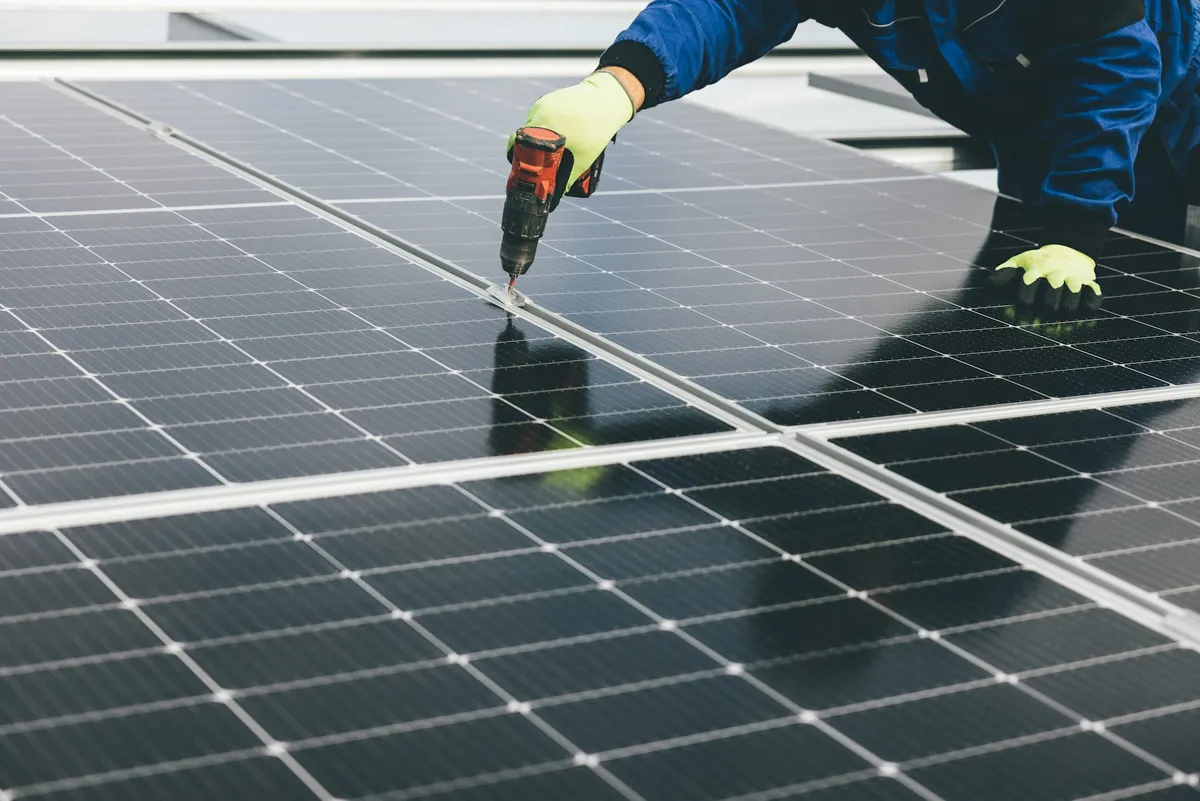
If you live in the rural Philippine provinces, trying to maintain reliable, highly available power systems for your home can be a frustrating and expensive proposition.
Living in rural parts of the Philippines has its advantages—space, lower cost of living, and a quieter lifestyle, rut one consistent challenge is reliable electricity.
Between frequent brownouts, unstable grid connections, and in some areas no grid at all, many homeowners are turning to solar power systems as a long-term solution.
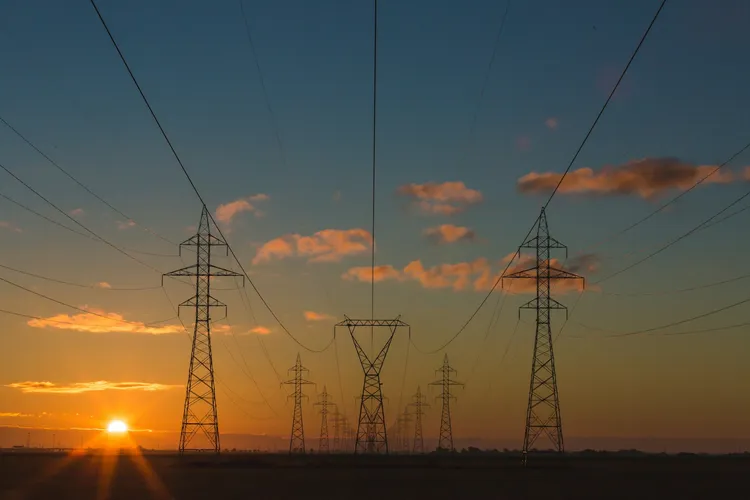
The local power cooperative (non-profit utility in the Philippines) can be unreliable. There isn’t much redundancy built into the local power grid; so, when they have to do maintenance, a large area may experience a power outage. When I first moved to the Philippines, this prompted me to get a diesel generator and a large diesel tank. After about a year, I bought a whole house battery solution (Ecoflow Delta Pro batteries) because it is considered rood to run the generator after about 8pm in residential areas—it is rather noisey. About six months after that, I was unable to get the generator started during a typhoon after it had run out of diesel. So, I bought a second diesel generator to increase the odds of always having power.
I’ve previously talked about my power infrastructure here at the house in these posts:
Maintaining all of that requires that you have a certain amount of skills / knowledge, tools on hand, and spare parts readily available. So, you very quickly become Your Own Maintenance Department.
With the recent war in Iran, shock to the oil supply chain, shortages, and price spikes here in the Philippines in March, 2026, I finally decided to prioritze solar power for my home.
This post walks through the fundamentals of designing and building a solar setup tailored for rural Philippine conditions. Then, goes into some detail about what I’m planning to do with my own system.
Before You Begin
Understand what your goals with a home power system are:
- Do you want to be completely disconnected from the grid?
- Do you want to be able to charge batteries with sufficient capacity to run some amount of time disconnected from the grid?
- Do you want to break even on your electric bill?
- Do you want to feed power back into the power grid? (This isn’t availabe, generally, in the rural provinces in the Philippines).
Or, some other variation of this.
My immediate goal is to be able to charge my Ecoflow batteries entirely from solar. I have enough battery capacity to run some lights, my laptop, server rack, primary / secondary Starlink routers, and sporadic usage of the water pump (no showers, one can flush the toilets) for about ten hours. We will expand that battery capacity some day, but not today.
☀️ Why Solar Makes Sense in the Philippines
The Philippines sits near the equator, giving it strong solar potential year-round. In fact, most regions receive 4.5 to 5.5 peak sun hours per day, making solar not just viable, but highly practical.
In rural areas, solar offers:
- Independence from unreliable utilities
- Protection from rising electricity costs
- Power in remote or undeveloped locations
- Long-term savings despite upfront cost
🔌 Step 1: Understand Your Energy Needs
Before buying anything, you need to answer a simple question:
How much electricity do you actually use?
List out your appliances and estimate daily usage:
| Appliance | Watts | Hours/Day | Daily Consumption |
|---|---|---|---|
| Lights (LED) | 10W | 5 hrs | 50 Wh |
| Refrigerator | 150W | 8 hrs (cycled) | 1,200 Wh |
| Electric Fan | 60W | 10 hrs | 600 Wh |
| Laptop | 60W | 5 hrs | 300 Wh |
Total example: ~2,150 Wh (2.15 kWh per day)
👉 This number drives your entire system design.
🔋 Step 2: Choose Your System Type
There are three main solar setups:
1. Off-Grid (Most Common in Rural Areas)
- No connection to utility power
- Requires batteries
- Fully independent
2. Grid-Tied
- Connected to utility
- No batteries (cheaper)
- Useless during outages unless paired with backup
3. Hybrid (Best of Both Worlds)
- Grid + batteries
- More expensive but flexible
👉 In rural Philippines, off-grid or hybrid systems are usually the best fit.
🔆 Step 3: Size Your Solar Panels
To estimate panel requirements:
Daily energy need ÷ sun hours = required solar output
Example:
- 2.15 kWh ÷ 5 sun hours = ~430W system
- Add inefficiency buffer (20–30%) → ~550W–600W
So you might install:
- 2–3 panels at 400W each
👉 Always oversize slightly—cloud cover and heat reduce efficiency.
🔋 Step 4: Battery Storage (Critical for Rural Homes)
Solar only generates power during the day. Batteries store energy for nighttime and outages.
Battery Types:
Lead-Acid (Cheaper)
- Lower upfront cost
- Shorter lifespan
- Requires maintenance
Lithium (Recommended)
- Longer lifespan
- More efficient
- Higher upfront cost
👉 In hot, humid environments like the Philippines, lithium batteries tend to perform better long-term.
⚡ Step 5: Inverter and Charge Controller
These are the “brains” of your system:
- Inverter: Converts DC (solar) → AC (home use)
- Charge Controller: Protects batteries and manages charging
Look for:
- Pure sine wave inverter
- MPPT charge controller (more efficient than PWM)
🌧️ Step 6: Design for Philippine Conditions
This is where many DIY systems fail.
1. Heat
- High temperatures reduce panel efficiency
- Ensure good airflow under panels
2. Typhoons
- Use strong mounting systems
- Secure panels against high winds
3. Humidity & Corrosion
- Use weatherproof enclosures
- Choose marine-grade wiring where possible
🏠 Step 7: Installation Basics
- Mount panels facing south (in most of the Philippines)
- Tilt angle: ~10–15 degrees (adjust for your location)
- Avoid shading from trees or structures
- Keep cable runs short to reduce losses
💰 Step 8: Cost Expectations
Costs vary widely, but rough estimates:
- Small off-grid system (basic needs): $1,500–$3,000
- Medium household system: $3,000–$8,000
- Larger hybrid systems: $8,000+
👉 Labor is often cheaper in rural areas, but component quality matters more than saving a few pesos.
⚠️ Common Mistakes to Avoid
- Undersizing your system (you will regret it)
- Skipping batteries in unstable grid areas
- Buying low-quality inverters or panels
- Ignoring proper grounding and safety
- Not planning for future expansion
🔄 Maintenance and Longevity
Solar systems are relatively low maintenance:
- Clean panels every few months (dust, bird droppings)
- Check wiring and connections annually
- Monitor battery health
A well-built system can last:
- Panels: 20–25 years
- Inverters: 5–10 years
- Batteries: 5–15 years (depending on type)
The Math
Here’s a no-nonsense primer on the core math you need for DC electricity. If you understand these, you can design most small systems (like solar, batteries, and basic circuits) without guessing.
⚡ 1. The Foundation: Ohm’s Law
V=IR
Where:
- V = Voltage (volts)
- I = Current (amps)
- R = Resistance (ohms)
Rearranged (you’ll use all three):
- I= V/R
- R = V/I
👉 This is the core relationship; everything else builds on it.
🔋 2. Power Formula (How Much Work Is Being Done)
P=VI
Where:
- P = Power (watts)
- V = Voltage (volts)
- I = Current (amps)
- R = Resistance (ohms)
Useful variations:
- P=I^2*R
- P=V^2/R
👉 This tells you:
- How much energy a device consumes
- How much heat a wire might generate
🔌 3. Energy (What You Pay For or Store)
E=Pt
Where:
E = Energy (watt-hours or joules) t = Time (Hours, in this case) P = Power (watts)
👉 Example:
100W device × 5 hours = 500 Wh (0.5 kWh)
This is what matters for:
- Battery sizing
- Solar system design
🔗 4. Series vs Parallel Circuits
Series (end-to-end)
- Voltage adds
- Current stays the same
- Rtotal=R1+R2+R3
👉 Used when:
- Increasing voltage (battery banks)
Parallel (side-by-side)
- Voltage stays the same
- Current adds
- Rtotal=R1+R2
👉 Used when:
- Increasing current capacity
- Most household wiring
🔋 5. Battery Capacity (Critical for Solar)
- E=V×Ah
- E=V×Ah
Where:
- Ah = Amp-hours
- E = Power (Watt-hours)
- V = Voltage (Volts)
👉 Example:
12V battery × 100Ah = 1200 Wh (1.2 kWh)
⚠️ 6. Voltage Drop (Why Your System Underperforms)
Vdrop=IR
👉 Long wires = more resistance = voltage loss
This matters a lot in:
- Solar setups
- Low-voltage DC systems
🔥 7. Efficiency and Losses
Real systems aren’t perfect:
Efficiency=(Output / Input)×100%
👉 Expect:
- 80–95% efficiency depending on components
🧠 How It All Connects (Practical Example)
Say you have:
- 12V system
- Device draws 5A
Then:
- Power = 12 × 5 = 60W
- Run for 4 hours → 240 Wh
- Battery needed ≈ 240 Wh + buffer
⚠️ The Mistakes People Make
- Confusing power (W) with energy (Wh)
- Ignoring voltage drop in long cables
- Undersizing batteries
- Forgetting inefficiencies
🧩 One-Line Summary
Voltage (volts) pushes; current (amps) flows; resistance (ohms) resists; power (watts) tells you how hard everything is working.
My System
So, for my solar power system, my initial goal is to be able to fully charge my current Ecoflow batteries in less than a day. We can expand in the future as additional batteries are added.
The Ecoflow Delta Pro has a built in MPPT Charge Controller. So, all we have to do is build a solar panel array that operates within the solar input ranges supported by the unit.
Per the Ecoflow Delta Pro documentation, the Solar Charger Input Port specs are:
- 11-150V, 15Amps Max, 1600W Max
So, we’d like to get as close to (but, not exceed) 1600watts being generated by solar as possible with direct sunlight, while not exceeeding 150v or 15amps.
At this point, some basic understanding of electrical formulas are necessary to be able to design / size your own solar power system. See above.
For my setup, I came up with the following:
.jpeg” “My Solar Power System Design”)
This setup will require twelve 100 watt panels as noted in the diagram.
I’m imaginging panels being damaged during heavy winds during typhoon season. So, I’m buying a couple of spare panels that are the same size / specs that can be swapped in quicly. Each panel costs about 1900PHP (~$31.00USD). I intend to go into typhoon season with two or four spare panels.
My plan is to put the panels on top of the two stairwells:
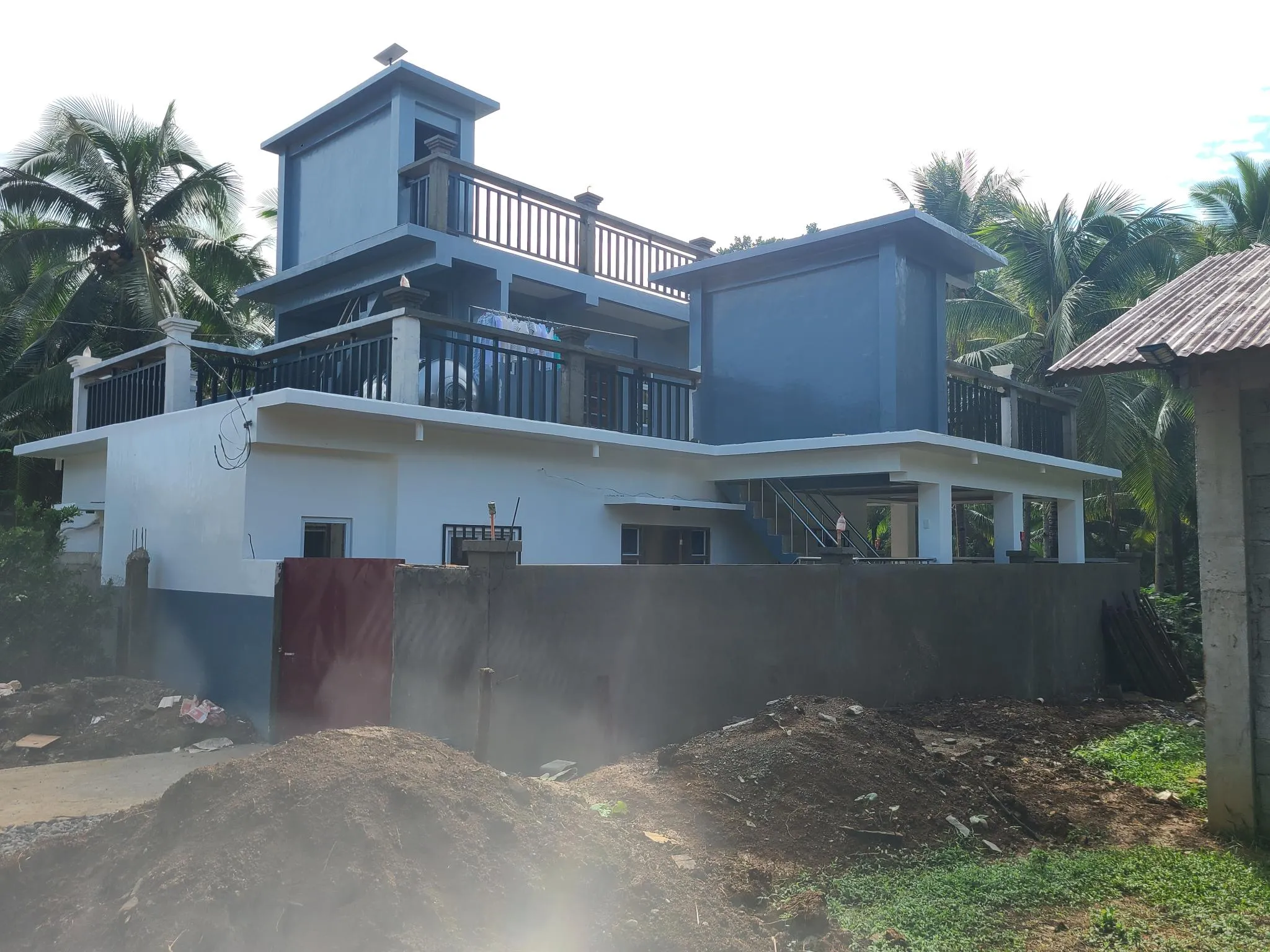
For future expansion, there is land out back with room to mount panels on stands where there is no foot traffic.
To provide some level of protection to my Ecoflow batteries, I bought a DC 15amp circuit breaker (and box to hold it) that will go inline between the panels (live wire) and batteries.
The panel specs are:
- 6 amps
- 20.4 volts
- rated at 100watts
These metrics fluctuate,but do represent an upper bound.
The costs so far have been:
| Part | Cost / Unit | # Units | Total |
|---|---|---|---|
| Solar Panels | 1900PHP | 14 | 26,600PHP (~$443.33USD) |
| 20 meter 10AWG MC4 cables | 2121PHP | 1 | 2121PHP (~$35.35USD) |
| XT60 Charging Cable | 1099PHP | 1 | 1099PHP (~$18.31USD) |
| 3 meter 12 AWG MC4 cables | 230PHP | 3 | 690PHP (~$11.50USD) |
| MC4 Parallel Solar Panel Connector Y Branch | 175PHP | 4 | 700PHP (~$11.67USD) |
| Solar Panel Bracket Kit Aluminum Mounting Rail | 706.72PHP | 14 | 9894.04PHP (~$164.90USD) |
| 2P DC1000V MCB Solar DC Circuit Breaker 15A | 714.71 | 1 | 714.71PHP (~$11.91USD) |
| MCB 2P Breaker Box Waterproof | 1027.93PHP | 1 | 1027.93 (~$17.13USD) |
| Total | - | - | 42846.64PHP (~$714.11) |
Installation will likely be around 20K PHP (~$333.33USD, Total: 62846.64PHP / ~$1047.44USD).
That’s on top of the 252K PHP / ~$4200USD spent on Ecoflow Delta pro batteries, 170K PHP spent on two diesel generators, and 24K PHP / ~$400USD 24K PHP for a diesel tank.
That brings the total to 508,846.64PHP / ~$8480.78USD for all power systems up to this point. That doesn’t cover tools and spare parts, but that is probably another $1500USD.
All that for 65% of what I quoted from a professional solar power installation company (800K PHP / ~$13,333.33USD).
I also bought a new multimeter. I fried my old one when I exceeded the max DC amps that it could handle. Noted, for future testing. The new one can handle the DC amps that my solar power system will generate.
As I’m writing this blog post, I’m still waiting on my second order of solar panels from Lazada. The first set of test panels I ordered arrived safely and seem to work per specs. So, I went ahead and ordered the rest that I need.
🌱 Summary
Designing a solar system in rural Philippines isn’t just about saving money—it’s about reliability and independence.
When the grid goes down (and it will), a properly designed system keeps your lights on, your food cold, and your daily life uninterrupted.
Done right, solar isn’t just a backup plan—it becomes your primary power source.
Thinking of Moving to the Philippines? Get Reliable Guidance
Online communities are helpful for general questions. For anything important, you still need accurate, professional, and updated information. E636 Expat Services helps foreigners with:
- Residency and long term visas
- Bank account opening
- Health insurance guidance
- Real estate assistance
- Business setup
- Retirement planning
- A smooth and secure transition into life in the Philippines
If you want to move with confidence instead of relying on random comments online, we can guide you every step of the way.
Book a consultation with E636 and start your journey the right way.
Photo by Markus Spiske on Unsplash