Filipino History
Introduction
The history of the Philippines is shaped by indigenous cultures, centuries of foreign rule, and a long struggle for self-determination. Its past reflects a blending of Asian, Western, and local traditions that continue to influence Filipino society today.
Long before European contact, the Philippine archipelago was home to complex, dynamic societies shaped by migration, trade, and local innovation. Far from being isolated, these islands were deeply connected to the wider Asian world.
Austronesian Migration (c. 3000–1500 BCE)
The most influential population wave began around 3000 BCE, when Austronesian-speaking peoples migrated southward from Taiwan.
This migration:
- Introduced agriculture (rice, taro)
- Advanced boat-building and navigation
- Established pottery, weaving, and metallurgy
- Spread a shared language family still dominant today
These settlers used balangay-type boats, enabling inter-island travel and trade.
Modern Filipino languages are primarily Austronesian in origin.
Formation of Early Settlements (c. 1000 BCE – 500 CE)
Over time, Austronesian communities formed permanent coastal and riverine settlements.
Key features:
- Small kinship-based villages (barangays)
- Leadership by a datu
Social stratification:
- Datu (leader)
- Maharlika (warrior nobility)
- Timawa (freemen)
- Alipin (dependent class)
Settlements were largely independent, though alliances existed.
Trade Networks and External Influence (c. 500–1400 CE)
The Philippines became part of a vast maritime trade network connecting:
- China
- Champa (Vietnam)
- Srivijaya and Majapahit (Indonesia)
- India
- The Arab world
Trade goods included:
- Gold
- Pearls
- Forest products
- Beeswax
- Pottery
Chinese records from the Song Dynasty (960–1279 CE) reference Philippine polities such as Ma-i (believed to be Mindoro or nearby areas).
Indianized Cultural Influence (Indirect)
While never fully Indianized like parts of Southeast Asia, Philippine societies absorbed elements of Indian culture via trade:
- Loanwords from Sanskrit
- Concepts of kingship and honor
- Decorative motifs
- Epic storytelling traditions
These influences blended with indigenous belief systems.
Indigenous Belief Systems
Pre-colonial Filipinos practiced animism, believing in spirits inhabiting nature, ancestors, and objects.
Common elements:
- Anito (spirits or deities)
- Shamans (babaylan), often women or gender-nonconforming individuals
- Rituals for healing, harvests, and protection
- Religion was localized and community-centered, not centralized.
- Arrival and Spread of Islam (c. 1300–1500 CE)
Islam entered the southern Philippines through trade and missionary activity from present-day Malaysia and Indonesia.
Key developments:
- Establishment of the Sultanate of Sulu (c. 1405)
- Establishment of the Sultanate of Maguindanao
- Adoption of Islamic law, writing (Jawi), and governance
Islamic polities were politically sophisticated and regionally connected by the time Europeans arrived.
Political Landscape Before 1521
By the early 16th century, the Philippines consisted of:
- Independent barangays
- Trade-oriented coastal chiefdoms
- Powerful Islamic sultanates in the south
There was no unified nation-state, but rather a mosaic of autonomous societies connected by trade, kinship, and warfare.
On the Eve of European Contact
When Ferdinand Magellan arrived in 1521:
- Filipinos had seafaring technology
- Active trade relationships
- Established social hierarchies
- Local political authority
- Deep cultural traditions
The islands were not primitive or isolated—they were already part of Asia’s maritime world.
Spanish Colonial Period (1521–1898)
Spanish involvement began in 1521 with the arrival of Ferdinand Magellan. Spain formally colonized the islands in 1565, naming them Las Islas Filipinas after King Philip II.
Over more than 300 years, Spanish rule introduced:
- Christianity, particularly Roman Catholicism
- Centralized colonial governance
- New social hierarchies
- Spanish legal, educational, and cultural influences
Resistance to colonial rule occurred throughout this period, culminating in the Philippine Revolution of 1896. In 1898, following Spain’s defeat in the Spanish-American War, Spain ceded the Philippines to the United States.
American Period (1898–1946)
The transition to American rule sparked the Philippine-American War (1899–1902), as Filipino revolutionaries sought independence. The United States eventually established civil governance and introduced:
- Public education in English
- Democratic institutions
- Modern infrastructure
The Philippines gradually gained self-governing authority, becoming a Commonwealth in 1935, with independence planned for 1946.
Japanese Occupation (1942–1945)
During World War II, Japan occupied the Philippines. The occupation was marked by severe hardship, resistance movements, and widespread destruction. Allied and Filipino forces liberated the country in 1945.
Independence and the Modern Era (1946–Present)
The Philippines gained full independence on July 4, 1946. The post-war period involved rebuilding, political development, and economic challenges.
Key moments include:
- The declaration of Martial Law under President Ferdinand Marcos (1972–1981)
- The People Power Revolution of 1986, which restored democratic governance
- Continued efforts to balance economic growth, political reform, and social equity
Today, the Philippines is a democratic republic with a rich cultural heritage shaped by its complex history.
Conclusion
The history of the Philippines is a story of resilience, adaptation, and cultural fusion. From independent pre-colonial societies to colonial rule and eventual independence, the country’s past continues to inform its national identity and role in the modern world.
The Philippines was populated thousands of years ago and shaped by multiple waves of migration. Long before colonization, its peoples had developed rich cultures, regional trade networks, complex social systems, and independent political entities.
European contact did not create Filipino society—it disrupted and reshaped one that already existed.
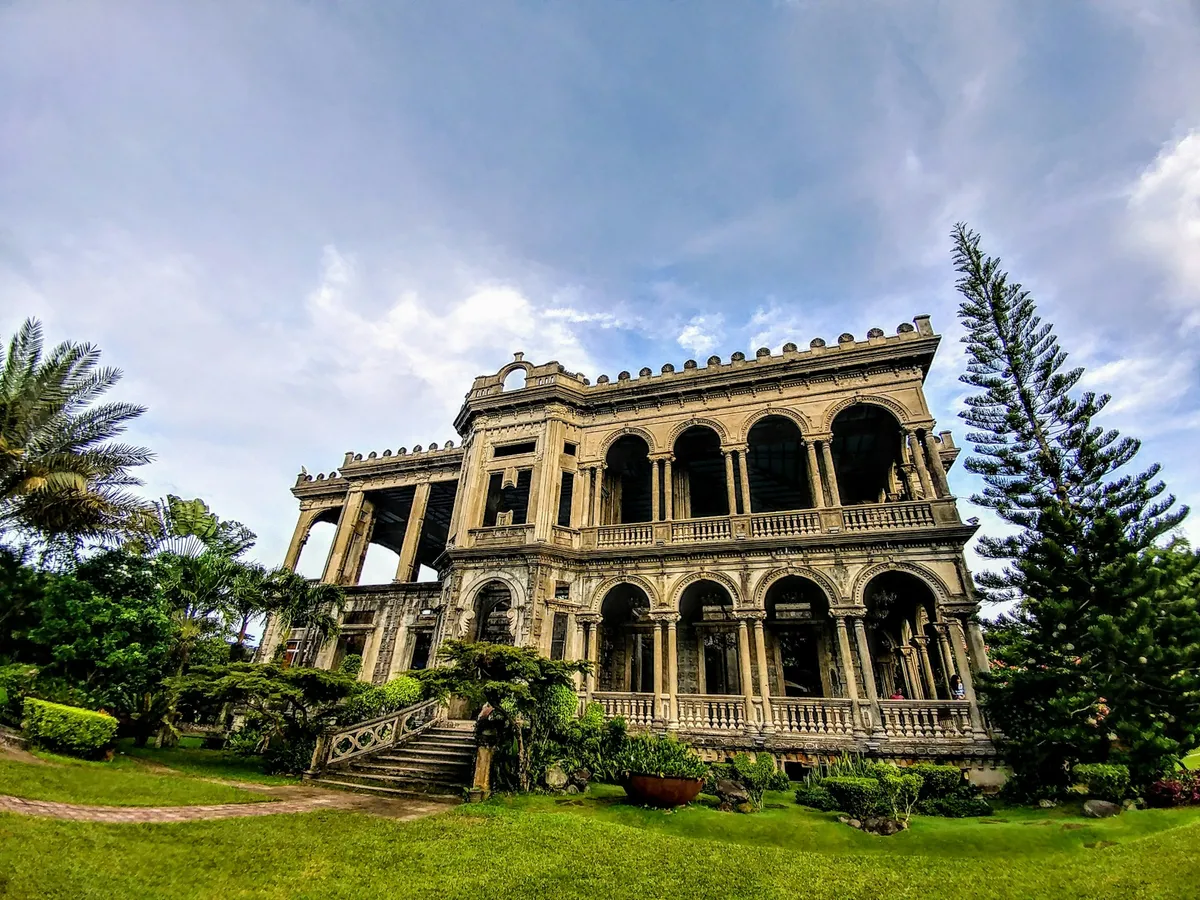
Photo by Brian Kairuz on Unsplash