Taxes For Foreigners in the Philippines
expats 23-01-2026
First, the usual disclaimer:
The information provided on this website is for general informational purposes only and does not constitute legal, tax, financial, or professional advice. Laws and regulations vary by jurisdiction and may change over time. You should consult a qualified attorney, tax advisor, or other licensed professional regarding your specific situation before making any legal or financial decisions. Reliance on any information provided on this website is solely at your own risk.
Taxes for Foreigners in the Philippines.
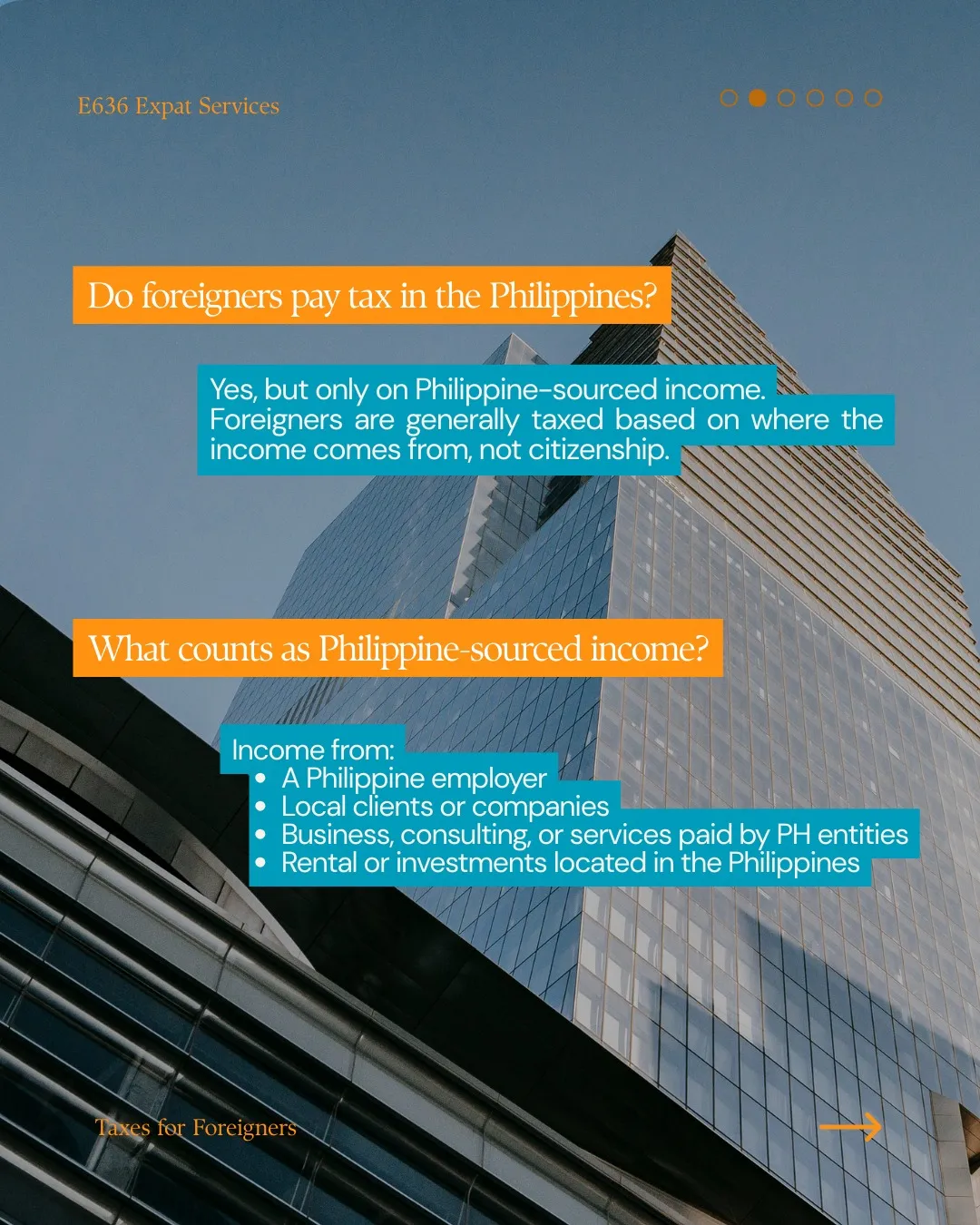
Do foreigners pay tax in the Philippines?
Yes, but only on Philippine-sourced income. Foreigners are generally taxed based on where the income comes form, no citizenship.
What counts as Philippine-sourced income?
Income from:
- A Philippine employer
- Local clients or companies
- Business, consulting, or services paid by PH entities
- Rental or investments located in the Philippines
Here’s some additional information for expats.
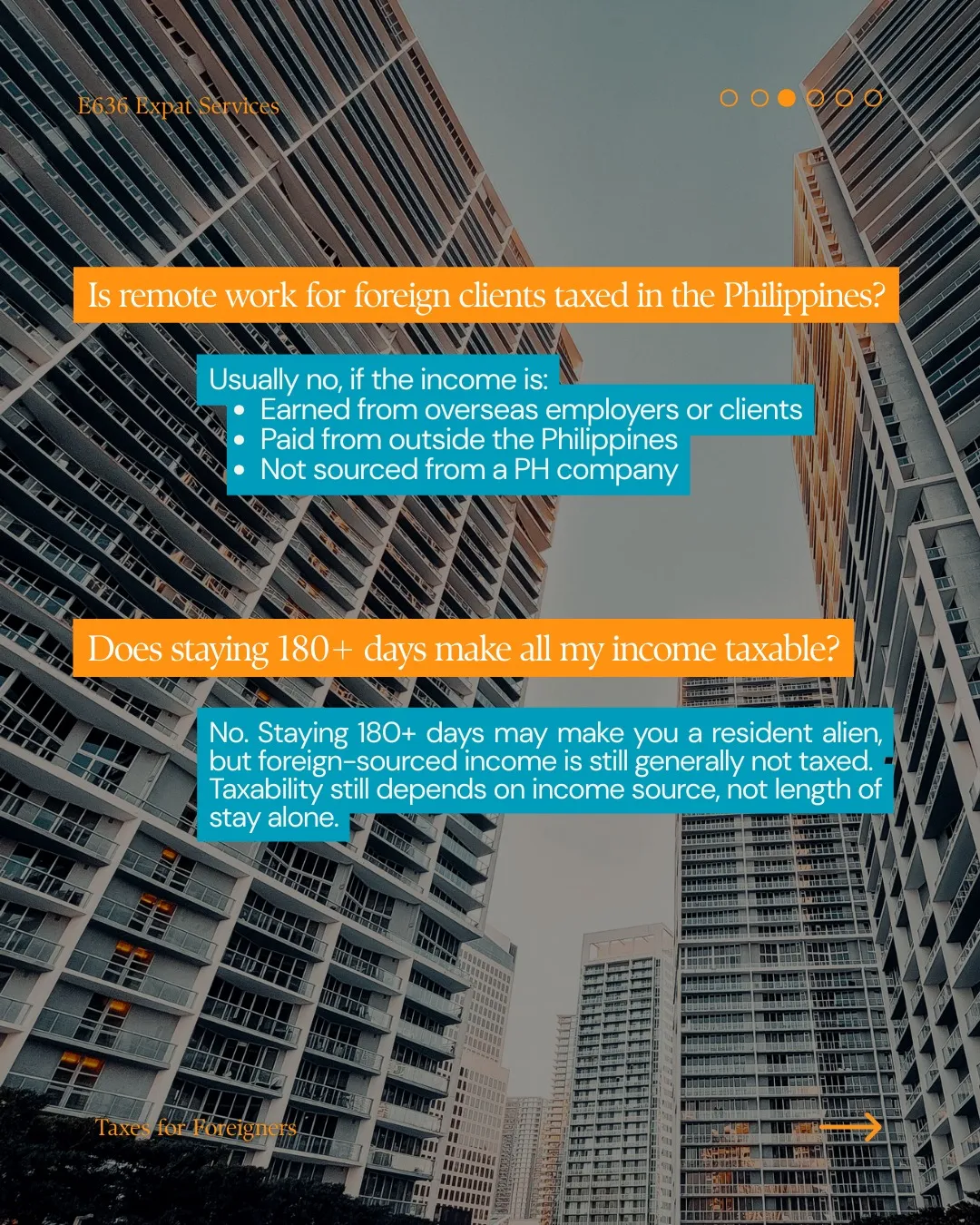
Is remote work for foreign clients taxe din the Philippines?
Usually, no, if the income is:
- Earned form overseas employers or clients
- Paid from outside the Philippines
- Not sourced from a PH company
Does staying 180+ days make all my income taxable?
No staying 180+ days make make you a resident alient, but foreign-sourced income is still generally not taxed. Taxability still depends on income source, not length of stay alone.
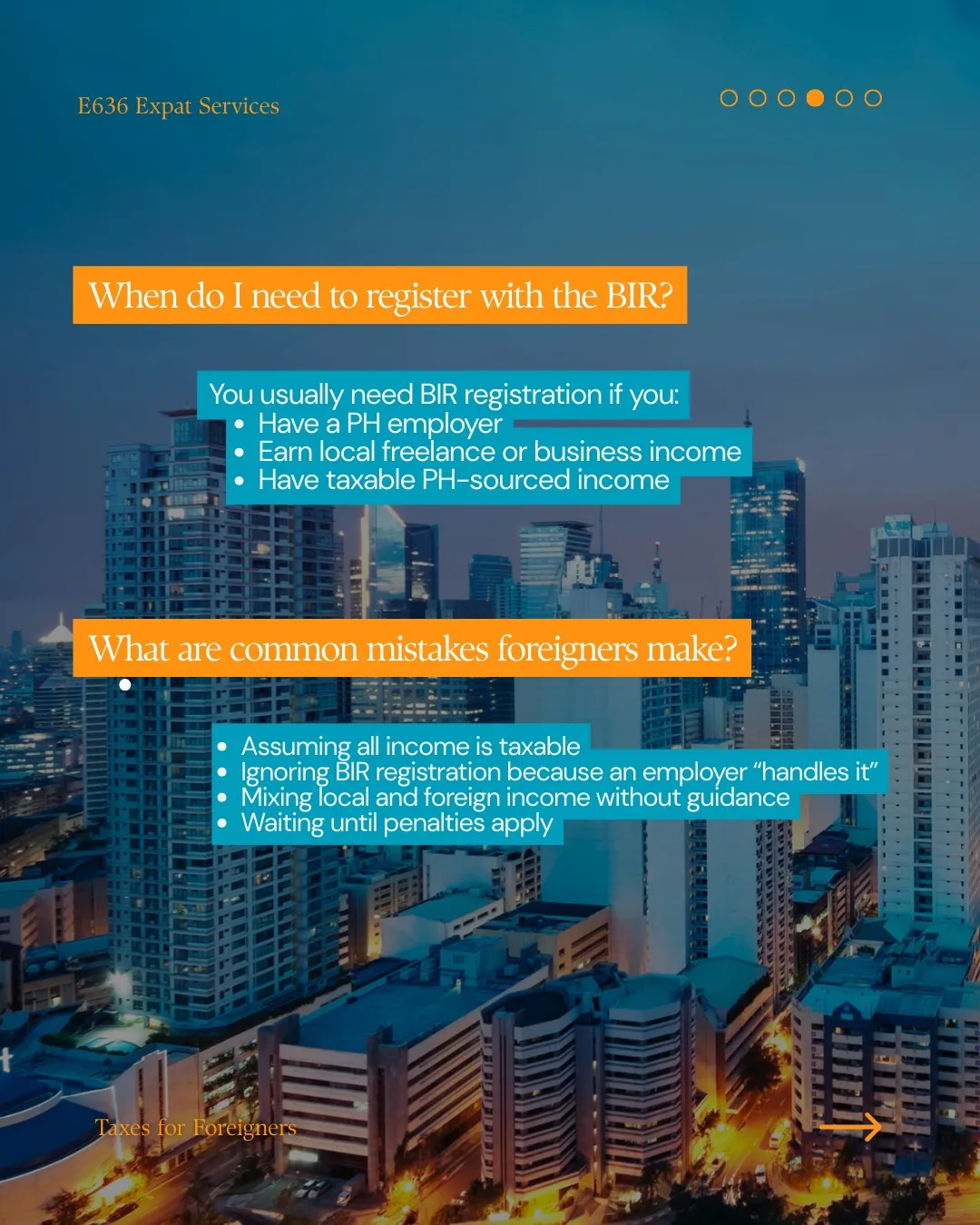
When do I need to register with the BIR?
You usually need BIR registration if you:
- Have a PH employer
- Earn local freelance or business income
- Have taxable PH-sourced income.
What are common mistakes foreigners make?
- Assuming all income is taxable
- Ignoring BIR registration because an employer “handles it”.
- Mixing local and foreign income without guidance
- Waiting until penalties apply
A Practical Tax Guide for Expats Living in the Philippines
Taxes are one of the least exciting parts of expat life—and one of the easiest ways to get yourself into trouble if you ignore them. The Philippines is relatively friendly to foreigners, but its tax system has quirks that can surprise even long-term residents.
Let’s cover the basics every expat should understand: who gets taxed, what income is taxable, and where foreigners most often get it wrong.
Who Is Considered a Taxpayer in the Philippines?
Your tax obligations depend on residency and income source, not citizenship.
1. Resident Alien
You are generally considered a resident alien if:
- You stay in the Philippines for more than 180 days in a calendar year, or
- You hold a long-term visa (13A, SRRV, work visa, etc.)
Taxed on:
- ✔ Income sourced within the Philippines only
2. Non-Resident Alien
- Short-term visitors, tourists, or those staying less than 180 days.
Taxed on:
- ✔ Philippine-sourced income only
- ❌ No tax on foreign income
What Income Is Taxable?
The Philippines follows a source-based taxation system for foreigners.
Typically Taxable:
- Salary from a Philippine employer
- Income from Philippine-based businesses
- Rental income from property located in the Philippines
- Professional or consulting services performed physically in the Philippines
Typically Not Taxable:
- Foreign pensions
- Overseas investment income
- Dividends, interest, or capital gains from abroad
- Remote income earned for non-Philippine companies, if properly structured
Important: Where the work is performed matters more than where the company is located.
Income Tax Rates for Expats
Foreigners earning Philippine-sourced income are generally subject to the same progressive tax rates as locals, which range from 0% up to 35%, depending on income level.
Some expats working under special arrangements (e.g., regional headquarters or BOI-registered companies) may qualify for preferential tax rates.
Do Expats Need a Tax Identification Number (TIN)?
Yes, if you earn income or plan to do anything official.
You’ll need a TIN to:
- Open a business
- Be legally employed
- File tax returns
- Sometimes even to open bank accounts or register utilities
Applying is done through the Bureau of Internal Revenue (BIR), often with employer assistance.
I am a foreign stock owner of a Filipino domestic stock corporation. I was initially able to be an authorized user of the Filipino SEC EFast website (where required documentation is uploaded). About six months later, I was presented with a screen that stated I had to enter my TIN in order to continue. I didn’t have a TIN at that point. It’s actually fairly easy to get one. There is a TIN “Application for Registration” form specifically for “Securing a TIN to be able to transact with any government office”. That one almost made sense. Later, when I opened a bank account, the bank wanted my personal TIN in order for my name to be put on the bank account.
Common Expat Tax Mistakes
1. Assuming Foreign Income Is Always Safe
While foreign income is generally not taxed, poor documentation or local bank transfers can trigger questions.
2. Ignoring Filing Requirements
Even if no tax is due, some expats are still required to file annual returns.
3. Working on a Tourist Visa
This creates both immigration and tax exposure, especially if payments hit Philippine accounts.
4. Mixing Personal and Business Funds
This is a fast way to invite audits or frozen accounts.
US Citizens: Extra Complications
If you’re a US citizen or green card holder, you still have:
- US federal filing requirements
- Possible state filing requirements
- Potential FBAR and FATCA reporting
- Possible double taxation without proper planning
The Philippines does have a tax treaty with the United States, but it does not automatically protect you—you must structure correctly and file properly. The tax treaty between the Philippines and the United States is a fascinating read.
Should You Hire a Local Accountant?
For many expats, the answer is yes.
A good local CPA can:
- Handle BIR filings
- Liaise with tax offices
- Keep you compliant without unnecessary overpayment
Just be aware that not all accountants understand expat or foreign income issues. Choose one with experience dealing with foreigners.
Final Thoughts
The Philippines is not a high-tax country for expats, but it is paperwork-heavy and rule-oriented. The biggest risks come from assumptions, not tax rates.
- If you earn locally, file properly.
- If you earn abroad, document clearly.
- If you’re unsure, get advice before money starts moving.
Doing it right is cheaper—and far less stressful—than fixing it later.
Thinking of Moving to the Philippines? Get Reliable Guidance
Online communities are helpful for general questions. For anything important, you still need accurate, professional, and updated information. E636 Expat Services helps foreigners with:
- Residency and long term visas
- Bank account opening
- Health insurance guidance
- Real estate assistance
- Business setup
- Retirement planning
- A smooth and secure transition into life in the Philippines
If you want to move with confidence instead of relying on random comments online, we can guide you every step of the way.
Book a consultation with E636 and start your journey the right way.