The ₱50 Rice Price Cap Is Over: What Ends, What Stays, and What It Means for Your Rice Budget
news11-09-2026

The government’s ₱50-per-kilo price cap on imported rice is officially over, and nobody is fighting to bring it back. On Wednesday, September 9, the Department of Agriculture (DA) said it would not seek any further extension of the ceiling, because retail rice prices have stabilized on their own.
DA spokesperson Arnel de Mesa put it simply, as reported by GMA News: a lot of rice is now sold below ₱50, so there is no need to set ₱50.
That is the short version. Here is how the cap started, why it faded away, and what to watch next as an El Niño approaches.
How the Cap Started: Executive Order 118
The price cap was a product of the 2026 oil shock. After the Middle East conflict began on February 28, fuel prices pushed inflation sharply higher. According to Philstar, headline inflation rose to 4.1% in March and 7.2% in April, while food inflation jumped to 6.1% in April from 2.7% in March. (We covered the start of the fuel crisis in The Global Oil Shock Hits Home.)
Rice matters more than anything else in that basket. Philstar notes rice makes up about 9% of the consumer basket, and for the poorest 30% of households it is close to one-fifth of all spending. By mid-May, BusinessMirror reported retail prices of imported rice had reached ₱60 per kilo.
On May 13, 2026, President Ferdinand Marcos Jr. signed Executive Order 118. According to GMA News and Philstar, it:
- Set a nationwide ceiling of ₱50 per kilo on imported rice with 5% broken grains, the most common imported grade
- Ran for 30 days, unless lifted earlier
- Required the National Price Coordinating Council (NPCC) to review the cap every 15 days and recommend continuing, adjusting, or lifting it
- Directed the DA and the Department of Trade and Industry to enforce it, and the Bureau of Customs to act against hoarding and smuggling
Unlike the earlier maximum suggested retail price, the cap had teeth. BusinessMirror reported that violators under the Price Act faced up to 10 years in prison and fines of ₱5,000 to ₱1 million, with DA administrative sanctions including closures, product seizures, and permit revocations. Agriculture Secretary Francisco Tiu Laurel Jr. said the mandated ceiling allowed the DA “to impose punitive sanctions and fines on violators.”
The Extension That Never Quite Happened
The cap lapsed on June 13. What followed was a summer of recommendations.
- Mid-May: Tiu Laurel said there was a good chance the cap “may be extended for another month or two,” according to BusinessMirror.
- After June 13: Philstar reported that Tiu Laurel accused some retailers of raising prices once the cap expired, calling it “profiteering.”
- July 8: The NPCC endorsed a 60-day extension to the Office of the President, GMA News and Philstar reported. DA monitoring at the time found imported rice at ₱45–₱50 per kilo and local rice at about ₱58.
- August 5: Philstar reported the DA had shelved the plan, with prices at ₱47–₱50 per kilo. “It doesn’t seem necessary to impose a price cap because the price cap was set at P50 per kilo,” Tiu Laurel said.
- September 9: The DA confirmed it would not pursue a further extension.
A flag on the timeline: We could not find any published order showing the July recommendation was approved. In practice, the ceiling appears to have been enforceable only during the original 30 days, from mid-May to June 13. If you read that the cap ran all summer, treat that with caution.
Not everyone was sorry to see it go. GMA News quoted a rice retailer who opposed the extension, saying the cap limited how freely retailers could sell and that raising prices could lead to arrest.
Where Prices Stand Now
According to the DA’s Bantay Presyo monitoring in Metro Manila as of September 9, reported by GMA News:
- Premium imported rice: mostly ₱50 per kilo, with the highest at ₱60
- Well-milled imported rice: ₱47–₱48 per kilo
- Regular milled imported rice: ₱45 per kilo
So most imported rice is now at or below the old ceiling, without anyone being forced. The wet-season harvest, which Philstar noted provides most of the domestic supply, is starting this month, and that usually adds supply.
The Tariff Backdrop: 15% or 20%?
Price caps are one lever. Tariffs are the bigger one, and the reporting on them is messy.
Under Executive Order 105, signed November 7, 2025, rice tariffs became flexible. Rates can move between 15% and 35%, rising when international rice prices fall and falling when they rise. The changes kick in only after the DA certifies that trigger price levels have been reached.
Flag: the current rate is reported inconsistently.
- The Nation (Thailand) reported on January 1 that the tariff rose from 15% to 20% that day.
- GMA News reported on January 8 that Tiu Laurel expected the tariff to rise to 20% by January 16.
- But a July 13 Manila Bulletin report on a proposed tariff hike on Vietnamese rice referred to the “current 15 percent tariff.”
The most recent reporting points to 15%, but if a precise figure matters to you, for example for an import business, check with the Bureau of Customs or a licensed customs broker.
Meanwhile, farm groups want more protection. Philstar reported in August that farmer groups were calling for a 30% safeguard duty on imported rice.
El Niño: No Import Ban
The next worry is weather. GMA News reports the DA is preparing for the food supply impact of a strong El Niño expected later this year, and Philstar reported it is expected to last until early next year.
The government’s answer, for now, is more supply, not less:
- No import ban. “There will be no import ban because there is a big El Niño coming,” Tiu Laurel told Philstar in August. He said buffer stocks are needed for December to April.
- Imports are high. The country had imported 3.3 million metric tons as of August 3, on track to pass 2025’s 3.39 million, according to Philstar.
- A Vietnam deal. BusinessMirror reported a one-year agreement with Vietnam, the main supplier, covering 1.5 million metric tons, aiming for uninterrupted shipments through April 2027.
- But less broken rice. The DA has asked importers to scale back 5% broken rice imports to give the local harvest room.
For a look at how drought affects water supply in Metro Manila, see our earlier post on El Niño and Angat Dam.
Cities vs. Provinces
A price cap on imported rice is mostly a city story. The harvest is a provincial one.
In the Cities
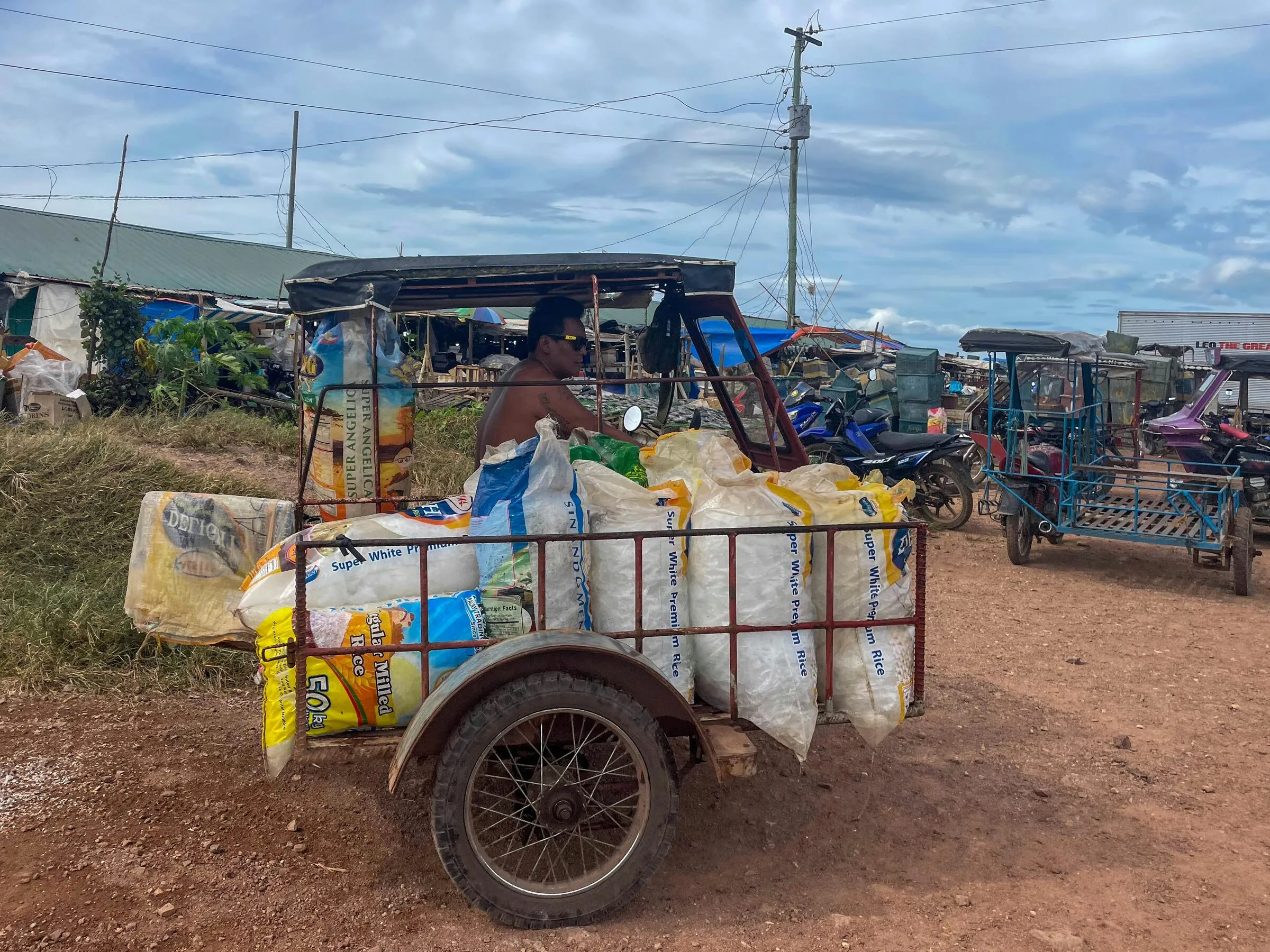
- Imported rice is what city families buy. The GMA price monitoring is for Metro Manila markets, and that is where cheap imported rice is most available. GMA quoted a shopper who said she buys imported rice because it saves money with decent quality.
- The cap was easiest to monitor here. Enforcement teams checked public markets, supermarkets, and rice outlets, BusinessMirror reported. Big-city markets are easier to inspect than a scattered network of provincial stores.
- No backup. Most city households have no family rice field and no harvest coming. They buy every kilo, so a few pesos per kilo adds up fast.
- Government rice outlets such as the ₱20-per-kilo rice program for vulnerable sectors, mentioned by Philstar, are an option for qualifying households.
In the Provinces
- Farmers want higher prices, not lower. For rice farmers, the key number is the farmgate price of palay (unhusked rice). Cheap imports at harvest time can push it down, which is why farm groups are pushing for higher tariffs.
- The NFA is buying. Philstar reported the National Food Authority is ready to buy about 500,000 metric tons of palay during the September harvest, at a minimum of ₱21 per kilo for wet palay and ₱25–₱27 for dry palay.
- Input costs are still high. GMA News noted local harvests are strained by higher fuel and fertilizer costs, plus the looming El Niño.
- Local rice is often the norm. In rice-growing provinces, local milled rice and rice from relatives are common. Provincial markets may show different prices from Manila’s Bantay Presyo figures, in either direction.
What It Means for Expats
The end of the cap changes very little at the checkout for most foreigners. Prices are already near or below ₱50. But rice is still worth understanding.
- Know the labels. Retail rice is generally sold as regular milled, well-milled, or premium, and as imported or local. Imported regular milled is usually the cheapest; premium and specialty varieties cost more.
- Try before you buy a sack. Rice varieties differ in texture, aroma, and how they cook. Buy a kilo or two first. Once you find one you like, a 25 kg or 50 kg sack usually brings the per-kilo price down.
- Where to buy. Palengke (wet market) rice stalls let you compare varieties side by side and buy by the kilo. Supermarkets offer sealed bags and receipts. Many neighborhoods also have small rice retailers who deliver sacks.
- Store it properly. A sealed container in a cool, dry place keeps out weevils and humidity. A sack left open in a humid kitchen is an invitation.
- Budget with a margin. Rice prices swing with fuel, weather, tariffs, and policy. With El Niño ahead, plan for some volatility over the next several months.
- Watch food inflation generally. If rice prices calm down, transport and electricity can still push up your grocery bill. Budget for food as a whole, not just rice.
For broader budgeting, see our guide to the Cost of Living in the Philippines, and add a margin for 2026 prices.
Summary
- Executive Order 118, signed May 13, 2026, set a ₱50-per-kilo cap on imported 5% broken rice for 30 days, amid Middle East–driven price spikes.
- The cap had real penalties, with NPCC reviews every 15 days. It lapsed on June 13.
- The NPCC recommended a 60-day extension in July, but we found no record it was approved. In August, the DA shelved the plan.
- On September 9, the DA said it would not seek a further extension, because retail prices had stabilized at or below ₱50.
- Tariffs are flexible under EO 105 (15%–35%), but reports conflict on whether the current rate is 15% or 20%.
- The DA is preparing for a strong El Niño and ruled out an import ban.
- For expats, rice remains affordable, but buy smart, store it well, and budget for volatility.
Sources
- GMA News: DA won’t seek further extension of P50/kilo imported rice price cap
- GMA News: Marcos sets P50/kg cap on imported rice to curb price surge
- Philstar: DA ready to enforce P50/kilo imported rice price cap
- BusinessMirror: ₱50 price cap on imported rice may extend for 60 days
- GMA News: NPCC seeks 60-day extension for P50 rice price cap
- Philstar: Rice price cap extension pushed amid lower food prices
- Philstar: DA shelves rice cap plan, rules out ban on imports
- Manila Bulletin: Philippines weighs higher rice tariffs on Vietnam to shield local farmers
- Lawphil: Executive Order No. 105, s. 2025
- The Nation: Philippines lifts rice import tariff to 20% on Jan 1
- GMA News: DA sees no drastic increase in retail prices of rice amid impending hike in tariff
Thinking of Moving to the Philippines? Get Reliable Guidance
Online communities are helpful for general questions. For anything important, you still need accurate, professional, and updated information. E636 Expat Services helps foreigners with:
- Residency and long term visas
- Bank account opening
- Health insurance guidance
- Real estate assistance
- Business setup
- Retirement planning
- A smooth and secure transition into life in the Philippines
If you want to move with confidence instead of relying on random comments online, we can guide you every step of the way.
Book a consultation with E636 and start your journey the right way.
Image credits (via Unsplash, free under the Unsplash License):
- Top image: “a person scooping rice out of a basket” by Helena Pfisterer
- Cities vs. Provinces section: “Man driving a three-wheeled vehicle loaded with sacks” by Bernd 📷 Dittrich