Coming Home Early: Nearly 10,000 Filipinos Repatriated From the Middle East War
news23-05-2026
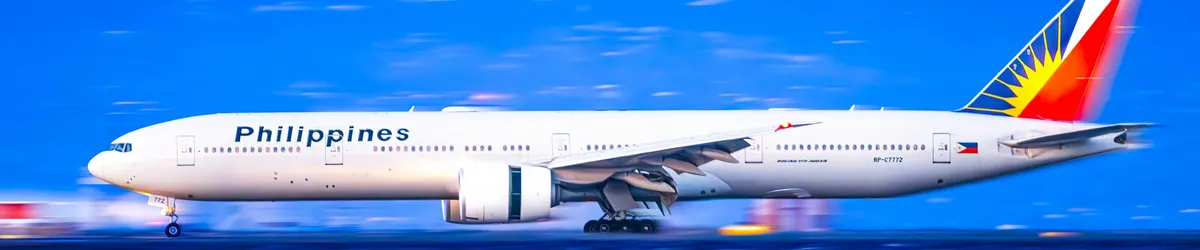
Nearly 10,000 Filipinos have now been flown home from the Middle East since the war began, and the government says more flights are coming. On May 21, the Department of Migrant Workers (DMW) reported 9,854 repatriated as of May 20—the largest emergency return of overseas Filipino workers (OFWs) in years.
Most of the attention on this war in the Philippines has been about fuel (see The Global Oil Shock Hits Home and the jeepney crisis). But the Middle East is also where a large share of Filipinos go to work. This post covers what the repatriation looks like, what returning workers face, and how it touches families and provinces back home.
What Happened
The conflict involving the United States, Israel, and Iran escalated in late February. Airspace closures, missile and drone attacks, and the shutdown of shipping through the Strait of Hormuz put Filipino workers across the Gulf at risk.
Some context on scale:
- About 2.4 million Filipinos live and work across the Middle East, according to BusinessMirror’s March reporting.
- In the PSA’s 2024 Survey on Overseas Filipinos, Saudi Arabia (21.9%) and the UAE (12.4%) were the two top destinations for OFWs.
- The war has already been deadly for Filipinos. BusinessMirror reported that a caregiver from Pangasinan was killed by missile debris in Israel on February 28.
The Numbers So Far
The DMW’s count has climbed steadily:
- April 3: 4,241 OFWs and dependents repatriated (Philstar)
- Around April 17: 6,706, including 5,023 OFWs (OWWA, via Philstar)
- May 7: 9,038 (DMW Secretary Hans Leo Cacdac, via Philstar)
- May 20: 9,854 (DMW, via GMA News)
The May 20 total breaks down into 7,748 OFWs, 1,745 family members, and 361 stranded Filipinos. Flights are continuing; on May 21, at least 79 OFWs arrived from Kuwait.
The DMW also reported that, as of May 19, it had provided more than 60,000 instances of on-site help to Filipinos who stayed in the region—including 27,369 cases of financial assistance, 21,120 of food assistance, 7,191 of transport assistance, 2,473 of shelter, and 2,418 of medical help.
Not everyone affected has flown home. In early April, the recruitment sector told SunStar that about 40,000 OFWs who were bound for Middle East jobs were waiting in agency accommodation or had gone back to their provinces, unable to deploy. And at sea, Philstar reported that about 1,400 Filipino seafarers had exited the Strait of Hormuz as of early May. On May 5, a ship with eight Filipino crew was hit near Oman in what was described as an alleged Iranian drone strike; several crew members were injured.
What It Costs
Emergency repatriation is expensive. In March, OWWA said the cost per OFW had risen from ₱135,000–₱140,000 to about ₱150,000 per head. According to Philstar, the emergency fund pays for flight tickets, hotels, temporary shelter, meals, domestic flights home, immediate financial aid, and reintegration aid.
The money is being stretched:
- BusinessMirror reported in March that OWWA’s Emergency Repatriation Fund held ₱1.5 billion—enough for roughly 10,000 repatriates at those rates. OWWA warned of a ₱2.2-billion gap if even 1% of Filipinos in the region asked to come home.
- By April, OWWA Administrator Patricia Caunan said the agency had used 55% of this year’s emergency repatriation allocation (which Philstar put at ₱1.2 billion—sources describe the fund differently) and was asking for a ₱12-billion supplemental budget. “We cannot ask for supplemental (budget) every other month,” she said.
One point worth knowing: early in the crisis, a claim spread online that repatriated OFWs would each get ₱150,000 in cash. OWWA called it fake news. Returning members are entitled to OWWA’s standard benefits—distress financial assistance, livelihood and reintegration programs, and training—but not a lump sum of that size.
What Returning Workers Face
Coming home early usually means coming home without a job, and often with debts from placement costs or loans taken out against future earnings.
The government’s main answers so far:
- Overseas job orders. Secretary Cacdac said the DMW has about 200,000 verified job orders in non-Middle East countries across Asia, Africa, Europe, and the Americas—in services, construction, hospitality, healthcare, and teaching.
- Local jobs and reintegration. The DMW has run job and reintegration fairs through its National Reintegration Network, and DOLE said in March it planned to match returnees with some 11,000 local job vacancies.
- Livelihood aid and training. OWWA and DMW offer livelihood assistance and skills training for those who want to stay.
How many will stay? The figures conflict. On April 6, Cacdac cited an OWWA survey showing about 50% planned to go back abroad. Three days later, the Daily Tribune quoted him saying 84% had expressed an intent to seek overseas work again before arriving. The difference likely reflects different surveys and timing. Either way, a large share of returnees see this as an interruption, not the end of working abroad—not surprising given the wage gap between a Gulf contract and most local jobs.
Families and Remittances
For many households, the OFW’s salary is the household income. When a worker comes home, the monthly transfer stops—for tuition, rent, loan payments, medicine, and support for parents and siblings.
So far, the national numbers show a slowdown rather than a collapse. The Bangko Sentral ng Pilipinas (BSP) reported on May 15 that:
- Cash remittances in March were $2.87 billion, up 2.3% from a year earlier—slower than February’s 2.6% growth.
- First-quarter cash remittances totaled $8.68 billion, up 2.8%. Personal remittances, which include informal channels and in-kind transfers, reached $9.66 billion.
- Saudi Arabia remained among the top three sources of remittances in the first quarter, behind the United States and Singapore.
Remittances hit a record $35.63 billion in 2025, and the BSP still expects about 3% growth this year. But national totals can hide a lot. A 10,000-person drop in the workforce barely moves a $35-billion number; it moves a lot for the families involved.
Cities vs. Provinces
In the Cities
Repatriation flights land mainly in Metro Manila—at NAIA, and for some chartered flights, Villamor Air Base. From there, OWWA covers temporary shelter and the domestic trip home. Cities are also where the job and reintegration fairs are held and where most local employers are.
For a returnee in Metro Manila, Cebu, or Davao, the options are wider: BPO, retail, hospitality, construction, and healthcare jobs exist, even if they pay far less than the Gulf. City families also tend to have more than one income source.
The catch is cost of living. A household that was paying Manila rent and tuition on a Gulf salary has a much harder adjustment, especially with transport and food prices up this year.
In the Provinces
OFWs come disproportionately from certain regions. In the PSA’s 2024 survey, CALABARZON accounted for 20.5% of OFWs, Central Luzon for 11.3%, and Western Visayas for 9.5%. Mindanao and the Visayas each supplied a bit over 18%.
In a provincial town, the effect of a returning worker is concentrated:
- Fewer local jobs. Farming, fishing, and small retail rarely pay what a Gulf contract did, and fuel prices have squeezed those sectors too.
- Paused projects. Many provincial houses are built a floor at a time as remittances arrive. When the money stops, construction stops—and so does work for local builders and hardware stores.
- Wider family impact. Remittances often support extended families, including elderly parents and nieces and nephews in school.
- Longer distance to help. OWWA and DMW regional offices, training centers, and job fairs are typically in provincial capitals or cities, which can mean a costly trip for someone in a remote barangay.
On the other hand, many returnees can fall back on family land and a lower cost of living—which is one reason some choose to wait out the crisis at home before redeploying.
What It Means for Expats
Most foreigners here are not directly affected, but many are connected to this story through a partner’s family, neighbors, staff, or community.
- Expect family requests. If your partner has a relative who came home from the Gulf, the extended family may ask for help. Agree as a couple, in advance, on what you can offer and in what form—cash, a loan, help with a job search, or school fees.
- Point people to official help. Returnees should register with OWWA and check the DMW for job orders and reintegration programs. Scams spread quickly in a crisis; the fake ₱150,000 aid claim is a good example.
- Consider hiring. Returning OFWs often bring strong skills and work experience—caregiving, construction, hospitality, driving, and household management. If you need help at home or in a business, this is a good pool to look at, with proper contracts and benefits.
- Check your travel routing. Many flights between the Philippines and Europe, Africa, and the Americas route through Gulf hubs. Confirm your itinerary close to departure and consider routings through East Asia if the Gulf is unsettled.
- Budget for a weaker local economy. Slower remittance growth means less spending in provincial towns. Combined with this year’s fuel-driven inflation, prices may stay elevated for a while. Review your cost of living assumptions.
- Stay informed from official sources. The DMW and OWWA post repatriation and assistance updates on their official websites and Facebook pages; the DFA issues travel advisories; and the BSP publishes remittance data monthly.
Summary
- The DMW reported 9,854 Filipinos repatriated from the Middle East as of May 20, 2026—7,748 OFWs, 1,745 family members, and 361 stranded Filipinos—with flights continuing.
- About 2.4 million Filipinos are in the region; tens of thousands more could not deploy.
- Emergency repatriation costs about ₱150,000 per person, and OWWA has asked for a ₱12-billion supplemental budget.
- Remittances are still growing, but more slowly: $8.68 billion in Q1 2026, up 2.8%.
- Between half and 84% of returnees, depending on which figure you use, want to work abroad again; about 200,000 non-Middle East job orders are available.
- The impact is heaviest in OFW-sending provinces, where one lost salary can support an entire extended family.
For expats, the practical steps are to plan for family requests, direct people to official help, keep an eye on travel routings, and budget for prices that may stay high.
Sources
- GMA News: Over 9,800 Filipinos repatriated amid Middle East conflict — DMW
- BusinessMirror: Philippines faces economic shock, mass OFW exodus as Middle East war escalates
- Philstar: DMW: 9,038 OFWs repatriated
- Philstar: OWWA seeks P12 billion fund for repatriated OFWs
- Philstar: 200,000 jobs ready for OFWs displaced by Mideast crisis
- SunStar: 200,000 jobs abroad offered to repatriated Middle East OFWs
- Philstar: DMW: Half of repatriated OFWs eye return abroad
- Daily Tribune: Majority of repatriated OFWs still want to work abroad — DMW
- GMA News: OWWA: P150k cash aid for repatriated OFWs not true
- Philstar: OFW remittances continue to climb
- GMA News: OFWs grew to 2.19M in 2024 —PSA
Thinking of Moving to the Philippines? Get Reliable Guidance
Online communities are helpful for general questions. For anything important, you still need accurate, professional, and updated information. E636 Expat Services helps foreigners with:
- Residency and long term visas
- Bank account opening
- Health insurance guidance
- Real estate assistance
- Business setup
- Retirement planning
- A smooth and secure transition into life in the Philippines
If you want to move with confidence instead of relying on random comments online, we can guide you every step of the way.
Book a consultation with E636 and start your journey the right way.
Image credits (via Unsplash, free under the Unsplash License):
- Top image: “Philippine airlines airplane on runway at dusk” by Hieu