Guimaras: Mangoes, Monks, and a Short Ferry Ride from Iloilo
culture27-05-2026
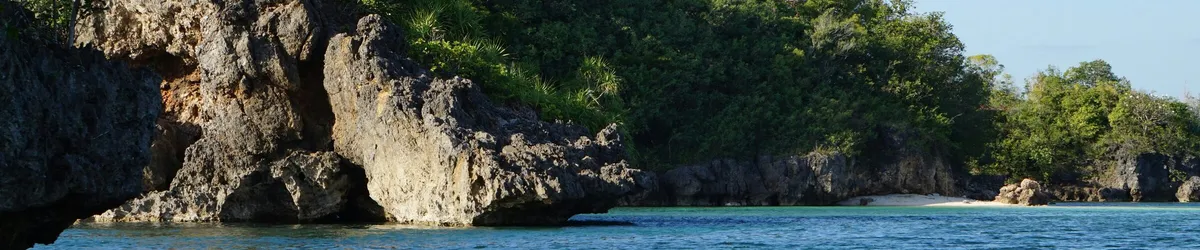
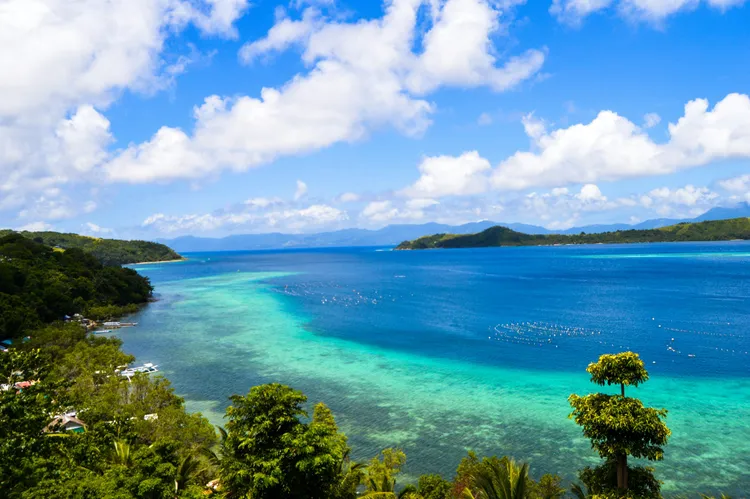
Guimaras is a small island province sitting in the strait between Panay and Negros, and most people who have heard of it know exactly one thing about it: the mangoes. That reputation is earned. But the island also has the country’s only Trappist monastery, a Good Friday passion play that has run for half a century, a scatter of small islands off its southern coast, and a pace of life that feels much farther from Iloilo City than the 15-minute boat ride suggests.
This post is part of our “Off the Map Philippines Adventures” series, where we look at regions that most tourists skip: the culture, the food, the festivals, and what a foreigner should know before visiting or settling there.
Guimaras at a Glance
Guimaras is one of the smaller provinces in the country, both in land and in people:
- Capital: Jordan
- Municipalities: Five—Buenavista, Jordan, Nueva Valencia, San Lorenzo, and Sibunag
- Population: 192,874 (2024 census)
- Area: About 605 square kilometers
- Region: Western Visayas (Region VI), alongside Iloilo, Capiz, Aklan, Antique, and Negros Occidental
For most of its history, Guimaras was part of Iloilo. It became a sub-province in 1966 and a full province in 1992 after a plebiscite. Sources disagree on the exact 1992 date—some give May 11, others May 22—but the province celebrates its founding anniversary on May 22, and that date anchors the island’s biggest festival.
The main language is Hiligaynon (also called Ilonggo), the same language spoken across the water in Iloilo City and in much of Negros Occidental. Kinaray-a, the language of rural Iloilo and Antique, is also heard. Filipino and English are widely understood. If you have been learning Tagalog, you will get by, but a few words of Hiligaynon—salamat (thank you), maayong aga (good morning)—go further. (See our post on Filipino Languages for why every province seems to need a new phrasebook.)
The Mango: An Island Built Around One Fruit
Guimaras calls itself the mango capital of the Philippines, and the claim is more than a slogan.
Why Guimaras Mangoes Are Different
The island grows the Carabao mango (also called the Philippine or Manila mango), the yellow, honey-sweet variety you see across the country. Guimaras growers argue theirs are the sweetest of all, and in 2023 the government gave that argument legal weight: the Intellectual Property Office of the Philippines (IPOPHL) registered Guimaras Mangoes as the country’s first geographical indication (GI). A GI works like the protected names on French cheese or Champagne—only mangoes grown on Guimaras that meet the standard can be sold under the name. The registration describes the fruit as reaching 16 degrees Brix (a measure of sugar content) or higher, with a distinct smooth texture.
Locally, one strain gets most of the praise: Super Galila, which provincial and agricultural sources describe as the sweetest Carabao strain on the island.
A note on bragging rights: Guinness World Records listed the Carabao mango as the sweetest fruit in 1995. Guimaras often claims that title, but some accounts say the fruit Guinness cited came from Zambales. The two provinces have not settled it, and we are not going to settle it for them.
The Mango Quarantine
Guimaras mangoes are also an export story. For years, the island was the only source of fresh Philippine mangoes allowed into the United States, because surveys found it free of the mango pulp weevil, a pest that bars fruit from strict export markets.
To protect that status, a Department of Agriculture quarantine order from 1993 prohibits bringing mango fruits and seeds into Guimaras. Plant quarantine personnel are assigned to the island. In practical terms:
- Do not carry mangoes from Iloilo or anywhere else onto the ferry to Guimaras
- Carrying Guimaras mangoes off the island is normal—it is what everyone does
- Rules and enforcement can change, so check with the Bureau of Plant Industry if you are moving fruit, seeds, or seedlings
What They Do With All Those Mangoes
Lower-grade fruit does not go to waste. Island processors turn mangoes into dried mango, jams, purée, achara (pickles), ketchup, and mango versions of Western Visayas pastries such as piaya. The best-known mango oddity is the mango pizza at The Pitstop restaurant in Jordan, which has since opened branches off the island. It sounds like a joke until you try it.
Manggahan Festival (Every May)
Manggahan means roughly “mango grove” or “the place of mangoes,” and the Manggahan Festival is the island’s signature celebration. It was first held on May 22, 1993, started by then-Governor Emily Relucio-Lopez to mark the first anniversary of provincehood. It was suspended during the COVID-19 pandemic and returned in 2022.
The 34th edition ran from May 15 to 24, 2026, with the main events on May 22–24. Typical features:
- Mango eat-all-you-can – the crowd favorite; the province set aside a reported 18 metric tons of mangoes for 2026, up from about 13 tons in 2025
- Cultural and street-dance competitions between the towns
- Trade fairs and agricultural exhibits, where you can buy processed mango products direct from producers
- Concerts, pageants, and tourism promotions
The festival is also a serious economic event—provincial officials reported more than ₱100 million in tourism receipts in 2025—and security is taken seriously. In 2026, a 31-day gun ban covered the whole of May.
Exact dates, prices, and schedules shift every year. Check with the Guimaras Provincial Tourism Office or its Facebook page before you plan a trip around it.
Ang Pagtaltal sa Balaan Bukid (Good Friday)
Holy Week on Guimaras centers on Jordan’s Pagtaltal sa Balaan Bukid, a reenactment of the Passion and Crucifixion of Christ. Balaan Bukid means “holy mountain” in Hiligaynon. We have not found an authoritative translation of pagtaltal; locally it simply names the Passion play.
The play moves through the streets on Good Friday, starting in the town proper and climbing to the crucifixion site on Balaan Bukid, roughly two kilometers away. It was first staged in 1975; the 2026 staging on April 3 was the 48th. Local organizers have reported crowds in the tens of thousands, and the town closes roads for it.
The hilltop Balaan Bukid Shrine itself dates from 1954, built in gratitude for protection during World War II. The ascent is lined with Stations of the Cross. Sources disagree on which barangay the shrine sits in (Balcon Melliza or Hoskyn), but every tricycle driver in Jordan knows the way.
If you go, dress modestly, expect heat and crowds, and remember this is a devotion first and a spectacle second. (Our post on Filipino Holidays covers how Holy Week works nationally.)
The Trappist Monastery
Near the center of the island, in Jordan, is Our Lady of the Philippines Trappist Abbey—the only Trappist monastery in the country. It was founded in 1972 by monks from the order’s United States region.
The monks follow the Trappist rule of prayer and work, and the work part is visible: the abbey keeps farmland and a large mango orchard, and sells food under the Trappist Monastic Products label—mango and other fruit jams, and mango-flavored baked goods. Proceeds support the community. The abbey also offers a retreat house for guests who want quiet rather than sightseeing.
Visitors come for the shop and the chapel, but this is a working monastery, not a theme park:
- Dress modestly
- Keep your voice down
- Ask before photographing people
- Respect areas marked for the monastic community only
Islands, Beaches, and the Southern Coast
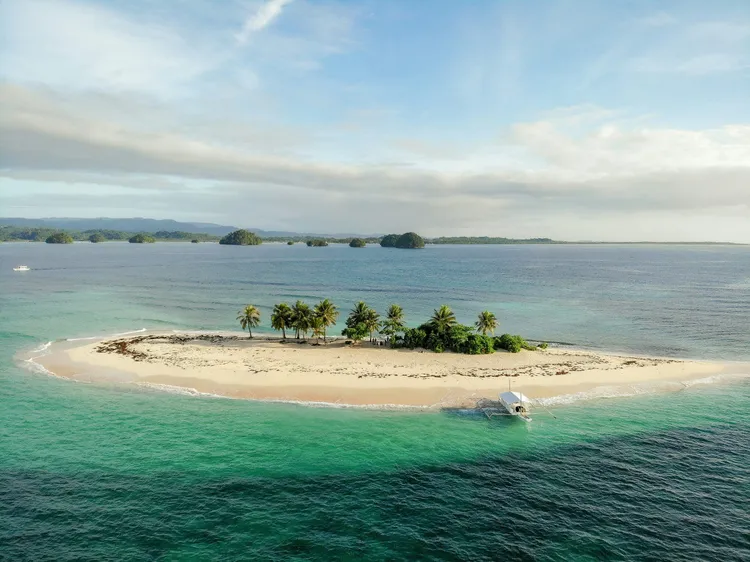
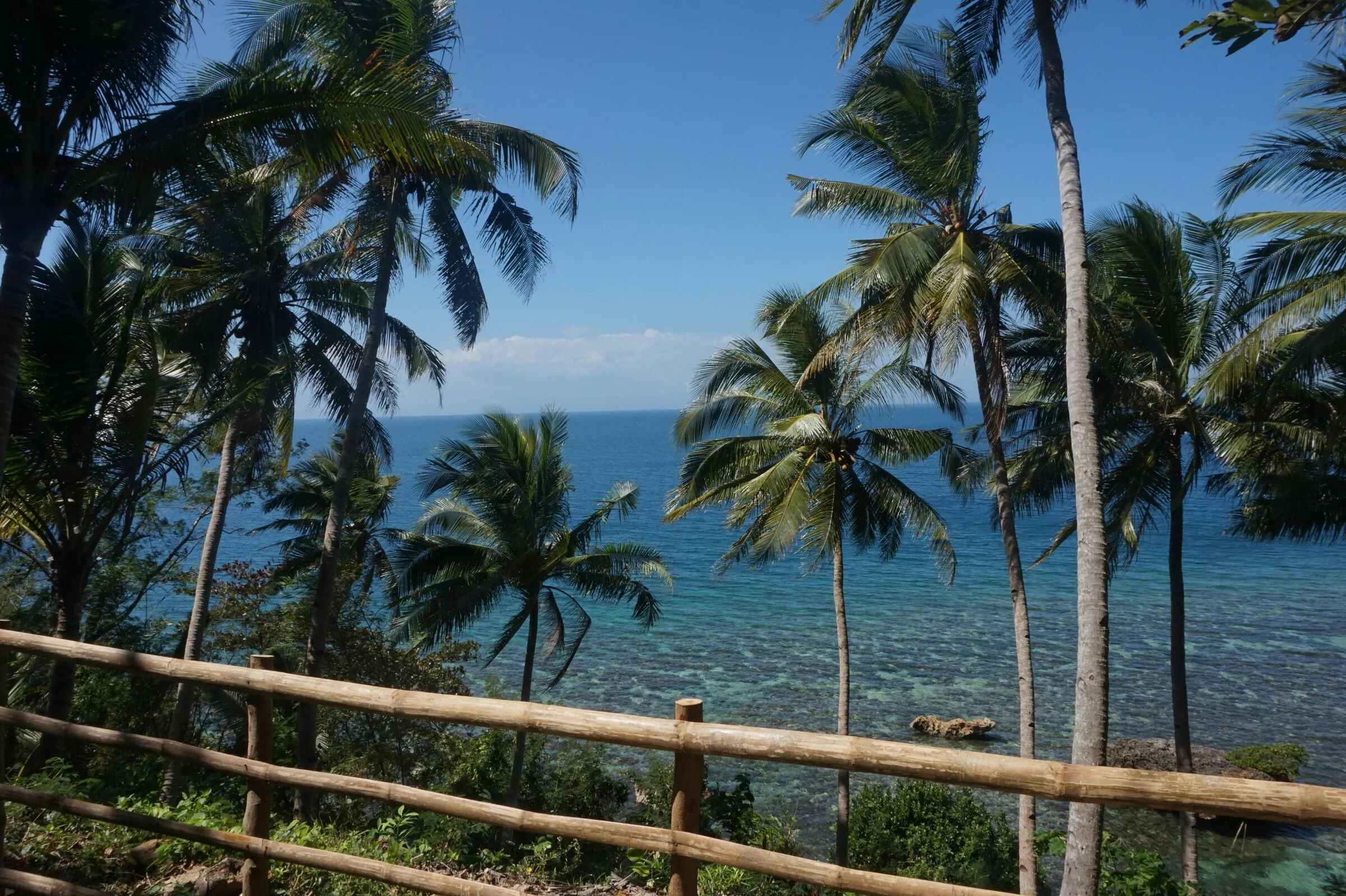
Guimaras is ringed with smaller islands, most of them off Nueva Valencia on the south and southwest coast. Alubihod Beach is the usual base, with most of the resorts and the boats for island-hopping.
Common stops:
- Taklong Island National Marine Reserve – a protected area divided into zones for tourism, multiple use, and strict protection
- SEAFDEC Igang Marine Station – a fisheries research station run by the Southeast Asian Fisheries Development Center, often the first stop on a boat tour
- Ave Maria Island – a small island visible from Alubihod
- Lamurawan Island – with a grotto of the Virgin Mary overlooking the surrounding islets
- Guisi Beach and the Guisi Lighthouse ruins – a Spanish-era lighthouse on the southwestern tip; travel sources date it to the late 1800s, though we have not found an authoritative construction date
Fees for boats, entrance, and environmental charges are set locally and change. Agree on the boat price, the route, and the return time before you leave the beach.
The 2006 Oil Spill
The southern coast also carries a scar. In August 2006, the tanker MT Solar 1, chartered by Petron, sank about 17 kilometers off Guimaras carrying roughly 2.4 million liters of bunker fuel. The oil fouled beaches, fishing grounds, and around 1,100 hectares of mangroves. It remains one of the worst oil spills in Philippine history. The coast has recovered substantially, but older residents of Nueva Valencia remember it clearly—it is worth knowing about if a local brings it up.
For Expats and Visitors
Getting There
There is no airport on Guimaras. Everyone arrives by boat, usually from Iloilo City, which has the nearest airport (Iloilo International, in Cabatuan).
- Passenger pumpboats run from the Iloilo–Guimaras ferry terminal to Jordan and Buenavista. The crossing takes about 15–20 minutes.
- RoRo ferries (roll-on/roll-off, for vehicles) run from Lapuz in Iloilo City to Jordan, roughly every 30 minutes to an hour during the day.
- A ferry also links Sibunag on Guimaras to Pulupandan in Negros Occidental.
Boats stop running in rough weather, and schedules change. Do not plan a same-day flight out of Iloilo with no margin.
A bridge is on the way, eventually. The Panay–Guimaras–Negros (PGN) Bridge is a roughly 32-kilometer project funded largely by a Korean loan. The start of construction has slipped more than once; as of March 2026, DPWH said work on the Panay–Guimaras section would begin in the fourth quarter of 2027.
Getting Around
The island is small, and none of the towns is far from the others by road. Tricycles cover short trips (see our post on the Filipino Tricycle); for touring, many visitors hire a tricycle or van for the day, or rent a motorbike. The main roads link all five towns; the barangay roads down to the beaches can be rough.
Weather and Typhoons
Guimaras follows the general Western Visayas pattern:
- Dry season: roughly December to May; March to May is hot, and May is mango season and festival month
- Rainy season: roughly June to November, when the southwest monsoon (habagat) brings rain and choppy crossings
Being on the western side of the archipelago, Guimaras is less exposed to Pacific typhoons than Samar or Bicol, but it is not immune. Strong storms do cross the Visayas, and ferries are suspended when PAGASA raises signals.
Costs
Guimaras is generally cheaper than Iloilo City for food and lodging, and much cheaper than Boracay or Palawan. Expect resort prices at Alubihod to be higher than in the town centers. Many visitors simply stay in Iloilo City and day-trip across, which is perfectly practical given the short crossing.
Connectivity and Power
Mobile data is generally available in the town centers and along the main roads, and weaker in remote barangays and on the small islands. If you plan to work remotely, test the signal where you will actually be staying. (Our post on Internet in the Philippines covers options.)
Healthcare
The main government hospital is the Dr. Catalino Gallego Nava Medical Center in Jordan, upgraded to a Level II hospital by law in 2024 and since equipped with services including hemodialysis. Smaller facilities serve other towns. For complex cases, patients are typically referred across the strait to the larger private and government hospitals in Iloilo City—close in distance, but dependent on boats and weather. Anyone with a serious chronic condition should factor that crossing into their plans.
Etiquette
- Do not bring mangoes onto the island. It is not a joke rule; it protects the island’s export status.
- Respect sacred spaces—the monastery, Balaan Bukid, and the churches. Modest dress, quiet voices.
- Leave the reefs alone. Do not stand on coral, collect shells, or feed fish in the marine reserve.
- Expect to be offered food. Hospitality in Western Visayas is generous. Accepting a little is the polite move.
- Check dates locally. Festival schedules, boat times, and fees all move. The provincial tourism office or the municipal Facebook pages are more current than any website.
Summary
Guimaras is:
- A small, quiet island province a short boat ride from Iloilo City
- Home to the Philippines’ first registered geographical indication—its mangoes—and a quarantine system to protect them
- The site of the country’s only Trappist monastery and a 50-year-old Good Friday passion play
- A base for easy island-hopping off Nueva Valencia, with a marine reserve still recovering from a major 2006 oil spill
- Practical to visit from Iloilo, with the main hospital and airport options just across the water
Guimaras does not ask much of visitors. Come in May if you want the festival and the fruit; come any other time if you want the island to yourself.
Thinking of Moving to the Philippines? Get Reliable Guidance
Online communities are helpful for general questions. For anything important, you still need accurate, professional, and updated information. E636 Expat Services helps foreigners with:
- Residency and long term visas
- Bank account opening
- Health insurance guidance
- Real estate assistance
- Business setup
- Retirement planning
- A smooth and secure transition into life in the Philippines
If you want to move with confidence instead of relying on random comments online, we can guide you every step of the way.
Book a consultation with E636 and start your journey the right way.
Image credits (via Unsplash, free under the Unsplash License):
- Top image: “a rocky cliff with trees on it” by Adam Bilbrough
- Guimaras coast, in the islands section: “a wooden fence with palm trees and a body of water in the background” by Adam Bilbrough