Romblon and Sibuyan: Marble, a Wandering Santo Niño, and the Galápagos of Asia
culture20-05-2026
Romblon is a scatter of islands in the middle of the Sibuyan Sea that most Filipinos know for one thing: marble. Most foreigners know it for nothing at all, unless they have watched it slide past the window of a ferry bound for Boracay. That is a pity, because the province has three languages of its own, a centuries-old fiesta on the water, a pair of Spanish-era forts, and, on Sibuyan Island, one of the most intact forests left in the country.
This post is part of our “Off the Map Philippines Adventures” series, where we look at the regions most visitors skip: their culture, their traditions, their food, and what a foreigner should know before going.
Romblon at a Glance
Romblon is an island province in the Mimaropa region, north of Panay and east of Mindoro.
- Capital: the town of Romblon, on Romblon Island
- Municipalities: 17, with 219 barangays
- Land area: about 1,533 square kilometers
- Population: 302,824 in the 2024 census, down from 308,985 in 2020
The province is really several worlds:
- Tablas – the largest island, with nine municipalities, including Odiongan, the largest town and the main commercial center
- Sibuyan – the second-largest island, with three towns: Magdiwang, Cajidiocan, and San Fernando
- Romblon Island – small, hilly, and home to the provincial capital and the marble trade
- The smaller island towns – Banton, Corcuera, Concepcion, and San Jose
Three Languages
Romblon is unusual in that it has three distinct native languages, all Visayan, and none of them is Tagalog:
- Romblomanon – spoken in Romblon town, San Agustin, and the three Sibuyan towns (where the local variety is often called Sibuyanon)
- Onhan – spoken in southern Tablas and San Jose
- Asi (also called Bantoanon) – spoken in Banton, Corcuera, Concepcion, Odiongan, and Calatrava
A traveler can cross from one town to the next on Tablas and land in a different language. Tagalog and English are widely understood in the towns, but a few words of the local language go a long way. (Our post on Filipino Languages explains how a country ends up with this many.)
Marble: The Stone That Built a Reputation
Romblon calls itself the “Marble Capital of the Philippines,” and Romblon Island is where you see it: workshops along the roadsides, blocks of white and grey stone stacked in yards, and the steady sound of cutting and polishing.
How big is the industry? Sources disagree. A Tourism Promotions Board page says Romblon produces around 80 percent of the country’s marble; other references describe it as the second-largest producer after Bulacan. The Mines and Geosciences Bureau has estimated reserves of about 150 million metric tons.
What the workshops produce:
- Tiles, countertops, and slabs
- Religious statues and images of saints
- Tabletops, mortars and pestles, vases, and ashtrays
- Small souvenirs such as chess sets, eggs, and figurines
The trade has had hard years, squeezed by cheaper synthetic tiles and by quarry regulation. In 2025, the Department of Science and Technology (DOST) in Mimaropa launched a ten-year roadmap for the industry, including work with Romblon State University on turning marble waste into ground calcium carbonate for paints and other products.
If you want a souvenir from Romblon, buy marble from the workshops in Romblon town. It is heavy—plan your luggage accordingly.
Biniray Festival (Romblon Town)
Romblon’s best-known fiesta is the Biniray, held in Romblon town in January in honor of the Santo Niño (the Child Jesus). Sources variously put it in the second week of January or on the second Friday of January; it runs for about a week.
The legend behind it: a Spanish galleon carrying an image of the Santo Niño stopped at Romblon on its way to Spain. After Mass, the crew could not carry the image out of the church—or, in the telling that the festival reenacts, every time the ship tried to leave the bay, it was forced back. The image stayed in Romblon.
The heart of the festival is a fluvial procession: the image is placed on a boat, followed by an escort of smaller outriggers, and carried around Romblon Bay seven times, symbolizing the galleon’s failed attempts to leave. The festival opens with the Tonton, the ceremony of lowering the image from its pedestal in the cathedral. Around it you get street dancing, Masses, and the usual fiesta food and music (our post on the Filipino Fiesta covers the general pattern).
The image has its own recent drama. It was stolen from St. Joseph Cathedral and was missing for some 22 years before it was returned, in time for the 2014 Biniray.
Banton, on its own island in the north of the province, holds a separate Biniray on September 10 in honor of San Nicolas de Tolentino.
As always, dates move. Check with the provincial or municipal tourism office.
Heritage in Romblon Town
Romblon town is one of the better-preserved small colonial towns in the region.
- Fort San Andres and Fort Santiago – the “twin forts,” built in the 17th century on hills above the harbor to defend against raiders from the south
- St. Joseph Cathedral and its belfry – home of the Santo Niño image
Both the forts and the cathedral are listed as National Cultural Treasures.
Sibuyan Island: The “Galápagos of Asia”
If Romblon Island is about stone, Sibuyan is about forest.
Sibuyan is a crescent-shaped island of about 445 square kilometers, with 62,815 residents in the 2020 census. It is surrounded by deep water and, according to geologists, was never connected to any other landmass in the archipelago. Plants and animals that reached it evolved in isolation, and some scientists have called it the “Galápagos of Asia.”
A few of the numbers usually cited:
- One study counted 123 tree species in a single hectare, 54 of them found nowhere else
- About 700 species of vascular plants are estimated to grow on the island
- An endemic pitcher plant, Nepenthes sibuyanensis
- Five threatened mammal species found only on Sibuyan, including the Sibuyan striped shrew-rat
Mount Guiting-Guiting
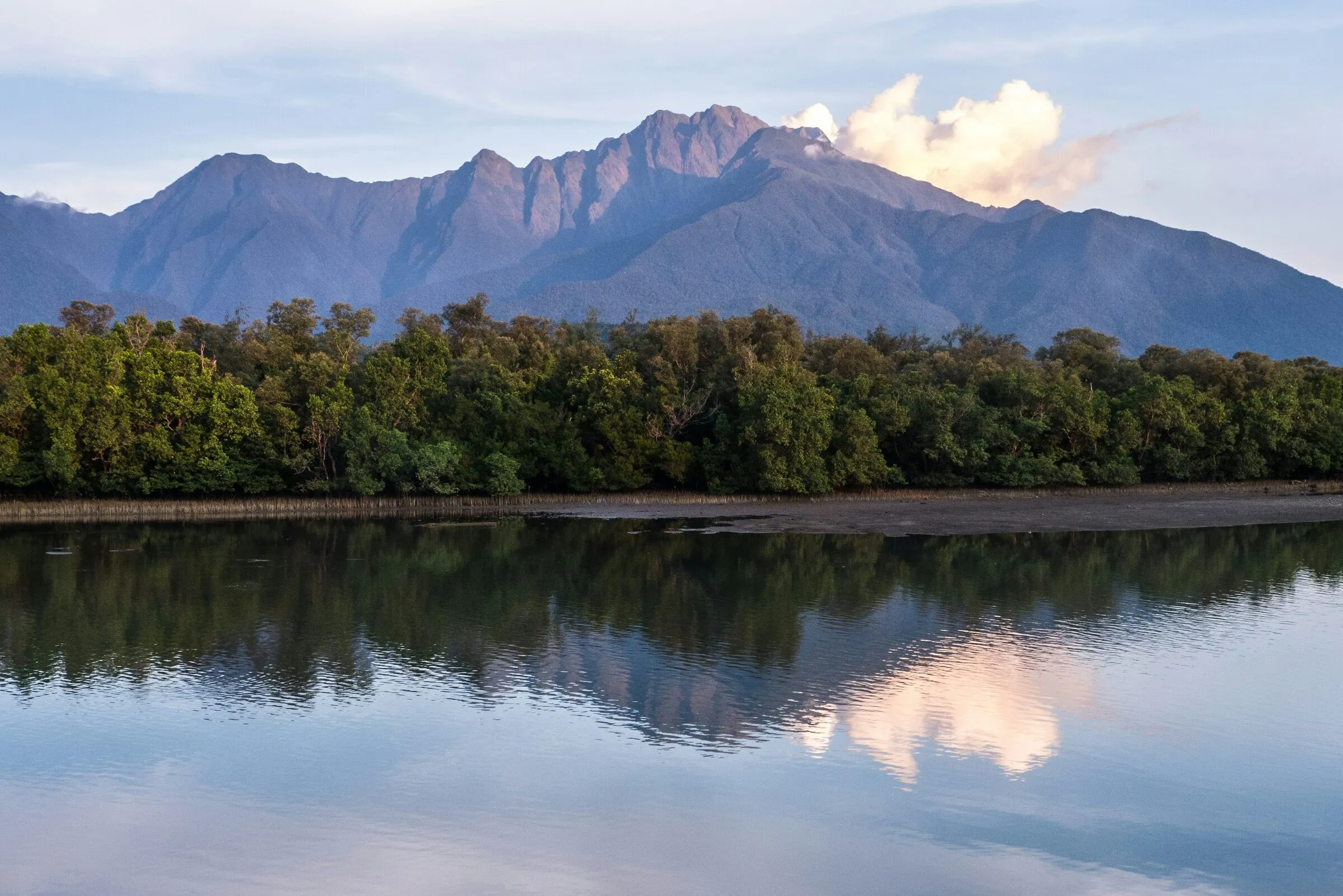
Rising in the middle of the island is Mount Guiting-Guiting, at about 2,058 meters the highest peak in the province. Its name is commonly said to mean “jagged,” and the summit ridge earns it: a line of saw-tooth rock pinnacles.
The mountain and its surrounding forest became Mount Guiting-Guiting Natural Park under Proclamation No. 746 on February 20, 1996, covering roughly 15,265 hectares (later bills cite a slightly larger figure that includes buffer zones). The park runs from mangroves and lowland forest at sea level up to mossy forest and montane grassland.
It is also widely considered one of the hardest climbs in the Philippines. Local hiking guides rate it at the top of their difficulty scales, with exposed knife-edge ridges and scrambling. What you need to know:
- A permit is required, issued through the protected area office (registration has been in Magdiwang)
- A licensed local guide is mandatory; solo climbing is not allowed
- A full climb or traverse typically takes several days
- Fees, rules, and seasonal closures change—confirm with the park office or DENR before you go
Cantingas River
The Cantingas River in San Fernando is often described as the “cleanest inland body of water” in the Philippines. The government recognition dates to around 2007, according to Inquirer reporting, though it is not the only river to have claimed the title. It also feeds the hydropower plant that supplies most of Sibuyan’s electricity—one Inquirer report put it at 90 percent. Locals swim and cliff-jump in its pools.
The Mining Question
Sibuyan’s forests sit on top of nickel, and that has made the island the scene of one of the country’s longest-running mining fights.
- Exploration dates back to the 1970s, and a mining agreement covering about 1,580 hectares in San Fernando was granted in 2009.
- In 2007, Romblon councilor Armin Marin was shot dead during an anti-mining protest.
- In 2023, residents blockaded Altai Philippines Mining Corporation after it began moving ore under a permit for bulk testing of 50,000 metric tons, and there were clashes at the San Fernando port; the DENR issued a notice of violation, and the company paused its activities.
- In July 2026, the San Fernando municipal council endorsed the company’s nickel project, drawing protests and criticism from residents, environmental groups, and church leaders. Weeks later the council voted to recall that endorsement, citing procedural concerns, and the company said it would pursue legal and administrative remedies.
The story is still moving. If you spend time on Sibuyan, you will hear about it, and opinions run deep.
The Sibuyan Mangyan Tagabukid
Sibuyan is also home to the Sibuyan Mangyan Tagabukid, an indigenous people of the island’s uplands. They received a Certificate of Ancestral Domain Title in 2004 and mark the anniversary with their own Indigenous Peoples’ Day celebration in August.
Food
Romblon’s cooking is built on what the islands have plenty of: coconut, seafood, and garden vegetables. Most published descriptions come from travel writers rather than food historians, and recipes differ by town, but these come up again and again:
- Sarsa – large freshwater shrimp mashed with grated coconut and chili, wrapped in leaves and cooked; sold as a snack
- Gayabon – Romblon’s take on laing, taro leaves in coconut milk, made with fresh rather than dried leaves
- Ginataang langka – young jackfruit cooked in coconut milk, often with dried fish
- Suman sa ibus – sticky rice wrapped in coconut leaves, a fiesta staple
- Inasluman – a simple soup of whatever vegetables are growing in the yard
For Expats and Visitors
Getting There
- By sea: Most people arrive by ferry. Overnight boats run from Batangas to Odiongan, Romblon town, San Agustin, and Sibuyan (arriving at Ambulong port in Magdiwang). Other routes connect Lucena to Romblon and Sibuyan, Caticlan (the jumping-off point for Boracay) to Odiongan, and Roxas City in Capiz to Magdiwang and Romblon. Operators include Starlite, Montenegro, 2GO, Kho Shipping, and Starhorse, but routes and days change often—confirm current schedules with the shipping line.
- By air: Romblon Airport is in Alcantara, on Tablas. Cebgo ended its operations there in August 2022, and service since has come and gone. In August 2026, Sunlight Air began twice-weekly flights from Clark. Check the airline before planning around a flight.
- Between islands: Smaller boats link Tablas, Romblon Island, and Sibuyan. Weather decides whether they run.
When to Go
- The dry months, roughly December to May, bring the calmest seas. The Biniray falls in January.
- Typhoons: Romblon sits in the path of storms crossing the central Philippines. Typhoon Nona (Melor) in December 2015 left deaths and long power outages in the province. In June 2008, the ferry MV Princess of the Stars capsized off Sibuyan during Typhoon Frank (Fengshen); most of the more than 800 people aboard died. The Coast Guard suspends sailings when storm signals are raised, and you should never pressure a boat operator to leave in bad weather.
Living There
- Costs: Everyday living is cheap by Manila standards, but anything imported comes by boat and costs more. Sibuyan and the small islands have the most limited shopping.
- Power: The islands run on local grids. Sibuyan’s hydropower is a local success story, but brownouts happen across the province. See our post on rural infrastructure.
- Connectivity: Mobile data is available in the town centers, but coverage thins out quickly in the interior and on smaller islands. Plan for it if you work online.
- Healthcare: There are provincial and district hospitals on the main islands, but specialist care and serious emergencies generally mean a transfer by sea or air to Batangas, Metro Manila, or Panay. Good health insurance matters here more than in a city.
- Safety: Romblon is generally considered a peaceful province, and we are not aware of any current government travel advisories for it. The real risks are the sea, the weather, and—on Guiting-Guiting—the mountain.
Etiquette
- Respect the protected area. Stick to the trails and rules of Mount Guiting-Guiting Natural Park, and treat your guide’s instructions as final.
- Be careful with the mining debate. It divides families and towns. Listen before you offer opinions.
- Treat the Santo Niño with respect. During the Biniray, the image is an object of real devotion, not just a parade float.
- Try the language. Learn a greeting in the local language of the town you are in. People notice.
Summary
Romblon’s traditions and attractions are:
- Built on stone—marble quarried, carved, and sold for generations
- Centered on a Santo Niño image that, by legend, refused to leave
- Divided among three languages, none of them Tagalog
- Rooted, on Sibuyan, in an island forest that has evolved on its own and is still being fought over
Most people pass Romblon on the way to Boracay. Those who get off the boat find a province that has kept a great deal of what other places lost.
Thinking of Moving to the Philippines? Get Reliable Guidance
Online communities are helpful for general questions. For anything important, you still need accurate, professional, and updated information. E636 Expat Services helps foreigners with:
- Residency and long term visas
- Bank account opening
- Health insurance guidance
- Real estate assistance
- Business setup
- Retirement planning
- A smooth and secure transition into life in the Philippines
If you want to move with confidence instead of relying on random comments online, we can guide you every step of the way.
Book a consultation with E636 and start your journey the right way.
Image credits (via Unsplash, free under the Unsplash License):
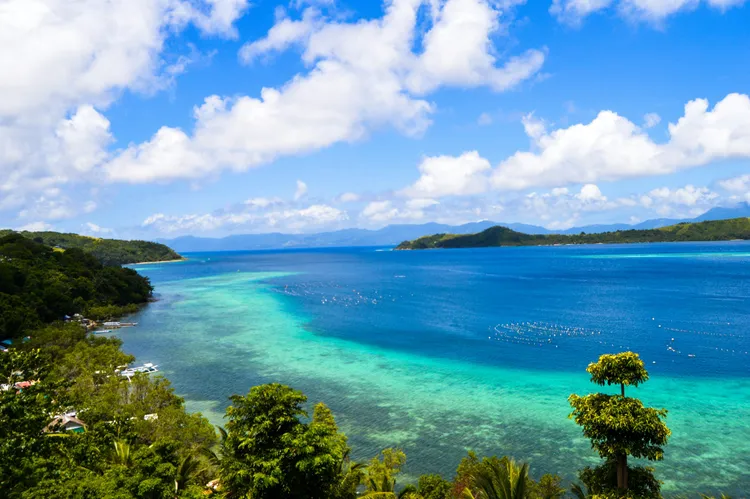
- Top image: “green trees near blue sea under blue sky during daytime” by Cristina Ong
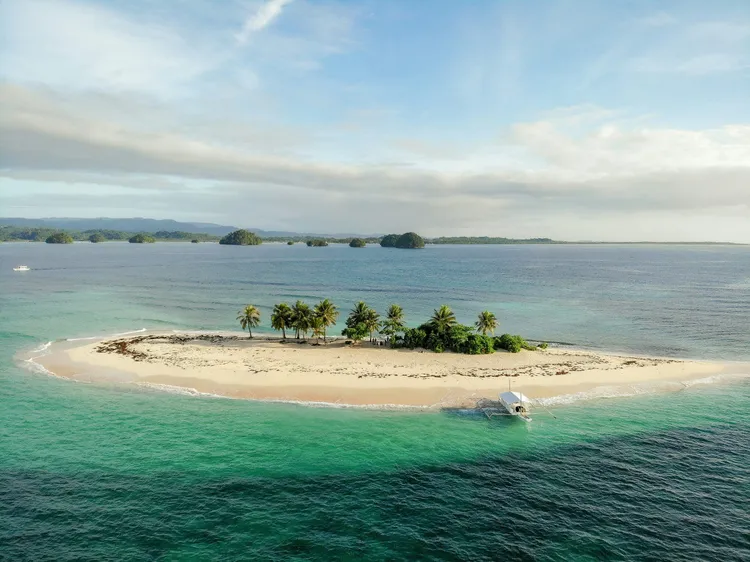
- Mount Guiting-Guiting, in the Sibuyan section: “green trees near lake and mountain under blue sky during daytime” by Emmanuel Maceda