Marinduque: Masks, Crowns, and the Heart of the Archipelago
culture13-05-2026
Marinduque is a small, heart-shaped island province that most Filipinos know for exactly one week of the year. During Holy Week, men in carved wooden masks and Roman armor walk its streets, and the national news crews arrive. The rest of the year, the island goes back to being a quiet, green, mostly rural place that foreign tourists almost never visit.
This post is part of our “Off the Map Philippines Adventures” series, where we look at the regions most visitors skip: their culture, their traditions, their food, and what a foreigner should know before going.
Marinduque at a Glance
Marinduque sits between Tayabas Bay (to the north, facing Quezon) and the Sibuyan Sea (to the south, facing Romblon), with Mindoro to the west. It belongs to the Mimaropa region.
- Capital: Boac
- Municipalities: six—Boac, Buenavista, Gasan, Mogpog, Santa Cruz, and Torrijos
- Barangays: 218
- Land area: roughly 950 square kilometers
- Population: 239,207 in the 2020 census (published figures for the 2024 census are inconsistent between sources, so check the Philippine Statistics Authority if you need a current number)
- Highest point: Mount Malindig, about 1,157 meters, a potentially active stratovolcano on the boundary of Buenavista and Torrijos
Marindukenyos will tell you the island is the geographic center of the Philippines. The claim is usually traced to the Luzon Datum of 1911, a survey reference system. How literally to take it depends on how you measure “center”—but it makes a good line on a welcome sign, and the island’s heart shape makes the “heart of the Philippines” branding hard to resist.
The Language
Marindukenyos speak Tagalog, but not quite the Tagalog you hear in Manila. Linguists describe Marinduque Tagalog as one of the more conservative forms of the language, keeping features that have faded elsewhere, with a distinctive “lilting” sound. Some of its verb affixes also appear in Asi, a Visayan language spoken in nearby Romblon, a reminder that the islands of the Sibuyan Sea have been trading words for a long time. The eastern dialect is considered the most different from standard Tagalog.
If you have learned some Tagalog, you will be understood. You will also be gently corrected. (See our post on Filipino Languages for why one country has so many ways of saying the same thing.)
Moryonan: The Moriones of Holy Week
The tradition that put Marinduque on the map is the Moriones, or as locals usually call it, the Moryonan.
For the week from Holy Monday to Easter Sunday, men known as moryon wear carved, painted masks and costumes modeled on Roman centurions (as local artisans have imagined them for generations), and walk the streets of the island’s towns. The word comes from the Spanish morrión, a type of helmet. The name “Moriones” itself was popularized by the national media in the 1960s.
The Story of Longinus
The whole week retells the story of Longinus, the Roman centurion who, by tradition, pierced the side of Christ on the cross. In the legend, he was blind in one eye, and a drop of blood from the wound restored his sight. He converted, proclaimed the miracle, and was hunted down by his fellow soldiers.
The moryon spend the week “searching” for him. He hides, escapes, and is recaptured, sometimes in chases through the town, until the climax: the pugutan, a reenactment of his beheading.
The schedule varies by town. One Inquirer report listed the pugutan in Santa Cruz on Good Friday, in Boac and Gasan on Black Saturday, and in Mogpog and Torrijos on Easter Sunday, usually at night. Other sources put the main beheading on Easter Sunday. Check with the provincial or municipal tourism office for the current year’s program.
The Masks
The masks are the heart of it. They are traditionally carved from soft local woods such as dapdap and santol, then painted with exaggerated features: furrowed brows, large eyes, wide or grimacing mouths, and often a crest of horsehair on the helmet. Carving and painting a single mask can take days, and many families have made them for generations.
Each mask is personal. Many moryon carve or commission their own, and the costume hides the wearer’s identity completely.
A Vow, Not a Show
To many Marindukenyos, Moryonan is not a “festival” at all—it is a panata, a religious vow. Men take part to give thanks, to ask for healing for a sick relative, or as penance, and many repeat it every year. Walking for days in a heavy wooden mask in the April heat is not a costume party. Local voices have argued for years that the tourism branding misses the point, and you will hear some locals politely insist on calling it Moryonan rather than the “Moriones Festival.”
Around the moryon, the rest of Holy Week carries on:
- Pabasa – the continuous chanting of the passion of Christ, often through the night
- Via Crucis – the Way of the Cross, reenacted through the streets
- Penitents – some men whip their backs or carry wooden crosses as atonement, and flagellants have been reported at the old cemetery in Gasan on Good Friday
- Santo Sepulcro – on Good Friday afternoon, the vigil over the image of the dead Christ, at which older women exchange verses drawn from scripture
Where It Comes From
The usual origin story credits a parish priest in Mogpog, Father Dionisio Santiago, with introducing dramatized Holy Week reenactments in the 19th century. The year is disputed: published sources give 1807, 1857, 1870, and 1887. All agree it started in Mogpog and spread to the other towns.
Putong: Being Crowned on Arrival
If you visit Marinduque as a guest of honor, a returning relative, or simply someone the community wants to welcome, you may be putong-ed.
The putong (also spelled tubong) is a crowning ritual. The person being honored is seated, a crown—traditionally woven from nito vine, or improvised from paper, board, or flowers—is placed on their head, and a group of singers performs a song of welcome, thanksgiving, and prayer for a long and blessed life. It usually ends with a shower of flowers (and sometimes coins) and a shout of “Mabuhay!” (“Long live!”).
The putong was originally for birthdays, for people recovering from serious illness, and for those returning after a long absence. Today it is also used for visiting officials and guests. The lyrics and melody differ from town to town, but the theme is always the same.
How old is it? Nobody can say with certainty. A provincial government account traces the word potong back to a 1609 Spanish chronicle by Antonio de Morga, and notes that José Rizal used the spelling “putong” in 1890.
If it happens to you, the correct response is to sit still, smile, and say thank you. You do not need to sing back.
Kalutang: Music From Two Sticks
The kalutang is a simple percussion instrument: a pair of wooden sticks, cut to different lengths so each produces a different pitch. Played in groups—traditionally bands of ten to twelve—they produce surprisingly complex melodies. Gasan is particularly associated with it.
In 2011, the National Commission for Culture and the Arts (NCCA) cited the kalutang as part of the country’s intangible cultural heritage. You are most likely to hear it during Christmas caroling, fiestas, and the putong itself.
Kangga Festival (Mogpog)
Mogpog is not only the birthplace of the Moryonan. Every May it holds the Kangga Festival in honor of San Isidro Labrador, the patron saint of farmers.
A kangga is a bamboo sled pulled by a carabao (water buffalo). Farmers have long used them to haul crops and tools through the fields. During the festival, barangays parade decorated kangga loaded with their local produce, and there are contests for the most beautiful sled, local cooking, and coconut husking. Sources give May 13 as the date; as with every fiesta (see our post on the Filipino Fiesta), confirm locally.
Food and Crafts
Marinduque’s best-known food souvenir is the uraro (arrowroot) cookie: a dry, crumbly, usually flower-shaped cookie made from arrowroot flour, which melts in the mouth. Several family bakeries make them; one of the best known traces its start to 1946. Cheaper versions elsewhere in the country often substitute tapioca or rice flour, which purists say you can taste.
Other things worth looking for:
- Morion masks – miniature and full-size masks are carved for sale, and are the most authentic souvenir you can bring home
- Handicrafts from Gasan – the town’s name is said to come from gasang-gasang, a local word for corals, and it is known for crafts and woven products
- Butterflies – butterfly farming is a small but real part of the local economy
History You Will Hear About
Two events from the island’s past still come up in conversation.
The Battle of Pulang Lupa. On September 13, 1900, during the Philippine-American War, Filipino forces under Colonel Maximo Abad forced the surrender of a company of the U.S. 29th Infantry at Pulang Lupa (“red earth”) in Torrijos. Accounts put the Filipino force at about 250 men and the American unit at 51 or 54, depending on the source. A monument marks the site, the anniversary is commemorated locally, and it is a point of considerable pride.
The Marcopper mining disaster. On March 24, 1996, a fractured drainage tunnel at the Marcopper Mining Corporation’s Tapian pit released mine tailings into the Boac River. Estimates of the volume vary—commonly cited figures range from 1.6 million cubic meters to around 3 million tons—but the result was the same: flooded villages, a river officials declared unusable, and lost livelihoods. It is often described as the worst industrial pollution disaster in Philippine history, and it shaped national mining policy afterward. The provincial government later sued Placer Dome, Marcopper’s Canadian co-owner. In Marinduque, mining remains a sensitive subject.
Sites Worth Seeing
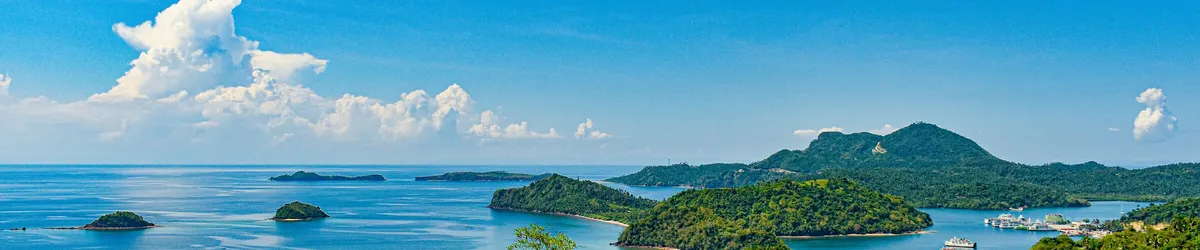
- Balanacan View Deck – a hilltop viewpoint over Balanacan Bay and its small green islands, near the main port in Mogpog
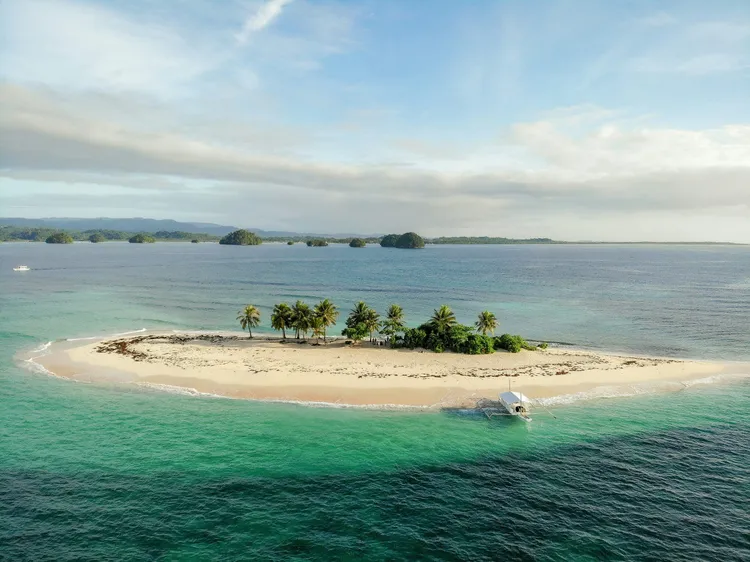
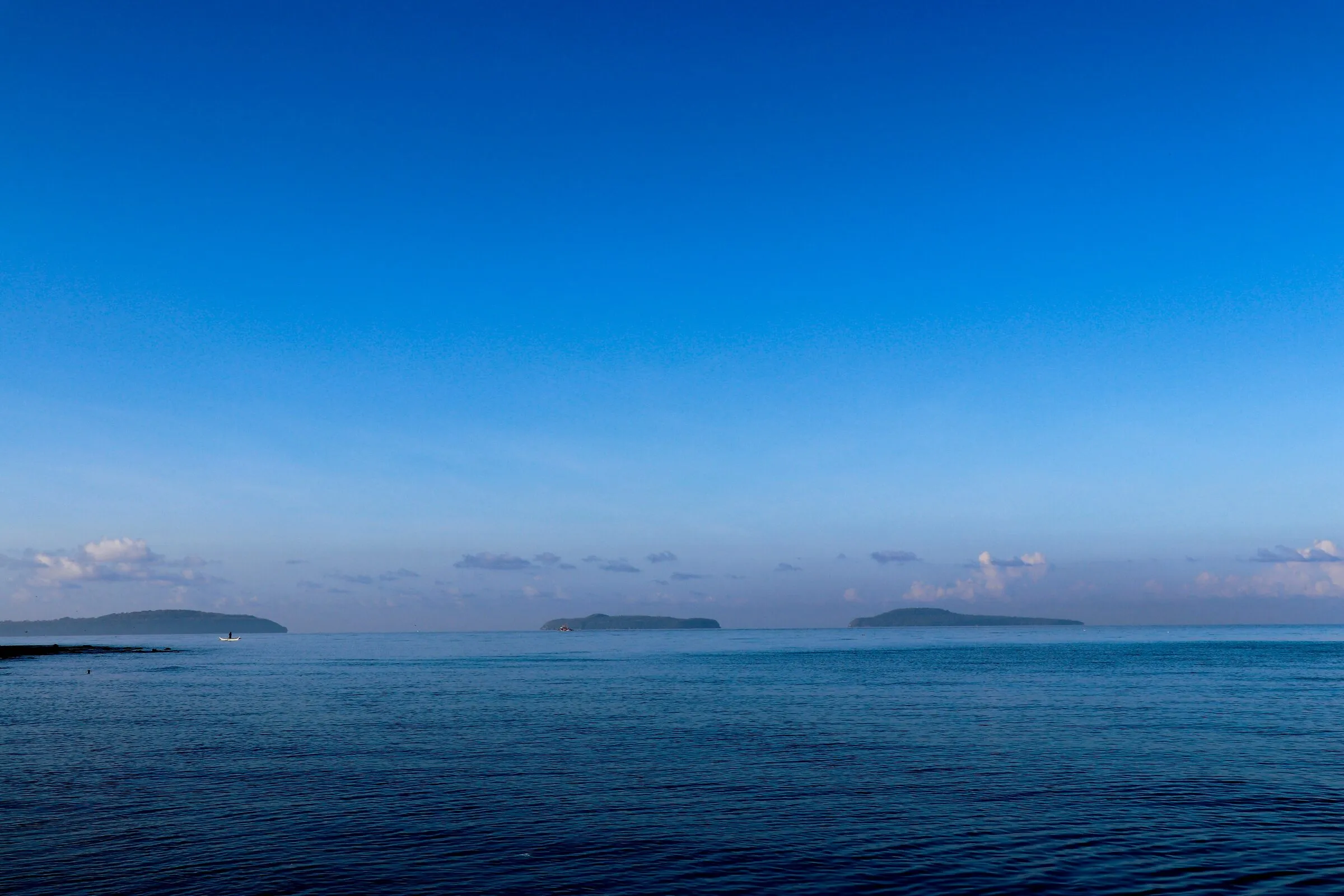
- Tres Reyes Islands – three islets named Gaspar, Melchor, and Baltazar, after the Three Kings, off the coast of Gasan; popular for snorkeling and island-hopping
- Poctoy White Beach – in Torrijos, often called the island’s best-known beach, with a view of Mount Malindig
- Maniwaya Island – off Santa Cruz, reachable by boat (a daily boat between General Luna in Quezon and Santa Cruz stops there), for quiet beaches
- Bathala Caves – a cave system near Barangay Ipil in Santa Cruz, on private property; sources disagree on how many caves there are (seven or eight) and which are open, so ask locally
- Mount Malindig – a climb through forest to the island’s highest point; arrange a local guide
For Expats and Visitors
Getting There
- By sea (the usual way): RoRo (roll-on/roll-off) ferries run from Lucena in Quezon to Balanacan Port in Mogpog. Published crossing times range from about two to three hours, and aggregator sites list fares roughly in the ₱220–₱470 range. There is also service to Santa Cruz. Schedules and terminals (Dalahican or Talao-Talao in Lucena) differ by operator, so confirm directly with the shipping line.
- By air: Marinduque Airport is in Barangay Masiga, Gasan. Cebu Pacific’s regional arm Cebgo began Manila flights in 2019, but service has been interrupted since, and we could not confirm a current scheduled route. Check before you plan around a flight.
- On the island: jeepneys, vans, and the ever-present tricycle (see the Filipino Tricycle). A circumferential road links the six towns.
When to Go
- Holy Week (March or April, depending on Easter) is the peak. Accommodation is limited and fills early, and ferries are crowded. Book well ahead.
- The dry season, roughly December to May, has the calmest seas.
- Typhoons: Marinduque is exposed. Typhoon Nina (Nock-ten) in December 2016 caused damage estimated at about ₱1 billion, and Typhoon Tisoy (Kammuri) in 2019 also led to a state of calamity. Ferries are suspended whenever storm signals are raised, so build slack into any travel plans between June and December.
Living There
- Costs: Day-to-day costs are provincial—lower than Manila or Batangas for food, rent, and transport—but imported goods cost more, because everything comes over by boat.
- Connectivity: Mobile data works in and around the towns; it gets patchier in the interior and on the small islands. See our post on internet in the Philippines.
- Healthcare: The main public hospital is the Dr. Damian Reyes Provincial Hospital in Boac, supported by district and municipal hospitals elsewhere on the island. For specialist care or serious emergencies, expect a transfer to Lucena or Metro Manila. Read our overview of Philippine healthcare before you commit.
- Safety: Marinduque is generally regarded as a peaceful province, and we are not aware of any current government travel advisories for it. Mount Malindig is classified as potentially active; check Phivolcs bulletins if you plan to hike it.
Etiquette
- Treat Holy Week as religious, not entertainment. Ask before photographing penitents up close, keep your distance from processions, and dress modestly at church.
- Do not mock the masks. They can look comic to outsiders. To the man wearing one, they are part of a vow.
- Accept a putong graciously. It is an honor, not a performance for you to judge.
- Be careful with mining talk. Marcopper is still a raw subject for families along the Boac River.
Summary
Marinduque’s traditions are:
- Deeply Catholic, built around Holy Week, patron saints, and personal vows
- Older than they look—the putong’s name appears in a Spanish chronicle from 1609
- Handmade, from carved dapdap masks to kalutang sticks to arrowroot cookies
- Shaped by hard history, including a war-time victory and an environmental disaster
Most visitors come for the moryon and leave on Easter Monday. The island is worth more than one week.
Thinking of Moving to the Philippines? Get Reliable Guidance
Online communities are helpful for general questions. For anything important, you still need accurate, professional, and updated information. E636 Expat Services helps foreigners with:
- Residency and long term visas
- Bank account opening
- Health insurance guidance
- Real estate assistance
- Business setup
- Retirement planning
- A smooth and secure transition into life in the Philippines
If you want to move with confidence instead of relying on random comments online, we can guide you every step of the way.
Book a consultation with E636 and start your journey the right way.
Image credits (via Unsplash, free under the Unsplash License):
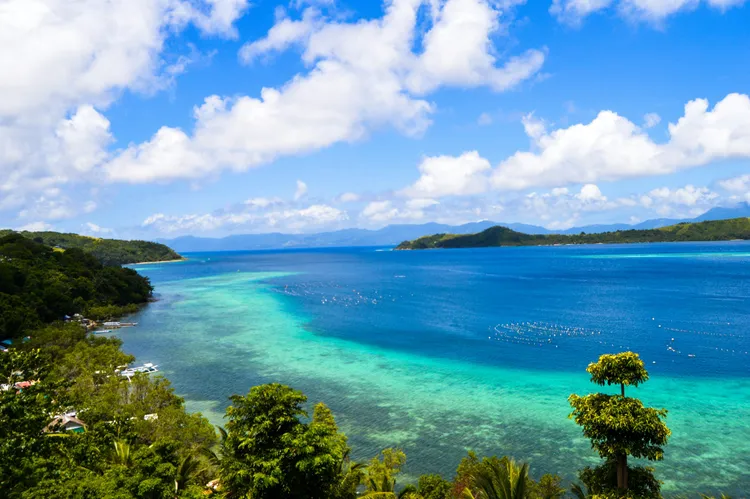
- Top image: “a scenic view of the ocean from a hill” by Sian Labay
- Islands off the coast, in “Sites Worth Seeing”: “a large body of water with two small islands in the distance” by Elton Cabrito