Batanes: Stone Houses, Vakul, and the Edge of the Philippines
culture29-04-2026

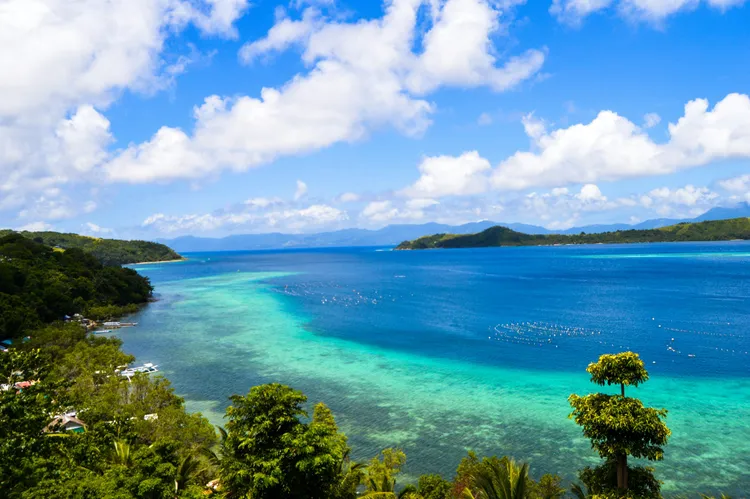
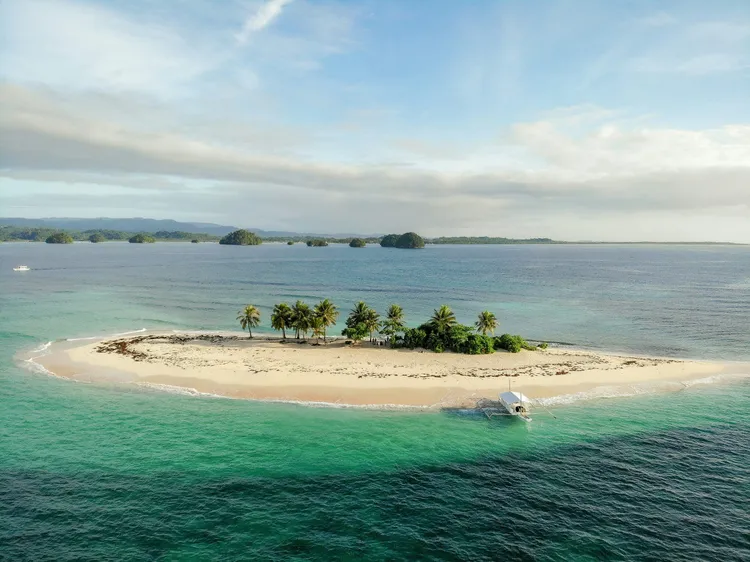
Batanes is the northernmost province in the Philippines, and the smallest in both land area and population. It sits closer to Taiwan than to Manila, it is reachable in practice only by plane, and it has a culture that looks and sounds unlike anything most foreigners have seen elsewhere in the country.
This post is part of our “Off the Map Philippines Adventures” series on regions most tourists skip: their culture, food, crafts, and sites, plus the practical details for expats thinking of going.
Batanes at a Glance
- Islands: Ten islands, of which only three are inhabited: Batan, Sabtang, and Itbayat
- Capital: Basco, on Batan Island
- Municipalities: Six (Basco, Mahatao, Ivana, Uyugan, Sabtang, and Itbayat), with 29 barangays between them
- Population: 18,937 at the 2024 census, up from 18,831 in 2020
- Region: Cagayan Valley (Region II)
The people are the Ivatan, an Austronesian group. Genetic research suggests Batanes was used as a stepping stone during the Austronesian expansion out of Taiwan, and the Ivatan traded and intermarried for centuries with the Tao people of Orchid Island (Lanyu), off Taiwan’s southeast coast. Basco’s 2026 foundation-day program included a reenactment of Tao people arriving by traditional boat.
Spain formally annexed the islands in 1783 under Governor-General José Basco y Vargas, which is where the capital gets its name. Batanes Day, June 26, marks that founding and is a special non-working holiday in the province.
The Language
The main language is Ivatan (in the language itself, Chirin nu Ibatan). On Itbayat, people speak Itbayaten, sometimes treated as a dialect of Ivatan and sometimes as a separate language. Tagalog and English are widely understood; Ilocano, the dominant language of the rest of northern Luzon, is much less so.
If you learn one phrase, make it “Dios mamajes” (roughly dee-yos ma-ma-huhs), the standard way to say thank you. Sources translate it loosely as “God reward you” or “God bless you,” and the spelling varies. (Our post on Filipino Languages explains why a two-hour flight can put you in a completely different language zone.)
Stone Houses Built for the Wind
The image most people associate with Batanes is the traditional Ivatan house: thick stone walls, small windows, and a heavy roof of cogon grass.
Before the Spanish arrived, Ivatan houses were built of wood and cogon. The Spanish introduced large-scale lime production, and the Ivatan began building with limestone and coral held together with lime mortar. Walls are often described as up to a meter thick, and the thatched roofs are dense enough to shed rain and insulate against heat.
There are two main forms you will hear about:
- Sinadumparan – the classic stone-and-lime house with a steep cogon roof
- Maytuab – a variant with a thick, tapering thatch roof
The difference is mainly the shape of the roof, and sources describe it inconsistently, so do not be surprised if two guides label the same house differently.
UNESCO has had “Batanes Protected Landscapes and Seascapes” on its World Heritage Tentative List since 1993—the oldest Philippine entry on that list. UNESCO’s description notes that Batanes is the only area in the Philippines where traditional architecture is of stone. A full nomination was deferred in 2005, and the bid has been complicated since: owners have converted old houses to concrete hollow-block construction, and earthquakes have damaged both houses and churches.
Where to See Them
- Chavayan, Sabtang – the best-known intact stone-house village, with one of the last cogon-roofed churches in the province
- Savidug, Sabtang – another village of stone houses, usually visited on the same day trip
- Ivana and Mahatao, Batan – scattered old houses, plus the San Jose de Ivana Church and the Mahatao church
These are people’s homes, not open-air museums. Ask before photographing residents or stepping into a yard.
Vakul and Kanayi: Clothing as Weather Gear
The other icon of Batanes is the vakul, a headgear worn by women and woven from the shredded leaves of the voyavoy palm (also spelled vuyavuy). It covers the head and drapes down the back, protecting the wearer from sun and rain while working in the fields. The men’s counterpart is the kanayi, a vest made from the same palm. Some sources also mention the talugong, a men’s hat.
The tradition is under pressure. Fewer people are weaving, and the voyavoy palm itself is listed as endangered by the IUCN because of habitat loss. Buying a vakul or other voyavoy product directly from a local maker is one of the more useful things a visitor can do.
Mataw: Fishing as Ritual
On the east coast of Batan Island, a small group of fishermen called the mataw carry on one of the most distinctive fishing traditions in the Philippines.
The method works in two steps. First the fishermen catch flying fish (dibang). Then they use the flying fish as live bait to catch dorado, also known as mahi-mahi or dolphinfish (arayu). The main season runs from roughly March to May, when both species pass through Batanes waters.
The season opens with a ritual called Kapayvanuvanuwa (also spelled Kapayvanuvanua), usually held in March. Fishermen gather on the shore, make offerings, and conduct a sacrifice to the anitu—the spirits—to secure safe passage and a good catch for the season. Anthropologists describe it as an exchange: the right to fish is earned through the offering. The Department of Foreign Affairs has highlighted it as a proposed nomination for UNESCO’s intangible cultural heritage list.
The season comes with prescribed rules and taboos that vary between communities. This is a working tradition, not a tour—but in season, dorado will be on every menu.

Festivals
Batanes festivals are small and community-focused. A few to know about:
- Batanes Day (June 26) – The province’s foundation day, with a thanksgiving Mass at the cathedral in Basco, a cultural parade, and associated events. The festival name attached to it has changed in recent years: it was the Pahuyuan Festival in 2022 (pahuyuan is the Ivatan term for bayanihan, or communal work) and the Vunung Festival in 2023 and 2026.
- Vakul-Kanayi Festival (Sabtang, late April) – First held in 2016 over April 25–27, coinciding with the feast of Sabtang’s patron saint, San Vicente. Expect indigenous games, cultural shows, a fluvial parade, and street dancing, with everyone in vakul and kanayi.
- Kapayvanuvanuwa (Mahatao, around March) – The mataw season-opening ritual described above.
- Town fiestas – Each of the six municipalities has its own patron saint and fiesta. See our post on the Filipino Fiesta for how these work.
Dates and festival names change from year to year. Check with the Batanes provincial tourism office or the municipal government before planning a trip around any of them.
Food
Batanes could be cut off by weather for weeks at a time, so much of Ivatan cuisine is about preserving things.
- Luñis (or lunis) – Ivatan “adobo,” made from pork cured in salt and cooked down until dry and crisp, then stored in its own fat. It was developed to keep meat for months without refrigeration.
- Uvod (also uved) – The pith of the banana stalk, cooked with meat or fish. It is traditionally served with palek at weddings and other festive occasions.
- Vunes – Dried young taro (gabi) stalks, cooked with fish, pork, or other meat.
- Palek – A native wine made from sugarcane.
- Flying fish and dorado – Fresh in season, dried the rest of the year.
- Root crops – Yam and taro are staples because they survive both typhoons and drought.
You will also see coconut crab on some menus. Conservation groups and local officials have raised concerns that tourist demand is a major reason the crabs are hunted, and the species is under pressure. Our suggestion: order the luñis instead.
Sites Worth Seeing
Batanes is mostly about landscape. A short list:
- Racuh a Payaman (Mahatao) – A communal pastureland of rolling hills above the sea where cattle and carabao graze freely. Tourists call it “Marlboro Country,” after a cigarette advertisement. The Ivatan name means roughly “vast pastureland.”
- Mount Iraya – The dormant volcano that dominates Basco. Commonly cited at just over 1,000 meters, though published figures vary.
- Lighthouses – Several lighthouses dot the coast of Batan, including the one on Naidi Hills above Basco and the Tayid lighthouse in Mahatao.
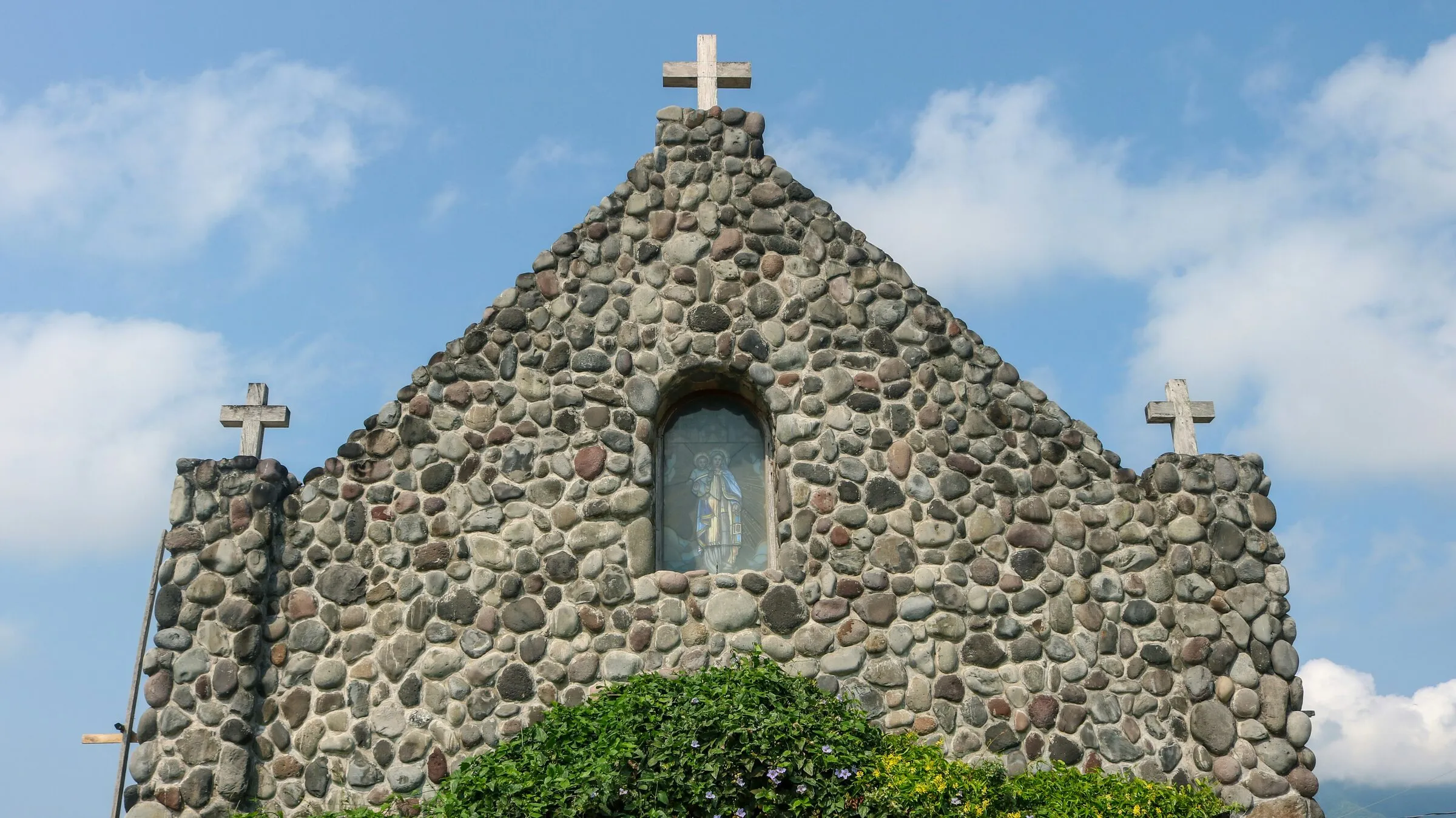
- Tukon Chapel (Basco) – The Our Lady of Mount Carmel Chapel on the hill at Tukon, opened in 2008 and built in the style of a traditional stone house.
- Honesty Coffee Shop (Ivana) – A small, unstaffed shop opened in 1995 by Elena Castaño-Gabilo near the Ivana port. You take what you want, write it in the logbook, and leave payment in the box. Its sign: “This store is too small for dishonest people.”
- Sabtang – Chavayan and Savidug villages, the Morong Beach rock arch, and coastal viewpoints. Usually a day trip by boat from Ivana.
- Itbayat – The largest island, raised high above the sea on limestone cliffs, with few visitors and real logistical challenges.
For Expats and Visitors
Getting There
- By air: Basco Airport is the main gateway. Philippine Airlines flies from Manila, and there has also been service from Clark and from Tuguegarao (Sky Pasada, as of 2024). Manila to Basco takes roughly 1.5 to 2 hours. Seats sell out during holidays and summer.
- Between islands: Boats locally called falowa (or faluwa) run from Ivana Port on Batan to Sabtang, a crossing of roughly 30–40 minutes. The trip to Itbayat is several hours by boat in good conditions, and there are small-plane flights from Basco. All of it depends on the weather.
- By sea from Luzon: Small boats do run between Aparri and Batanes, but there is no published passenger schedule a visitor should count on. Plan to fly.
Weather and Typhoons
Batanes has a reputation as typhoon country. Typhoon Meranti (Ferdie) made landfall on Itbayat in September 2016, and storms regularly cut off flights and boats. Some sources call the idea that Batanes is hit constantly a misconception; the more accurate point is that when storms do come, the islands are exposed and cut off.
- Best months: Roughly March to May, when the seas are calmer and the weather is drier. April is typically the driest month.
- Typhoon season: Roughly June to November, with August typically the wettest month.
- Winter: From December to February the northeast monsoon makes the seas rough and the air noticeably cooler.
When flights are cancelled you may be stuck for days. Carry extra cash and medication, and avoid tight onward connections.
Earthquakes are the other hazard. In July 2019 a series of quakes struck Itbayat—the strongest reported at magnitude 5.9 to 6.0 (early reports said 6.4)—killing nine people and damaging stone houses and the town church.
Costs and Money
- Batanes is one of the more expensive provinces to visit, mainly because of airfare and the cost of shipping goods in.
- Bring enough cash. ATMs are few, concentrated in Basco, and can go offline, and many small businesses take cash only.
- Batanes is not connected to the Luzon grid, and power supply can be affected by fuel costs and weather (see our post on the Philippine energy crisis).
Connectivity
Smart brought LTE to Batanes in 2019, and both Smart and Globe announced upgrades in 2025. The DICT’s free Wi-Fi program had reached 95 public locations by mid-2025. Expect usable data in Basco and the main towns, weaker signal in hilly areas and on Itbayat, and outages after storms.
Healthcare
The Batanes General Hospital in Basco is the main referral hospital for the province. Smaller facilities serve Itbayat and the other towns. Seriously ill or injured patients are often transferred to Tuguegarao or Manila by air, which depends on the weather. Bring a full supply of any prescription medicine and make sure your insurance covers medical evacuation.
Respectful Etiquette
- Respect the honesty culture. Batanes has a reputation for low crime and for leaving things unlocked. Do not be the reason that changes.
- Ask before photographing people and homes, especially in Chavayan and Savidug.
- Do not take stones, coral, or shells from beaches or old structures. The stone houses are literally built from them.
- Leave no trash. Batanes banned single-use plastics in 2021. Bring a reusable bottle and bag.
- Remember that pastures and fishing grounds are workplaces. Racuh a Payaman is a working pasture; close gates and keep your distance from livestock.
Summary
Batanes is:
- The northernmost and smallest province in the Philippines, with fewer than 20,000 people
- Home to the Ivatan, whose stone houses, vakul, and mataw fishing traditions are found nowhere else in the country
- A landscape of cliffs, pastures, and lighthouses, on UNESCO’s Tentative List since 1993
- Isolated, expensive, and weather-dependent—and better for it
Batanes is not a place you visit on a whim. You plan around flights, weather, and cash. In return, you get a corner of the Philippines that has held on to its culture precisely because it is so hard to get to.
Thinking of Moving to the Philippines? Get Reliable Guidance
Online communities are helpful for general questions. For anything important, you still need accurate, professional, and updated information. E636 Expat Services helps foreigners with:
- Residency and long term visas
- Bank account opening
- Health insurance guidance
- Real estate assistance
- Business setup
- Retirement planning
- A smooth and secure transition into life in the Philippines
If you want to move with confidence instead of relying on random comments online, we can guide you every step of the way.
Book a consultation with E636 and start your journey the right way.
Image credits (via Unsplash, free under the Unsplash License):
- Top image: “gray concrete pathway near green grass and body of water during daytime” by Lavinia Harris
- Mahatao coast photo: “aerial photography of cliff” by JC Gellidon
- Tukon Chapel photo: “gray stone chapel” by Yvonne Assen