Traditions Unique to Samar Island: Kuratsa, Scarecrows, Banig, and the Sea
culture22-04-2026
Samar is the third-largest island in the Philippines, and one of the least visited by foreigners. Tourists pass through on their way somewhere else, if they pass through at all. That is a shame, because Samar has held on to traditions that you will not find in Cebu, Manila, or Boracay—some of them older than the Spanish, and some of them still argued about on the evening news.
This post covers the customs and celebrations that are distinctly Samareño: what they are, where they come from, and what a foreigner living here should know about them.
Samar at a Glance
Samar Island is divided into three provinces:
- Samar (sometimes called Western Samar), with its capital in Catbalogan
- Northern Samar, with its capital in Catarman
- Eastern Samar, with its capital in Borongan
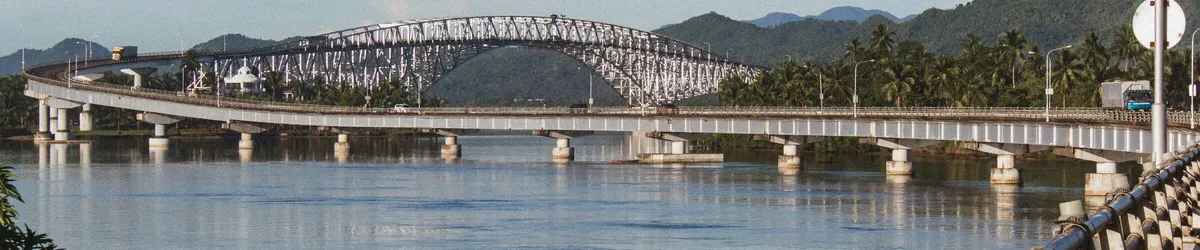
The island is connected to Leyte by the San Juanico Bridge, and the two islands together form the heartland of the Waray people. Many traditions are shared across both islands, but Samar has its own flavor—and Samareños will be quick to tell you which version is the original.
The language is Waray-Waray (usually just “Waray”). Each province on Samar has its own variant, with differences in vocabulary, tone, and accent that locals can identify immediately. If you have been learning Tagalog or Cebuano, expect to start over. (See our post on Filipino Languages for why this happens so often in the Philippines.)
Samar is also typhoon country. The island faces the open Pacific, and when Typhoon Yolanda (Haiyan) made its first landfall in November 2013, it was at Guiuan, Eastern Samar. Many of the traditions below survived that storm—and some, like banig weaving, were deliberately rebuilt afterward as a way for communities to recover.
Kuratsa: The Dance Where Money Falls From the Sky
If there is one tradition that defines the Waray, it is the kuratsa.
The kuratsa is a courtship dance. A man and a woman dance around each other—he pursues, she evades, both show off. The Samar style is generally described as livelier and more playful than the more formal Leyte style; male dancers sometimes imitate a rooster circling a hen.
What makes it unforgettable for foreigners is the money.
How the Money Works
While the couple dances, the people around them shower them with cash. There are words for this:
- Gala – the money offered to the dancers
- Abwag – the money tossed into the air over the dancers, by the dancers themselves or by the people offering it
At weddings, the kuratsa is part of a ritual called the bakayaw. The bride and groom dance first, followed by the ninong and ninang (the principal sponsors), and guests are expected to throw money at the dancing couple. The more money that falls, the more blessings the couple is supposed to receive. In practical terms, it is the community helping a new household get started—and the family publicly welcoming the new spouse into the clan.
You will also see kuratsa at birthdays, baptisms, fiestas, and even political events.
Where It Comes From
The origin is disputed. Some sources say it was inspired by the Mexican “La Cucaracha” during the Spanish galleon era. Many Samareños reject that entirely and trace the dance’s movements to older, pre-colonial ritual—particularly the sarakiki, the courtship and fighting display of a rooster (more on that below).
Why It Makes the News
The kuratsa regularly becomes a national controversy. In 2025, video of a Samar governor being showered with large amounts of cash during a fiesta kuratsa went viral; the provincial government responded that it was a cultural tradition and that the money went to charity. Critics outside the region see it as an excessive display of wealth.
Economic pressure also shows up here. In April 2026, a town in Northern Samar banned the kuratsa and other fiesta extras because of the energy crisis (see our post on the Philippine energy crisis). When fuel and electricity prices spike, throwing money in the air becomes harder to justify.
Hadang Festival (Calbayog City)
Calbayog’s city festival is held every year from September 1–8, culminating in the city fiesta on September 8.
For years it was branded the “Sarakiki-Hadang Festival.” Sarakiki is the Waray word for the series of moves a rooster makes when courting a hen or challenging another rooster. Hadang refers to a ritual dance in which the old people of Calbayog sought favor from the spirits—for a good harvest, to cure the sick, or to drive away evil—by offering a live rooster.
In 2025, the city formally adopted Hadang Festival as the official name, dropping the hyphenated version after residents and cultural advocates argued it blurred two distinct traditions together. The Hadang contingent has also won the Tandaya Festival of Festivals—Samar’s province-wide festival competition—more than once.
Pahoy-Pahoy Festival (Calbiga)
The Philippines has more than one scarecrow festival, but Calbiga’s is the one rooted in a local legend.
As the story goes, waves of maya birds once descended on Calbiga’s rice fields and threatened the town with famine. The farmers built pahoy—scarecrows—to drive them off, and the harvest was saved.
Every May, Calbiga gives thanks for the harvest with:
- Giant scarecrows made from native materials paraded through the streets
- Street dancing
- Bands playing instruments made from bamboo, tin cans, and stones
Published dates vary—some sources list the last week of May, others the whole month—so check with the municipal tourism office before you plan a trip.
Manaragat Festival (Catbalogan City)
Manaragat is the Waray word for fisherfolk, and Catbalogan’s August festival honors them along with the city’s patron saint, St. Bartholomew. Locals credit the saint with keeping Maqueda Bay rich enough to remain one of the province’s major fishing grounds.
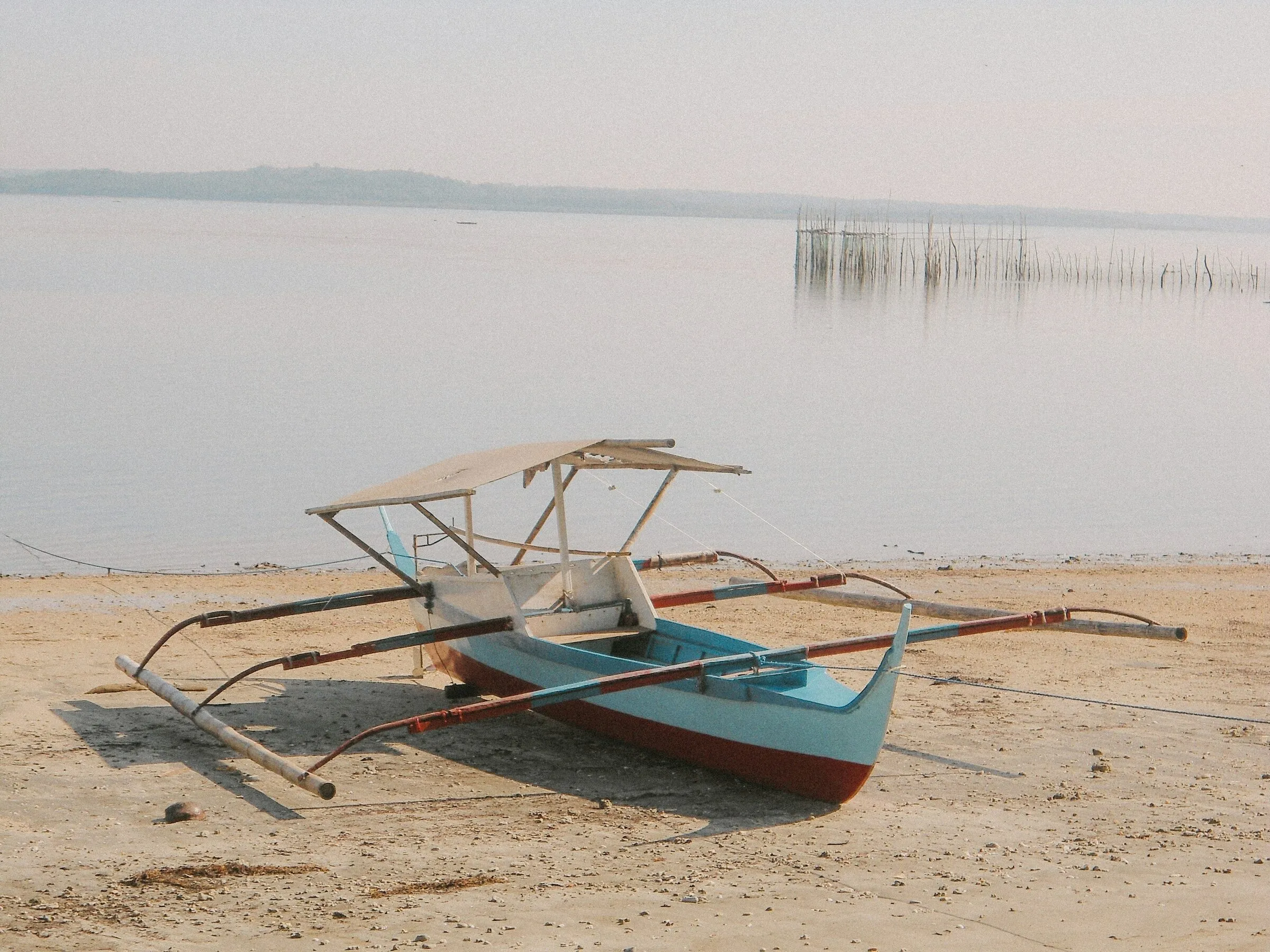
The festival took its current form in 2007. Its centerpiece is a street dance that tells the story of the city’s fishing heritage, from before the Spanish arrived to the present. Around it:
- A thanksgiving Mass
- Pageants (Mister, Miss, and Queen Manaragat)
- Sports, talent contests, and cultural presentations
- The festival showdown and parade
The main fiesta day is August 24, but events run most of the month.
Like the kuratsa, Manaragat has been hit by hard times. It was canceled in 2020 because of COVID-19, and in July 2026 a continuing water crisis forced Catbalogan to scale it down again.
Padul-Ong Festival (Borongan City)
Borongan’s festival on September 7–8 honors the city’s patroness, Our Lady of the Nativity, and it happens largely on the water.
Padul-ong comes from the Waray for “to deliver” or “to transport.” The festival reenacts the arrival of the image of the Virgin Mary in Borongan: the image is carried from Barangay Punta Maria by fluvial procession across the bay to the city port, then in procession to the cathedral on September 7. The fiesta itself is September 8.
Local legend says the image was brought mysteriously from Portugal. Historians disagree about how much of that story is literal and how much accumulated over the centuries, but nobody in Borongan is waiting for a ruling.
The weather does not always cooperate. In 2021, when a typhoon made landfall in Eastern Samar on September 7, the image was moved to the cathedral by vehicle convoy instead of by sea.
Banig Weaving in Basey
Basey, in southern Samar, is widely called the banig capital of the Philippines, and there is a bill in the Senate to make that title official.
A banig is a woven sleeping mat. In Basey it is made from tikog, a reed that grows in swampy ground near the rice fields. The work is done almost entirely by women: harvesting, drying, dyeing, weaving, and selling. A single large mat can take a full day of work, and weavers often put in ten hours or more.
The tradition predates Spanish arrival, and some women in the area have long done their weaving inside caves, using traditional methods.
After Typhoon Yolanda, the weavers organized. The Basey Association for Native Industry Growth—which, appropriately, abbreviates to BANIG—was formed in 2014 to help weaving communities rebuild and market their work, and the association has worked with the Department of Education on a tikog weaving curriculum for senior high school students.
If you want a gift from Samar that actually comes from Samar, a Basey banig is it.
Tuba: Not Just a Drink
Across the Waray region, tuba—coconut wine tapped from the palm—is part of daily and ceremonial life. As one Waray writer put it, tuba is not just a drink here; it is the culture.
A few terms worth knowing:
- Tuba – fresh coconut toddy, mildly alcoholic and sweet
- Bahal – tuba that has been fermented longer, often for months
- Bahalina – aged tuba, darker and stronger
Every October, the region holds Oktubafest to celebrate tuba and the coconut industry that produces it. You will be offered tuba at fiestas and gatherings. It is polite to accept a little, and wise to know that it sneaks up on you.
Samar’s “Secret Kitchens”
Samar’s food traditions were, for a long time, literally family secrets. In Catbalogan, households guarded their recipes and passed them down rather than sharing them. A provincial initiative called the Secret Kitchens of Samar has been working to bring these dishes into the open. Some worth looking for:
- Roskas – a ring-shaped, lightly sweet, crunchy bread from Catbalogan, and the classic pasalubong (take-home gift)
- Bola Catalana – Catbalogan’s version of embutido, a meatloaf wrapped in caul fat and baked in a wood-fired oven
- Tamalos – Samar’s take on the tamale: pork belly in peanut sauce, wrapped with rice in banana leaves and steamed for hours
- Binagol – a sweet made from talyan (a relative of taro), glutinous rice, and coconut milk, served in a coconut shell; Calbiga’s version has its fans
- Tinola – chicken soup is everywhere in the Philippines, but Calbiga’s has a reputation of its own
Samar Island Natural Park
Most of Samar’s interior—and much of the upland running toward the island’s eastern side—is protected as Samar Island Natural Park (SINP), spread across all three provinces. It is the largest contiguous tract of old-growth forest left in the Philippines. Published figures for its size differ (from roughly 333,000 to more than 450,000 hectares, depending on whether buffer zones are counted), but by any measure it is enormous, and it has been placed on UNESCO’s tentative list for World Heritage status.
The forest is mostly lowland dipterocarp, shading into mossy forest on the higher ridges, and it is known habitat for the Philippine eagle. For visitors, the park is less a single destination than a collection of them:
- Ulot River – the longest river on Samar (sources put it anywhere from 90 to more than 100 km). In Paranas, local operators run “torpedo boat” rides through its gorges and rapids; before the national highway was built, the river was the main route into the interior.
- Sohoton Caves and Natural Bridge Park – near Basey: caves, underground rivers, waterfalls, limestone formations, and a natural stone bridge. It was first set aside as a national park in 1935.
- Calbiga Cave – often described as the largest cave system in the Philippines.
- Waterfalls – including Lulugayan Falls in Calbiga and Amandaraga Falls.
Practical notes:
- Most sites are reached with local guides, usually arranged through the municipal tourism office. For caves and river trips, they are not optional.
- Access depends on the weather. River levels rise fast after rain, and trips are cancelled when they do.
- Facilities are basic. Bring water, cash, and something waterproof for your phone.
The park is one of the reasons Samar’s traditions are so tied to the land: the same forests and rivers that draw visitors are still where many families farm, fish, and gather.
What This Means for Expats
If you live on Samar, or are thinking about it, these traditions are not just tourist attractions. They are your neighbors’ social calendar.
A few practical points:
- Expect to be invited. Town and barangay fiestas run on a fixed schedule (see our post on the Filipino Fiesta). Being invited is a sign of acceptance; showing up matters more than what you bring.
- Bring small bills to weddings. If there is a bakayaw, guests are expected to participate in the kuratsa money shower. Nobody expects a foreigner to throw thousands of pesos—but standing aside with your hands in your pockets is noticed.
- You may be pulled onto the floor. Foreigners are sometimes invited to dance the kuratsa. Go along with it. Enthusiasm counts far more than technique, and it will be talked about (fondly) for weeks.
- Learn some Waray. Even a few words—“salamat” (thank you), “maupay nga aga” (good morning)—go a long way, especially in the rural barangays where Tagalog is a second language and English is a third.
- Treat tuba with respect. It is offered as hospitality. Accept a small amount; you are not obligated to keep up with the locals.
- Check dates locally. Festival schedules shift with typhoons, budgets, and—lately—fuel and water shortages. The municipal tourism office or the town’s Facebook page is more reliable than any website.
Summary
Samar’s traditions are:
- Rooted in pre-colonial ritual, layered with Spanish Catholicism
- Tied closely to the land and the sea—rice fields, fishing grounds, reeds, and coconut palms
- Communal, generous, and occasionally controversial
- Resilient enough to survive typhoons, pandemics, and energy crises
Samar does not perform its culture for tourists the way the bigger festivals in Cebu or Iloilo do. It mostly performs it for itself. If you are invited in, take the invitation.
Thinking of Moving to the Philippines? Get Reliable Guidance
Online communities are helpful for general questions. For anything important, you still need accurate, professional, and updated information. E636 Expat Services helps foreigners with:
- Residency and long term visas
- Bank account opening
- Health insurance guidance
- Real estate assistance
- Business setup
- Retirement planning
- A smooth and secure transition into life in the Philippines
If you want to move with confidence instead of relying on random comments online, we can guide you every step of the way.
Book a consultation with E636 and start your journey the right way.
Image credits (via Unsplash, free under the Unsplash License):
- Top image: “white and red boat on sea near bridge during daytime” by Lance Lozano — https://unsplash.com/photos/white-and-red-boat-on-sea-near-bridge-during-daytime-E3camfkI3AI
- Manaragat section: “pink and white boat on shore during daytime” by Ken Borja — https://unsplash.com/photos/pink-and-white-boat-on-shore-during-daytime-vAdLFoM7cr8