Our latest Technical Glitches
electrical 01-03-2026
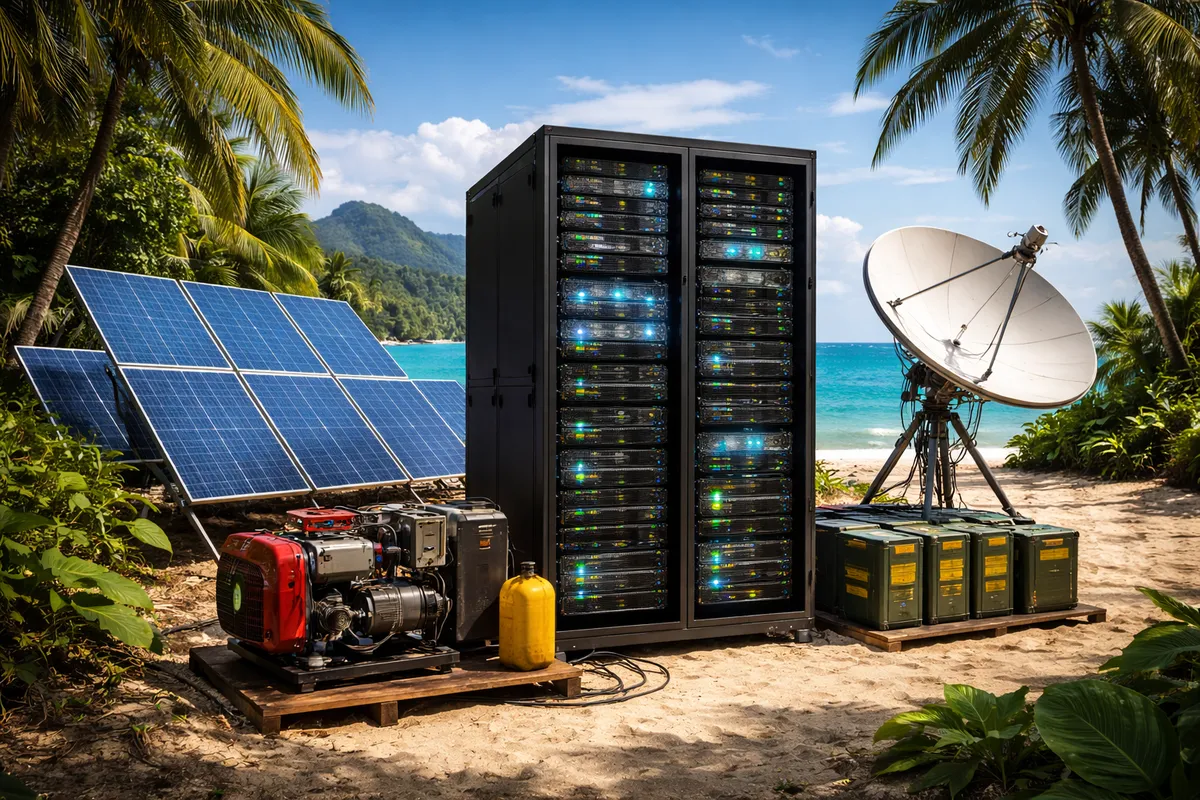
I’ve recently had to work my way through a couple of technical glitches in my power systems.
First, after the new negative pressure tank was installed in our home water system last year, we started having a periodic issue where the power would go out for anywhere from 10 seconds to a minute or so while people were taking a shower. Note, that taking a shower more-or-less implies that the hot water heater for that bathroom is running—each bathroom has a dedicated hot water heater. That is common in Southeast Asia. When I lived in Singapore, the condo we rented had the same setup for hot water. Though, it took us a couple of days to figure out that the light switch that didn’t seem to do anything was in fact for the bathroom’s hot water heater when we first got there (again, SG).
I checked to make sure the breaker wasn’t flipping. It wasn’t.
There was also the odd bit of behavior wherein the automatic transfer switch didn’t kick in and flip the house over to the ecoflow batteries.
Maybe, one out of five times using the shower, there would be no issue. But, the rest of the time, we’d experience a loss of the power to the whole house for a few moments (or minute or so). The power will not come back on for a minimum of ten seconds due to the whole house surge protector switch. I think the most I counted was the power going out six times during my shower. To call this annoying would be an understatement. I, eventually, noticed that the neighbors still had power when our power was going this issue was occurring.
We’ve exceeded my electrical know-how; so, it was time to get the electrician back here.
After many weeks of bothering them every couple of days, the electrician and his crew came over on a Saturday. They were able to reproduce the issue fairly quickly. But, only after I reminded them that the water pump had to be manually turned back on upstairs—forty five minutes we’ll never get back. Once the issue was reproduced, they started measuring voltage and amps at various points. They found that the power surge protection switch (which also protects against low-voltage conditions) was kicking in because the voltage was too low. This switch wouldn’t start the ten second delay to restore power until the low voltage condition is corrected (or any other condition it protects against).
From there, it was found that the voltage coming into the house was low. I’ve assumed this was the case for a while do to lights dimming each time something turns on. The electrician knew the local power cooperative manager and was able to get a crew out here within a couple of hours. They rewired a couple the ground wire for the house and redid the connections for the other wires. This increased the voltage coming into the house by a few volts, but was still not to their specs (started at 220V, it was no up to 226V).
Next, the power company crew tracked the power wire all the way back to the meter box. I finally learned which meter box is ours out on the main street. The box is is essentially made of rust at this point (after threee years). How it doesn’t short circuit is beyond my explanation, but it works, mostly. The connections from the meter box were rewired. I’m not entirely clear on everything they did over the course of three hours, but they did get the voltage up to about 232V coming into the house (with everything turned off).
So, one issue has been resolved. The lights haven’t been dimmming the way it was before. I think this constitutues progress.
Unfortunately, the power to the whole house was still going out sporadically when the shower was running. Furhter investigation found that the voltage switch was configured to have max amps set at 30amps (I think is what they had). More than that, it only supports a max of 63amps (for the whole house). Unfortunately, running two hot water heaters and the water pump concurrently (what happens when two showers are running at the same time) pulls about 53amps. Running one shower isn’t a problem; having the water pump kick in creates issues (or right on the edge of issues) at the original voltage protection switch configuration. So, that was increased to the maximum allowed. Once that was done, both showers could run concurrently and we haven’t had the power go out during a shower since then.
One follow up to these repairs is to get a 120amp-max voltage protection switch to replace the one we currently have. Even with that, running all air conditioners + all showers + both water pump + all appliances at the same time would max out the switch again. We’ve never actually turned all this stuff on and probably are not going to; so, I’ll go along with this plan for now, but I can imagine a few years from now that we will be upgrading the switch again.
This is a perfect metaphore for my experiences with building these types of home systems here in the Philippines so far. The electricians are not doing the math to properly size the parts they buy. They just get the same part with the same sizing that they’ve used for the last ten jobs. I suppose it makes sense, the power draw for my house is multiples of what these guys are used to seeing in residential builds and there isn’t any code enforcement or municipal inspections to keep them on the ball. So, live and learn. I’m definitely checking what the proposed solutio and parts are going forward.
That issue is mostly addressed at this point. I can at least take a shower without getting out to turn the water pump back on five times.
Next, last night, there was a storm that moved through. During the storm, the power went out. The house power flipped over to batteries as expected. After about twenty five minutes later, Starlink stopped working—that interrupted the movie I was watching. So, annoying. So, I went up to the office to see what the problem was. The whole server rack was dead. I pressed the power button on the UPS in the server rack to see what would happen. It turned on, but immediately started beeping that the system was running on battery, not charging, and the battery was about to die. As I described in the Whole home Battery Backup Solutions blog post, I have an Ecoflow Delta Pro plus one extra battery to power the house when commercial power is out and we can’t run the generator (late at night). For my server rack, I have a CyberPower CP1500PFCRM2U 2U rack mounted UPS to power the server rack. This powers the Synology NAS, pfSense (Protectli hardware) router, switches, and internal cameras.
For some reason, the CyberPower UPS wasn’t charging when running off the Ecoflow batteries. Everything in the server rack is US equipment that uses US power specs. I have a 5000W voltage transformer that can convert Filipino power specs to US power specs. The voltage transformer has worked without issue for two years now. In fact, the CyberPower UPS has successfully worked as expected with the Ecoflow batteries on many occasions. I can think of one other occasion when I had this same issue, but it worked the next time around; so, I kind of forgot about it.
Anyway, after several iterations of turning the UPS back on and having it shutdown almost immediately, I went back down to the Ecoflow batteries to look around. I found that the batteries had flipped back to 50hz mode. One can flip back to 60hz mode on an Ecoflow Delta Pro by pressing and holding the AC outlet power button for ten seconds. It beeps, then flips fromm 50hz to 60hz on the display. At this point, it was after 11pm and I didn’t want to mess with it anymore. So, first thing in the morning, I flipped the house over to battery and went upstairs to the office to confirm that the CyberPower UPS was behaving as expected (running on AC power, continuing to charge the battery, not beeping). All was well.
So, a couple of lessons.
- Periodically check to make sure that the Ecoflow batteries have not flipped back to 50hz power mode.
- The CyberPower CP1500PFCRM2U UPS will absolutely NOT work with 50hz power.
- That 50hz power mode is not doing any of the Filipino power spec or US power spec electronics in the house any favors (both countries use 60hz power).
Thinking of Moving to the Philippines? Get Reliable Guidance
Online communities are helpful for general questions. For anything important, you still need accurate, professional, and updated information. E636 Expat Services helps foreigners with:
- Residency and long term visas
- Bank account opening
- Health insurance guidance
- Real estate assistance
- Business setup
- Retirement planning
- A smooth and secure transition into life in the Philippines
If you want to move with confidence instead of relying on random comments online, we can guide you every step of the way.
Book a consultation with E636 and start your journey the right way.