The Biggest Mistakes Expat Entrepreneurs Make In The Philippines
expat 02-12-2025

Thinking of starting a business in the Philippines? Many expat entrepreneurs fall into the same pitfalls. 🚨

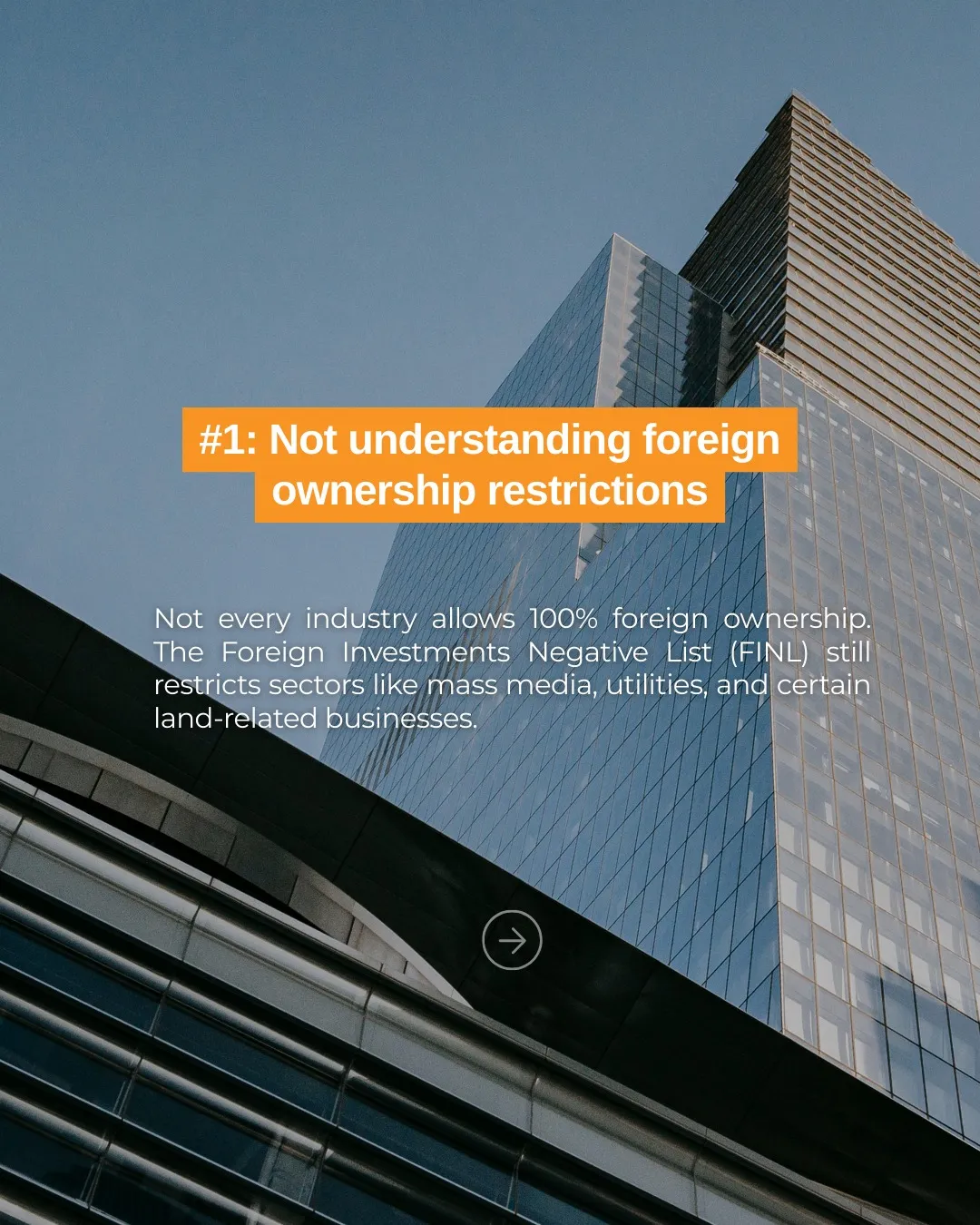
Foreign Ownership Rules Are Strict (but manageable)
Many sectors allow 100% foreign ownership, but others are capped at 40% for foreigners (utilities, media, some land-related businesses, etc.).
The updated Public Service Act and Foreign Investment Act have opened more industries — but you still need to verify your specific industry category before you commit.
Workarounds:
-
100% foreign-owned export enterprises
-
PEZA-registered companies
-
Use a domestic corporation with Filipino majority, if needed
-
Philippine Representative Office (non-trading)
It is strongly recommended that you seek professional legal / real estate advice to navigate any options available.
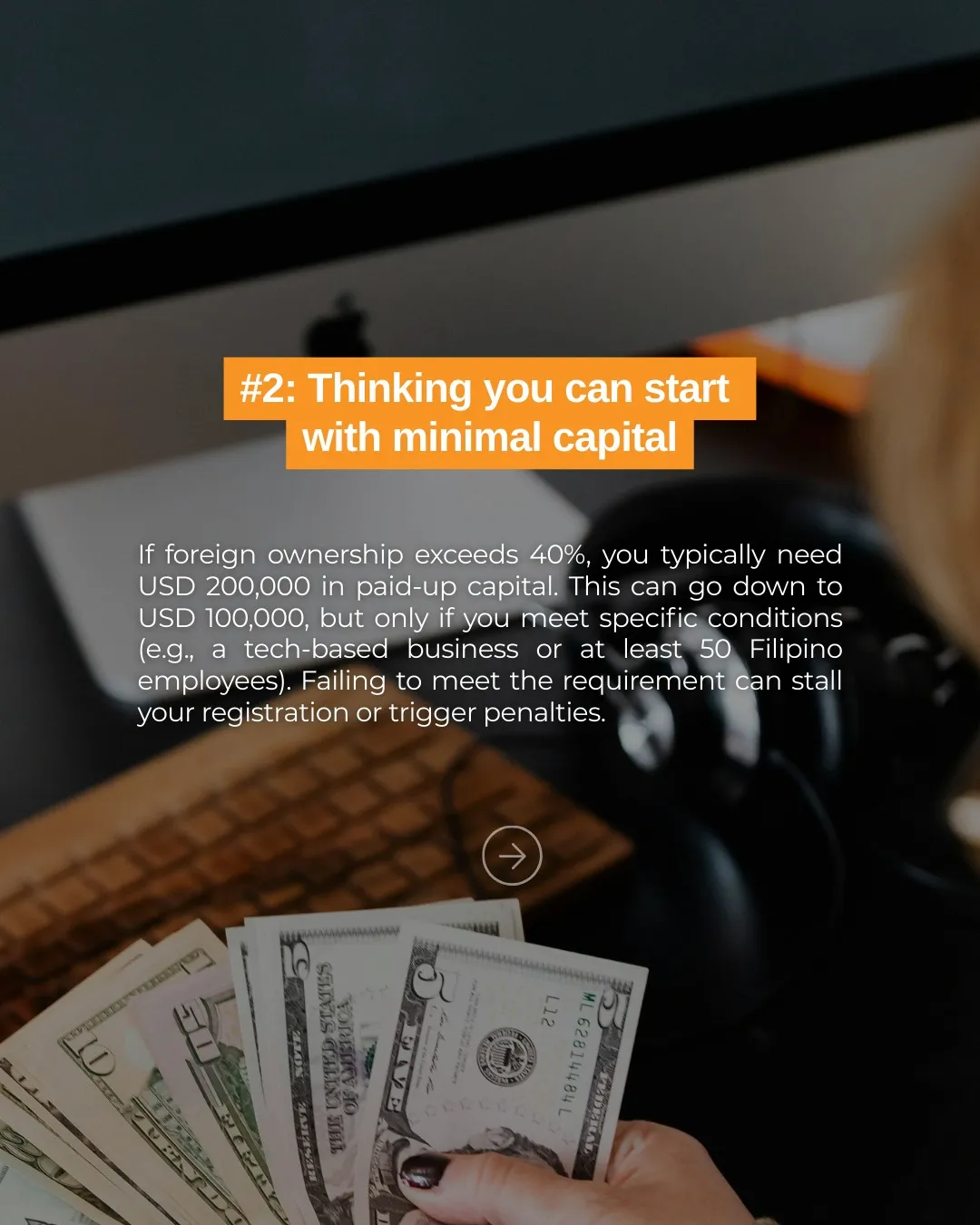
Thinking you can start with minimal capital.
The paid up capital required for a corporation with foreign ownership has complex rules that can be difficult to follow. Seeking professional advice is always the best path forward.
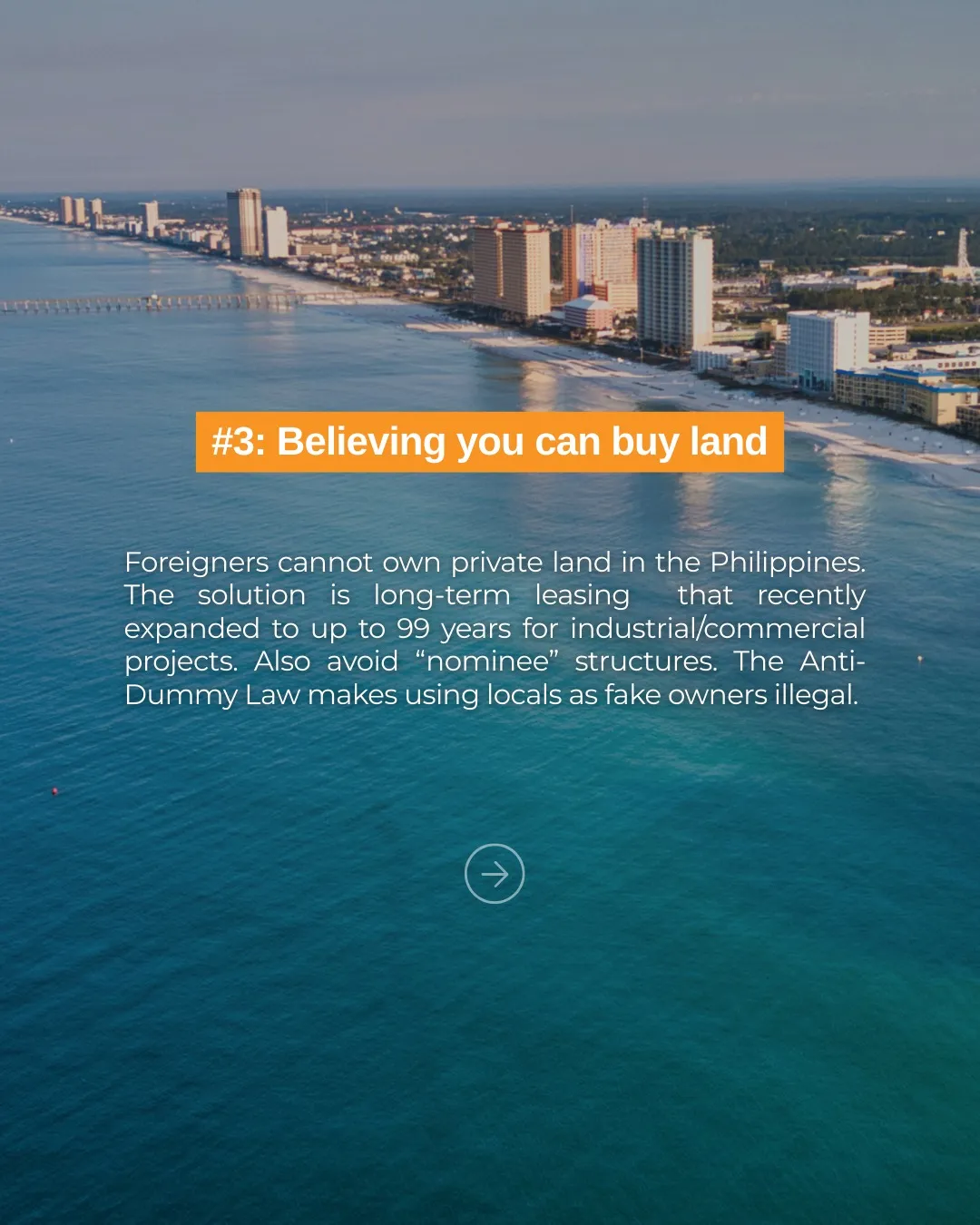
You Can’t Own Land as a Foreigner
Even through a business entity.
You can own:
-
A condo (up to 40% foreign ownership in a building)
-
Long-term land leases (25 years + 25 year renewal)
-
Buildings / improvements on leased land
Don’t let these mistakes cost you time and money.

Some Additional Things To Consider
1. Bureaucracy Is Slow — Build That Into Your Timeline
Business registration across SEC → BIR → LGU can take weeks if you’re lucky, months if you’re not.
Government offices frequently require in-person visits, multiple copies, and old-school paper documents.
You are going to want to have a law firm or firm that specializes in this help / represent you.
2. You’ll Need a Local Corporate Secretary
Philippines corporations must have:
-
A corporate secretary who is a resident Filipino citizen
-
A local treasurer (can be foreign with a visa, but often best handled locally)
-
This is not optional — it’s the required legal structure.
3. Banking Is Hard for Foreign Entrepreneurs
Opening a corporate bank account requires:
-
SEC registration documents
-
Resident directors
-
Authorized signatories physically present
-
KYC requirements that are very strict
Some banks will decline your application even if everything is in order.
BDO, BPI, Metrobank, SecurityBank, and UnionBank are generally the most foreign-friendly.
4. Taxes Are Complex but Improving
You’ll deal with:
-
12% VAT
-
25% corporate income tax (lower for small businesses)
-
Documentary stamp taxes
-
Quarterly filings in many cases
-
Tax rules that differ by sector and location
And yes—BIR audits are very common.
5. Labor Laws Are Employee-Friendly
Key factors:
-
You cannot fire employees at will — terminations must follow strict legal grounds.
-
Mandatory benefits include SSS, PhilHealth, Pag-IBIG, 13th-month pay.
-
Minimum wage varies by region.
-
Hiring contractors is possible, but regulations are tightening.
-
Expect higher compliance overhead compared to the U.S.
6. Local Culture Shapes Business Relationships
You will need to understand:
-
“Pakikisama” (harmonious relations)
-
Indirect communication style
-
The importance of trust and relationships
-
Hierarchy plays a big role — go through the right channels.
Foreigners who ignore cultural nuances often get burned.
7. You Must Have a Clear Anti-Corruption Policy
Petty corruption exists.
Your company needs firm policies for:
-
Gifts
-
Permits
-
Dealing with LGUs
-
Procurement
This protects you and your staff legally and reputationally.
8. Internet and Infrastructure Vary Wildly by Area
- Manila = decent
- Provincial cities = hit or miss
- Rural = unreliable
If your business depends on connectivity, choose your location strategically.
9. Using a Lawyer or Corporate Services Firm Is Worth It
Many things that are easy in other countries (like notarization or lease registration) can be an absolute maze in the Philippines.
Professional help saves time, mistakes, and money.
10. You Need a Clear Structure for Bringing In Money
Foreign currency rules matter.
Capital contributions, loans, and investments require:
-
Foreign Inward Remittance Certificates (FIRC)
-
Proper labeling of purpose (“capital,” “loan,” etc.)
-
Documentation for repatriation later
If you do it wrong now, you’ll struggle to take your money out later.
11. Local Partnerships Can Be Powerful — If You Vet Them
A Filipino partner can:
-
Smooth bureaucracy
-
Help with hiring
-
Assist with cultural operations
But partnerships in the Philippines should ALWAYS include:
-
Clear shareholder agreements
-
Veto rights
-
Exit clauses
-
Roles spelled out on paper
-
Never operate on handshakes.
12. Compliance Never Ends
After setup, expect ongoing obligations:
-
Annual SEC report
-
BIR filings
-
Local business license renewals
-
Barangay clearances
-
Fire / safety inspections
-
LGU taxes
Miss one thing → penalties pile up fast.
Thinking of Moving to the Philippines? Get Reliable Guidance.
Online communities are helpful for general questions. For anything important, you still need accurate, professional, and updated information. E636 Expat Services helps foreigners with:
- Residency and long term visas
- Bank account opening
- Health insurance guidance
- Real estate assistance
- Business setup
- Retirement planning
- A smooth and secure transition into life in the Philippines
If you want to move with confidence instead of relying on random comments online, we can guide you every step of the way.
Book a consultation with E636 and start your journey the right way.