Postal Services for American Expats -- Everything Is Complicated
expats 10-01-2026
First, let’s repost the disclaimer we have at the bottom of every page of this website:
The information provided on this website is for general informational purposes only and does not constitute legal, tax, financial, or professional advice. Laws and regulations vary by jurisdiction and may change over time. You should consult a qualified attorney, tax advisor, or other licensed professional regarding your specific situation before making any legal or financial decisions. Reliance on any information provided on this website is solely at your own risk.
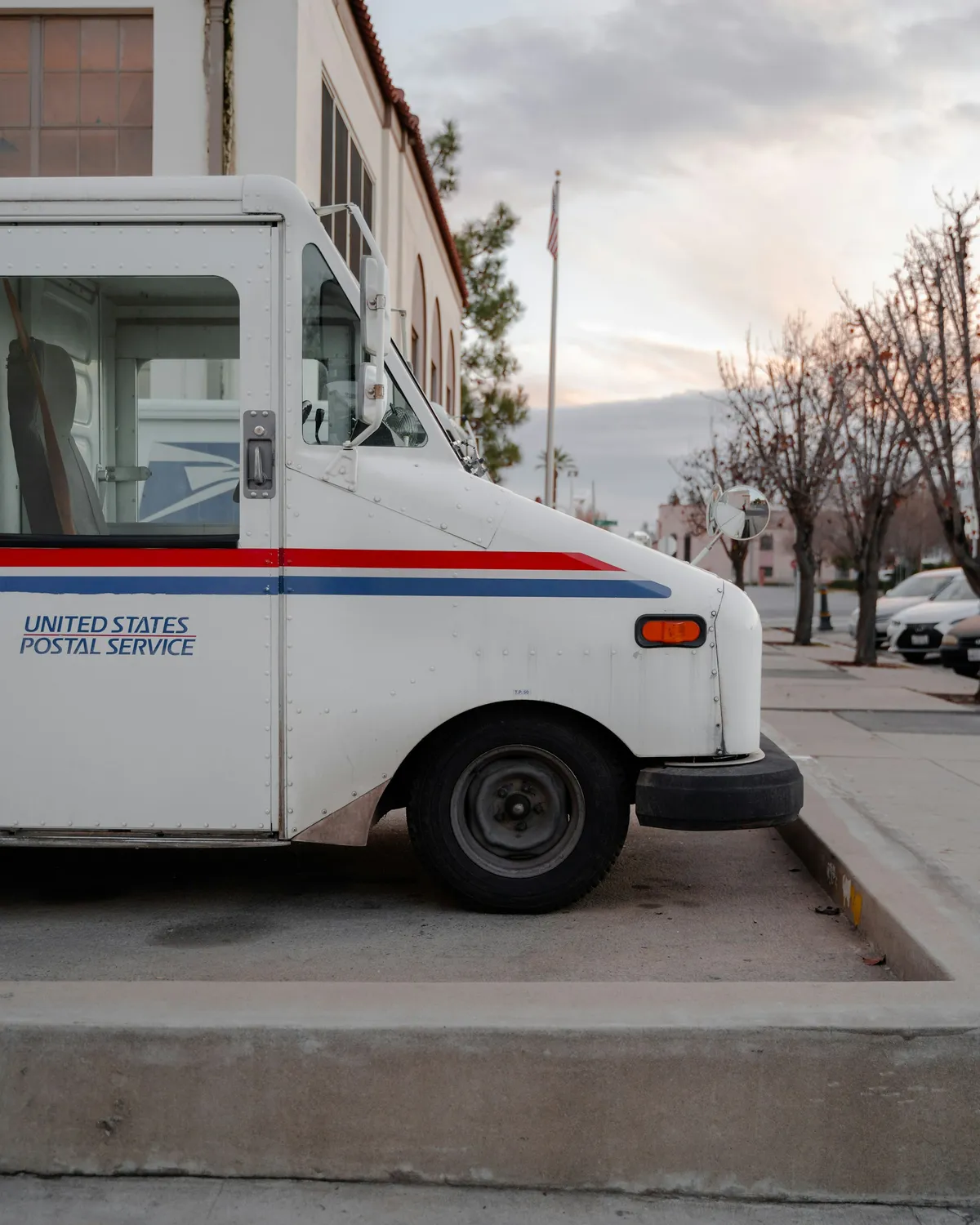
An American living outside the United States is generally going to need some way of receiving domestic United States Postal Service mail within the USA. There are several options for how to do this. Most options are going to require fees / expenses.
The US government and most US states do not have a formal designation for its citizens that are living outside the country. So, the topic of how you handle simple every day things involving the US government, state governments, taxation, mail, voting, etc can be messy, inconsistent, and overly complicated.
If I was writing this blog post for my cybersecurity consulting audience, similar techniquess would be used for maintaining real-world privacy and data privacy around mailing addresses and residential addresses. That’s a separate (and big) topic; so, we aren’t going to try to address that here today. If you are interested in that topic, I’d recommend Extreme Privacy: What It Takes To Disappear by Michael Bazzell. Be sure to check for the latest edition; it is updated every so often because the topic continiously evolving.
Here are what rules apply to an American Expats living abroad who want (or need) to keep a U.S. mailing address.
Spoiler: it’s mostly allowed, but how you do it matters.
Short answer
Yes, Americans living abroad may maintain a U.S. mailing address.
There is no law that forces you to give it up just because you moved overseas.
But different institutions treat “address” very differently, and that’s where people get tripped up.
1. There is no federal residency requirement for a mailing address
The U.S. government does not require citizens to:
- live in the U.S.
- maintain a physical residence
- or give up a mailing address when abroad
You may legally:
- use a family member’s address
- use a mail forwarding service
- use a commercial mailbox (CMRA)
- receive mail while living overseas indefinitely
2. Mailing address vs. legal residence (critical distinction)
✔ Mailing address
Used for:
- mail delivery
- correspondence
- subscriptions
- some government notices
Totally fine to maintain while abroad.
What I do
I use a mail-forwarding service for my mailing address that will scan my mail and post it to an app for me. Once every month or so, I have it send the physical mail to me in a package. I like to have it all bundled together rather than individual letters forwarded, which always seems to be the default option. Some mail forwarding services will forward domestic mail to an international address—some don’t. That would be one of the questions to ask before choosing a mail forwarding service.
This mail forwarding service is located in a state with no personal income tax. See below.
⚠ Legal residence / domicile
Used for:
- taxes
- voting
- driver’s licenses
- banking compliance
- insurance
You cannot lie about this.
Using a U.S. mailing address does not magically make you a U.S. resident. Likewise, a US citizen living abroad will be treated as a resident of one of the 50 states in most cases. The exceptions to this could involve a situation such as being a resident of Puerto Rico or similar US Territory—there are very specific requirements around being able to legally claim such status. So, most people won’t fall into that category.
What I do
I use the South Dakota Full Time RVer / Traveler program to maintain residency in the state of South Dakota. We’ll do a separate blog post on that at some point. In the meantime, there are numerous articles on the internet discussing this and how it applies to expats living abroad. Note, you do have to go through the full proceess of making a clean break from whatever state you lived in previously.
Note, if you are self-employed or own a business, the states that have no personal income tax will still, generally, have some type of business excise tax or similar that requires reporting / registration and taxes being paid. The rules differ by state. Talk to your tax advisor.
3. IRS rules (this matters most)
The IRS:
- does not require a U.S. address
- accepts foreign addresses
- allows mail forwarding addresses
On tax forms:
- You may list a foreign physical address
- AND a separate U.S. mailing address
Perfectly legal.
⚠️ What you must not do:
- Claim U.S. residency for tax benefits you don’t qualify for
- Use a U.S. address to falsely claim state residency
The exact rules for residency / domicile differ by state. Some states care far more (primarily for taxation purposes) about residency / domicile (and edge cases around residency) than others. Always talk to your tax advisor when planning this type of move.
What I do
I use the mail forwarding service I mentioned above for any mail. I claim the South Dakota address for my home residence. The accountant I used said this was all acceptable.
Note, there has been some recent news in the RVer community around a recent law South Dakota passed that limits the ability of people who are not in the state for at least 30 days to vote in local / state elections. Someone in this situation can still vote (as of the time this blog post was published) in the federal elections. Personally, I think this law makes sense. Though, if a bunch of officials get elected on a campaign to end the RVer program and benefits around it, that would be unfortunate.
4. State residency rules (where people screw up)
States care a lot more than the federal government.
If you:
- keep a U.S. address
- keep a driver’s license
- keep voter registration
- keep a state tax return
That state may argue you are still domiciled there and owe taxes.
Best practice:
- Break state residency cleanly
- File a final resident return (if applicable)
- Switch to non-resident status
- Avoid using a state address tied to residency claims
- Mail forwarding addresses (like TX, FL, SD) are popular because they have no state income tax.
What I do
Described above.
5. USPS rules (mail forwarding & CMRA)
You may legally use:
- UPS Store
- iPostal1
- Anytime Mailbox
- Escapees (TX)
Requirements:
- USPS Form 1583
- Two forms of ID
- Acknowledgment it’s a mailing address, not residence
This is 100% legal.
What I do
I’ve used Escapees and UPS Store mailboxes before. There are many choices in this space.
6. Banking & financial institutions (this is the real headache)
Banks are governed by:
- KYC (Know Your Customer)
- AML (Anti-Money Laundering)
- Patriot Act rules
Most banks require:
- One physical address
- One mailing address
Many will not accept:
- a CMRA as a physical address
- foreign residence + U.S. mailing combo (some do, some don’t)
Common workaround:
- Physical address = foreign residence
- Mailing address = U.S. forwarding service
⚠️ Do not lie about where you live. That’s how accounts get frozen.
7. Voting rules
U.S. citizens abroad:
- May vote via FVAP
- Use their last U.S. residence
- Do NOT need a current U.S. address
Maintaining a mailing address does not affect eligibility.
Various states have enacted various rules regarding voting eligibility. I’m not going to attempt to summarize these here.
8. Driver’s licenses
State-specific.
Some states allow:
- renewal while abroad
- mailing to forwarding services
Others require:
- proof of in-state residency
Using a U.S. mailing address does not automatically entitle you to a license.
What I do
I have a South Dakota driver’s license. In the past year, I’ve spent a couple of weeks total driving in the US.
9. What is actually illegal
Let’s be clear.
❌ Illegal:
- Claiming you “live” at an address you don’t
- Using a U.S. address to evade state taxes
- Misrepresenting residency to banks or insurers
- Using a CMRA as a physical residence when prohibited
✔ Legal:
- Maintaining a U.S. mailing address
- Using mail forwarding
- Receiving government and private mail
- Living abroad indefinitely
Summary
Americans abroad may keep a U.S. mailing address.
📬 Mail forwarding services are legal.
🏦 Banks care more than the IRS.
🏛 States care more than banks.
❌ Lying about residency causes real problems.
✔ Using a mailing address honestly does not.
Thinking of Moving to the Philippines? Get Reliable Guidance
Online communities are helpful for general questions. For anything important, you still need accurate, professional, and updated information. E636 Expat Services helps foreigners with:
- Residency and long term visas
- Bank account opening
- Health insurance guidance
- Real estate assistance
- Business setup
- Retirement planning
- A smooth and secure transition into life in the Philippines
If you want to move with confidence instead of relying on random comments online, we can guide you every step of the way.
Book a consultation with E636 and start your journey the right way.
Photo by Diego De Alba on Unsplash