The Filipino Tricycle: The People’s Vehicle
culture 30-12-2025
The Filipino Tricycle: The People’s Vehicle
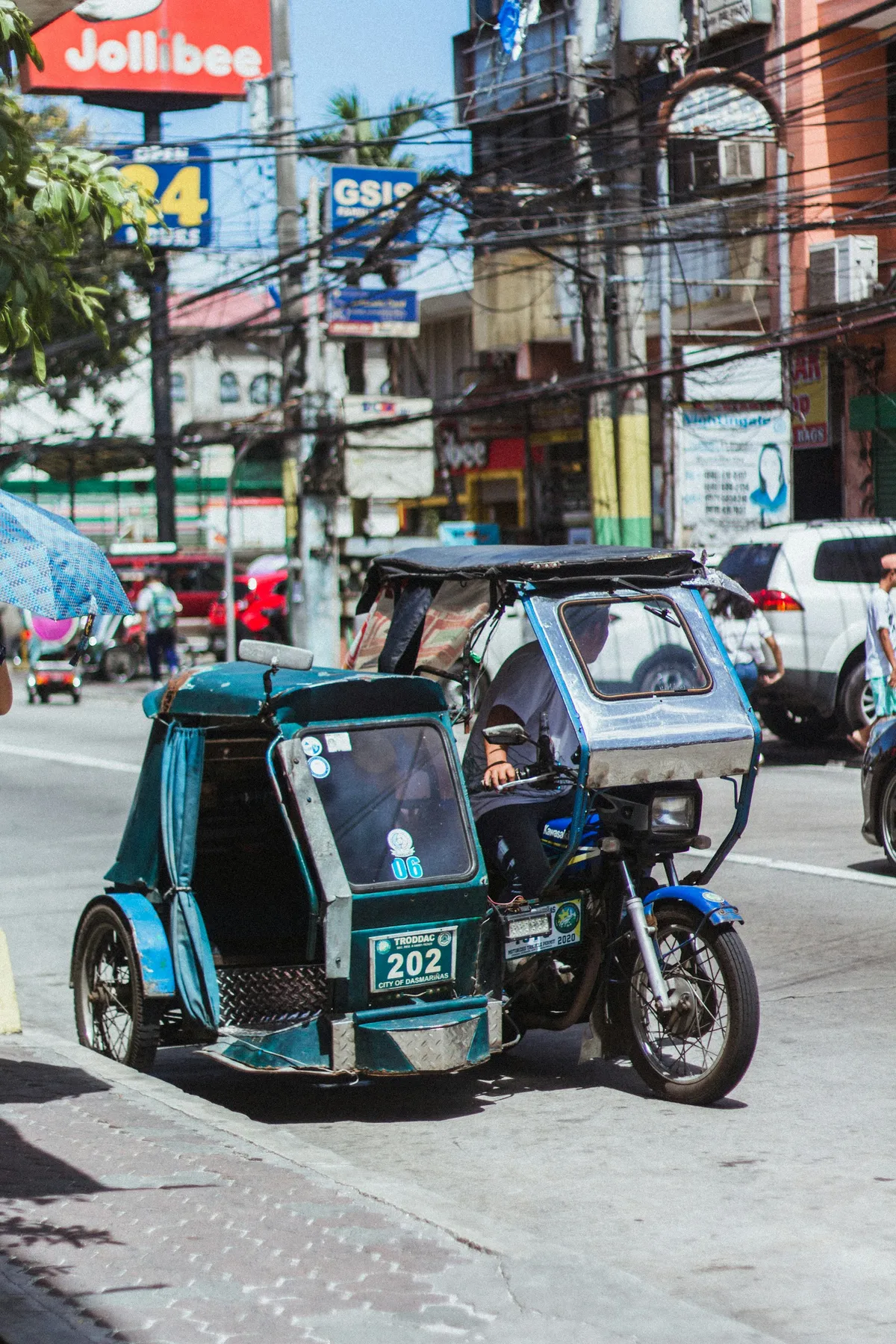
The Filipino tricycle is a locally adapted mode of transport consisting of a motorcycle fitted with a sidecar, designed to move people, goods, livestock, construction materials, and occasionally entire families—often all at once. Found everywhere outside major city centers, it is one of the most recognizable symbols of everyday life in the Philippines. Especially in the rural provinces.
In the rural provinces this is usually the most common type of vehicle. It’s the economical choice. The local roads tend to be made for tricycles, not cars or trucks.
Origins and Evolution
The tricycle evolved from:
- Post-war surplus motorcycles
- Local metalworking ingenuity
- The need for affordable, flexible transport on narrow roads
Rather than importing standardized vehicles, communities built their own solutions, resulting in thousands of regional variations.
No two tricycles are truly alike. Seriously, each one is an unreproducable work of art. The shops that create the side cars are mostly small, local businesses and all the fabrication work is done by hand. When we ordered our side car, it took about three months before they were able to deliver it. They had to ask for half the payment up front, then another 10K PHP to cover production costs.
Design Characteristics
Core Components
- Motorcycle (typically 100–200cc)
- Welded steel sidecar
- Bench seating (often padded… sometimes)
- Roof canopy made from metal or plastic
- Optional doors that may or may not align
Engineering Philosophy
- Function over aesthetics
- Repairable with basic tools
- Parts sourced locally
- Structural optimism
Suspension is optional. Weight limits are aspirational.
Capacity (Theoretical vs Actual)
Official capacity:
- 2–3 passengers
Observed capacity:
- 6 adults (or 1 American + 2 Filipinos)
- 3 children
- 2 sacks of rice
- A propane tank
- Plus the driver’s cousin riding sidesaddle
Physics is treated as a suggestion.
Regional Variations
- Urban areas: Smaller, regulated, painted
- Rural provinces: Larger, taller, reinforced, and louder
- Island communities: Rust-resistant adaptations
- Mountain regions: Gear ratios chosen by prayer
Local government units often impose:
- Color schemes
- ID numbers
- Roof height rules (with varying success)
If you cannot hear it coming, you will likely see it coming due to bright, varied color schemes.
Role in Daily Life
Tricycles function as:
- Taxis
- School buses
- Delivery trucks
- Ambulances (unofficial)
- Mobile stores
- Community message carriers
They are deeply integrated into:
- Local economies
- Social interaction
- Informal employment
For many drivers, the tricycle is:
- Their primary livelihood
- Their largest asset
- Their personal workshop
Economics
- Low entry cost
- High utilization
- Fuel-efficient
- Constant maintenance required
Drivers typically operate under:
- Boundary systems (daily rental fee)
- Cooperative ownership
- Family arrangements
- Profit margins are thin but steady.
Cultural Significance
The tricycle represents:
- Filipino adaptability
- Community-scale engineering
- Informal problem solving
- Social visibility
It is loud, imperfect, and endlessly modified—much like the environments it serves.
Safety and Reality
Safety standards vary wildly:
- Seatbelts are rare
- Crumple zones do not exist
- Helmets may be decorative (more typically, what helmets?)
Yet accidents are surprisingly normalized, managed through:
- Community response
- Practical risk acceptance
- Experience over regulation
The Tricycle vs Modernization
As ride-hailing apps and minibuses expand:
- Tricycles persist
- Adapt
- Fill gaps others can’t
- They thrive where roads are narrow, demand is local, and flexibility matters more than polish.
Bottom Line
The Filipino tricycle is not just transportation—it’s:
- A livelihood
- A cultural artifact
- A mechanical compromise that works
It survives not because it’s perfect, but because it’s appropriate.
Cost: Our Tricycle
- Motorcycle: 80K PHP (new)
- Sidecar: 35K PHP
- Total: 115K PHP
The most important questions my girlfriend had for me at the time was what quote was going to be stenciled on the front and whose name would be written on it (bit bright lettering). I passed on putting my name on it.
Thinking of Moving to the Philippines? Get Reliable Guidance
Online communities are helpful for general questions. For anything important, you still need accurate, professional, and updated information. E636 Expat Services helps foreigners with:
- Residency and long term visas
- Bank account opening
- Health insurance guidance
- Real estate assistance
- Business setup
- Retirement planning
- A smooth and secure transition into life in the Philippines
If you want to move with confidence instead of relying on random comments online, we can guide you every step of the way.
Book a consultation with E636 and start your journey the right way.
Photo by Lance Lozano on Unsplash