The Filipino Fiesta
culture 20-12-2025
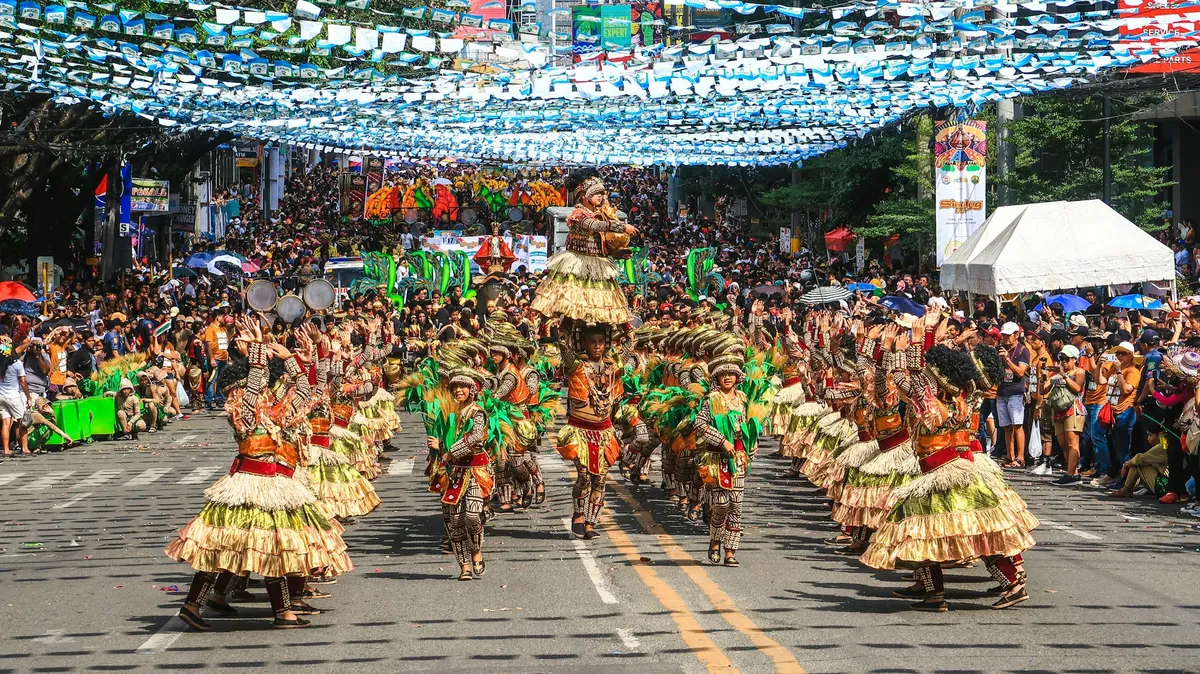
Filipino fiestas are community celebrations held in towns, cities, and barangays across the Philippines. They are typically tied to a patron saint, a religious feast day, or a local historical event, and they blend Catholic tradition with pre-colonial customs, family obligation, and social display. Nearly every locality has at least one fiesta each year.
Origins and Purpose
Most fiestas originated during Spanish colonization, when Catholic feast days were adopted by local communities and merged with existing indigenous celebrations. Today, fiestas serve several functions at once:
- Religious devotion (processions, masses, novenas)
- Community identity (celebrating a town’s history or patron)
- Social obligation (open houses, hospitality, family reunions)
- Economic activity (vendors, tourism, local trade)
Fiestas are as much social events as religious ones.
Fiestas in the Philippines are the result of layered history—pre-colonial ritual, Spanish Catholicism, American civic influence, and modern tourism all stacked on top of each other. What looks today like a street party with lechon and loud music is actually the end product of over a thousand years of cultural adaptation.
1. Pre-Colonial Roots (Before 1521)
Before the Spanish arrived, Filipino communities already held ritual celebrations tied to:
- Agricultural cycles (planting, harvest)
- Seasonal changes
- Healing rites
- Victories, alliances, and major life events
These gatherings were led by babaylan (shamans or priestesses) and involved:
- Communal feasting
- Dancing and chanting
- Offerings to spirits and ancestors
These were not “festivals” in the modern sense, but ritual obligations—community survival depended on them. Food sharing and collective participation were already central, which explains why those traits persist in fiestas today.
2. Spanish Colonization and Catholic Transformation (1565–1898)
The Spanish didn’t eliminate local celebrations—they rebranded them.
Their strategy was simple and effective:
- Assign each town a patron saint
- Replace indigenous rituals with Catholic feast days
- Align fiestas with the church calendar
By the 17th century:
- Every pueblo had an annual fiesta patronal
- Celebrations centered on Mass, processions, and novenas
- Indigenous elements quietly survived beneath Catholic symbolism
This period solidified the core fiesta structure:
- Religious ceremony + public celebration
- Church at the center of town life
- Community-wide participation
The Spanish also introduced pageantry, music, fireworks, and formal parades—turning ritual into spectacle.
3. Fiestas as Social Control and Status (Spanish Era)
Fiestas were not just religious—they were political.
Local elites (principalia) were expected to:
- Fund celebrations
- Host visiting clergy and officials
- Display generosity and loyalty to church and crown
This embedded a lasting social pattern:
- Hospitality as obligation
- Public generosity as status
- Shame for failing to participate properly
That social pressure is still very much alive.
4. American Period and Secular Influence (1898–1946)
The Americans didn’t abolish fiestas, but they diluted their religious exclusivity.
Key changes:
- Introduction of civic holidays
- Emphasis on town fairs, sports, and education
- Less church dominance in some urban areas
Fiestas began to include:
- Beauty pageants
- School performances
- Civic parades
- Political speeches
This is when fiestas started drifting from purely religious observance toward community entertainment.
5. Post-Independence Expansion (1946–1970s)
After independence, fiestas became a tool for:
- National identity building
- Regional pride
- Cultural preservation
During this period:
- Ethnic and regional festivals were revived or invented
- Indigenous themes were reintroduced (sometimes accurately, sometimes theatrically)
- Local governments began formalizing fiesta schedules
Many “traditional” festivals actually took their modern form during this era.
6. Commercialization and Tourism (1980s–Present)
In the late 20th century, fiestas became economic assets. Government and tourism agencies:
- Promoted festivals internationally
- Standardized costumes and performances
- Turned religious events into ticketed spectacles
Major festivals like Sinulog, Ati-Atihan, Dinagyang, and Kadayawan evolved into:
- Multi-day events
- Highly choreographed performances
- Tourist-driven celebrations alongside religious rites
This created a split:
- Local religious observance continues quietly
- Public-facing festival grows louder, larger, and more commercial
Both now coexist—sometimes uneasily.
7. The Modern Fiesta Today
Today, fiestas are:
- Still deeply tied to Catholic feast days
- Still rooted in communal obligation
- Increasingly influenced by sponsors, media, and politics
They remain culturally powerful because they:
- Reinforce family and hometown ties
- Obligate generosity and participation
- Serve as social glue in a fragmented modern society
Even Filipinos who are no longer religious often still return home for the fiesta. That tells you everything you need to know about its importance.
Common Features
While details vary by region, most fiestas include:
- Religious events: Processions, church services, and statues of saints carried through the streets
- Food-centered hospitality: Homes are opened to relatives, friends, and sometimes strangers; large quantities of food are prepared
- Street activities: Parades, dancing, beauty pageants, games, and live music
- Public gatherings: Barangay halls, town plazas, and roads become social centers for the day or week
Hospitality is central. Visitors are expected to eat; hosts are expected to provide.
Famous Examples
Some fiestas have grown into major national or international events:
- Sinulog (Cebu) – honoring the Santo Niño, known for large-scale street dancing
- Ati-Atihan (Aklan) – one of the oldest fiestas, with tribal influences and face paint
- Dinagyang (Iloilo) – choreographed performances and competition-style dances
- Kadayawan (Davao) – celebrating harvest and indigenous culture
These larger festivals often mix religious tradition with tourism and city promotion.
Social and Cultural Significance
Fiestas reinforce:
- Family ties (relatives return home for the celebration)
- Reciprocity (hosting today, being hosted elsewhere later)
- Status and reputation (how well a family or town “puts on” a fiesta)
They can also create financial pressure, as some families spend beyond their means to meet expectations of generosity and hospitality.
Modern Realities
In recent years, fiestas have evolved:
- Some are shortened or scaled back for economic or environmental reasons
- Others are commercialized, sponsored by brands or local governments
- Urban areas may emphasize concerts and events over religious rites
Despite changes, fiestas remain deeply embedded in Filipino life.
Summary
Filipino fiestas are not just parties. They are ritualized expressions of faith, community, hospitality, and identity, repeated year after year. To understand Filipino culture, you don’t study fiestas from a distance—you attend one, eat too much, stay too long, and realize you were expected all along.
In the rural province where we live, every barangay has a fiesta on a set schedule that was established long before my girlfriend was born.
Thinking of Moving to the Philippines? Get Reliable Guidance
Online communities are helpful for general questions. For anything important, you still need accurate, professional, and updated information. E636 Expat Services helps foreigners with:
- Residency and long term visas
- Bank account opening
- Health insurance guidance
- Real estate assistance
- Business setup
- Retirement planning
- A smooth and secure transition into life in the Philippines
If you want to move with confidence instead of relying on random comments online, we can guide you every step of the way.
Book a consultation with E636 and start your journey the right way.
Photo by Hitoshi Namura on Unsplash