Shopping: Filipino Style
expat 17-12-2025

- What You Are Probably Used To
- Post Addresses & The Filipino Post Office
- Shipping / Delivery
- Available Options For Shopping: Ones I’ve Tried
- Available Options For Shopping: General
- Thinking of Moving to the Philippines? Get Reliable Guidance
What You Are Probably Used To
If you’ve lived in the United States, Western / Northern Europe, or a few other places in the last ten years, you’ve probably become accustomed to, if not spoiled by, online shopping plus delivery within a day, maybe a couple of hours. The situation is more complicated in the Philippines.
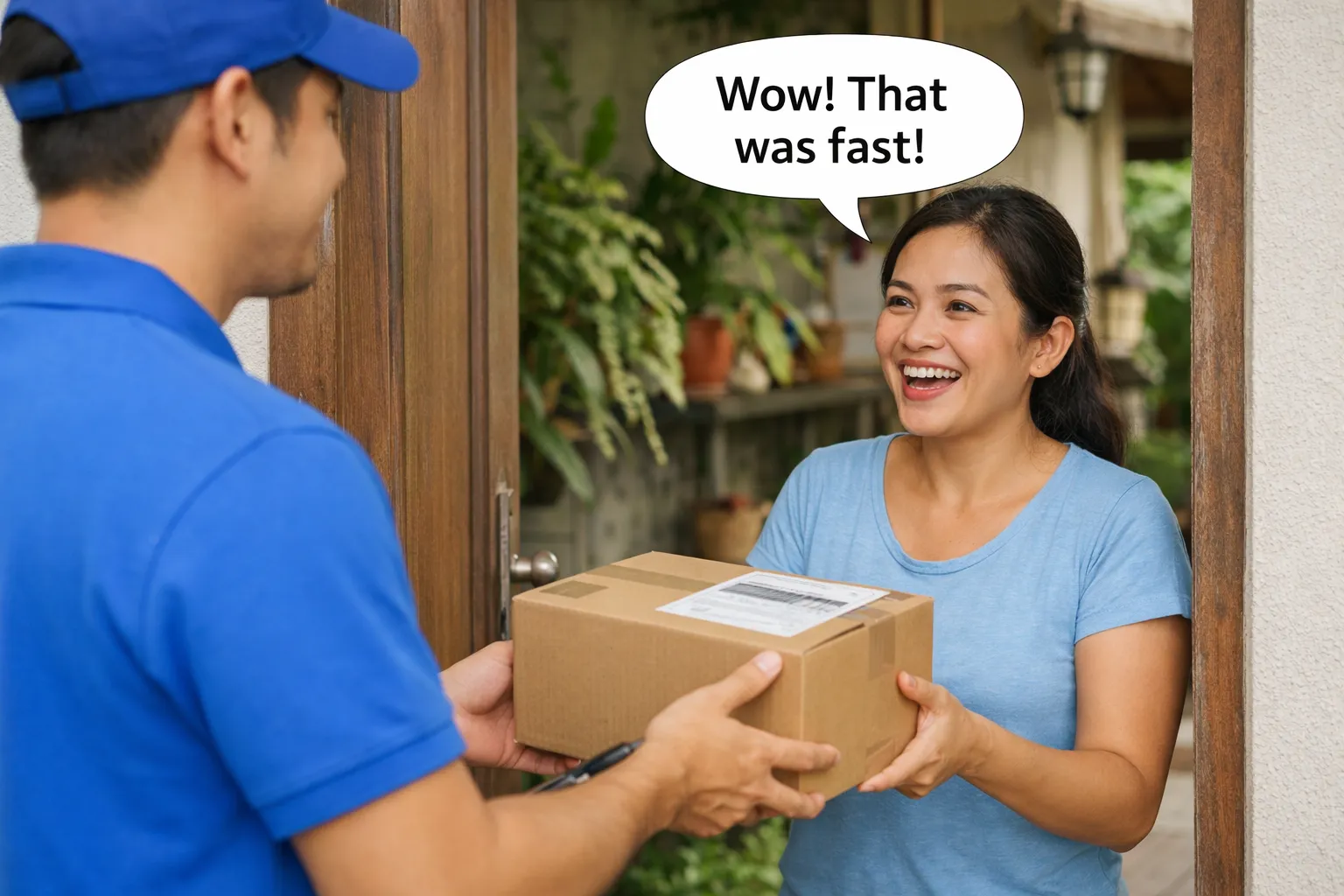 Amazon is available, but has limited delivery and selection in the Philippines. Frankly, my experience with it has been that it reports various items are available for delivery in the Philippines, but then when you try to check out it reports that “This item cannot be shipped to your selected delivery location.” I’ve never successfully ordered something from Amazon and had it shipped to me. Officially, there are delivery options in the urban areas (especially the Manila Capital Region), but there seems to be hang ups more often than not. Luckily, there are other options.
Shipping / Delivery and customs seems to be the two largest issues no matter where you order from.
Before we jump into the online shopping options that are available in the Philippines, a quick discussion of how addresses and shipping works in the Philippines is needed.
Post Addresses & The Filipino Post Office
I live in a rural provinces. Out here, there are no street addresses and no local post office. They’ve really embraced using smart phones, apps, and text messaging in place of what would have been done through regular mail a generation ago. Now, the first question I asked when I learned there were no assigned street addresses was how do they know where to deliver the package? There’s a phone number included with every package being delivered. The driver has to call and confirm exactly where you are located. For Shopee and Lazada, it’s the same drivers every week; they learn where you are located and remember. For things delivered via LBC Express or other shipping companies, we have to walk out to the main road and find the driver.
The Philippines was never built around street addresses. The country developed around:
- Barangays (formalized neighborhood concept), not cities
- Landmarks, not numbered streets
- Family compounds, not plotted lots
So instead of:
123 Rizal St., Lot 4, Block 7
You get:
“Third house after the mango tree, near the chapel, beside Mang Tonyo’s place”
That works great for humans who live there. It doesn’t work so well for postal systems. It works terribly for postal systems.
The rural areas were designed for oral navigation, not bureaucracy. In many rural areas:
- Roads were added after houses
- Roads change names (or have none)
- Houses were never numbered
- Entire sitios (small territorial enclave that is part of a barangay in rural areas), grow organically, not planned
A postal service needs fixed, standardized locations. The Philippines mostly has vibes and memory.
The Philippines had a national postal service company called PhilPost. PhilPost Declined (Hard) because:
- it was underfunded
- it was slow
- lost relevance fast
- couldn’t compete with private couriers
Once people stopped relying on mail through PhilPost:
- Budgets got cut
- Rural post offices closed
- Staff were reassigned or vanished
Then, email, SMS, Facebook, and private courier companies finished the job.
PhilPost is still around, but has a much greater presence in the urban areas than the rural areas. However, it isn’t nearly as prominent in day-to-day activiites as in other countries.
For small physical things that had to be moved from place to place (what a post office does), private couriers replaced the postal system. Companies like:
- LBC Express
- J&T
- JRS
- Ninja Van
- Shopee/Lazada logistics
…Don’t need street addresses.
They rely on:
- Phone numbers
- Barangay names
- GPS pins
- Rider local knowledge
Which is far more efficient locally than a Western-style postal grid.
So the market said:
“Why pay for addresses when riders already know where everyone lives?”
And that was that. The Filipino postal service was dead.
This probably sounds utterly insane to the typical westerner from North America or Europe. I was stuck on ‘How can there be no post office?’ for quite awhile. Well, it works well enough for the the Philippines. How did it get to be like this?
The Local Governments Units (LGUs), the municipality and barangay levels, never enforced street names and housing numbers as a priority in the rural areas. Some places they did, but often not. Street naming and house numbering are LGU responsibilities. There were a couple of problems:
- No political payoff
- Costs money
- Requires surveys and signage
- Causes disputes (“Why did his street get named first?”)
So most LGUs just didn’t bother or they half-did it:
- Street name signs with no consistency
- House numbers that skip randomly
- Duplicate street names in the same barangay
Again attempting postal delivery under these conditions is pointless.
In the Philippines, the cultural reality is that mail Was never central to daily life. Unlike in the US or Europe:
- Bills are paid in person or online (granted, online payment and bill delivery via email is becoming more the norm in US with each passing year)
- Government notices are handled face-to-face
- Legal documents are hand-delivered
- Families live close together
- There was never a strong cultural dependence on mailed letters
So when the system weakened, nobody fought to save it.
Furthermore, the propensity for natural disasters to occur frequently didn’t help either. Typhoons, floods, and earthquakes:
- Destroy signage
- Wash out roads
- Reshape neighborhoods
Maintaining a rigid address grid in disaster-prone rural zones is expensive and thankless.
So, today, rural “addressing” is effectively:
- Barangay + municipality
- Landmark directions
- Phone number
- Google Maps pin
For example:
Brgy. San Isidro, after the water station, near basketball court. Call when nearby.
And honestly, It works better than formal addresses in many places.
Western postal logic lost to human networks, mobile phones, and riders who actually know the area.
Shipping / Delivery
Again, I live in a rural province. So, I’ve got much to say about deliveries out here; the situation is better (more flexible, more options) in the urban areas.
As we just learned in the last section, there is no formal physical address scheme beyond the Barangay level in the traditional sense that is universally implemented. That makes the entire process of receiving a delivery a bit different (probably a bit more chaotic) from what the typical westerner would expect. For my home address, the street doesn’t have a name and I have never seen a number on any house or building in this barangay.
We are a kilometer away from one of the major express ways (a two-lane concrete road that is always under construction) in this province. There is a paved road that goes all the way to our drive way from the main road, but again, no road names, no street numbers. So, for every delivery, the address is:
“1 Express Highway” + the barangay + city / municipality + province + zip code.
Just about everything has eventually found its way here. For most of the major online marketplaces an actual street address number + road name is optional. I think it was the Starlink website that required this field to be filled in and had a note stating that if there is no address number or street name, find the closest street with a name and use ‘1’ as the street number. I’ve been using “1 Express Highway” as the street address ever since, but in practice, the driver either already knows where we live or calls to find out.
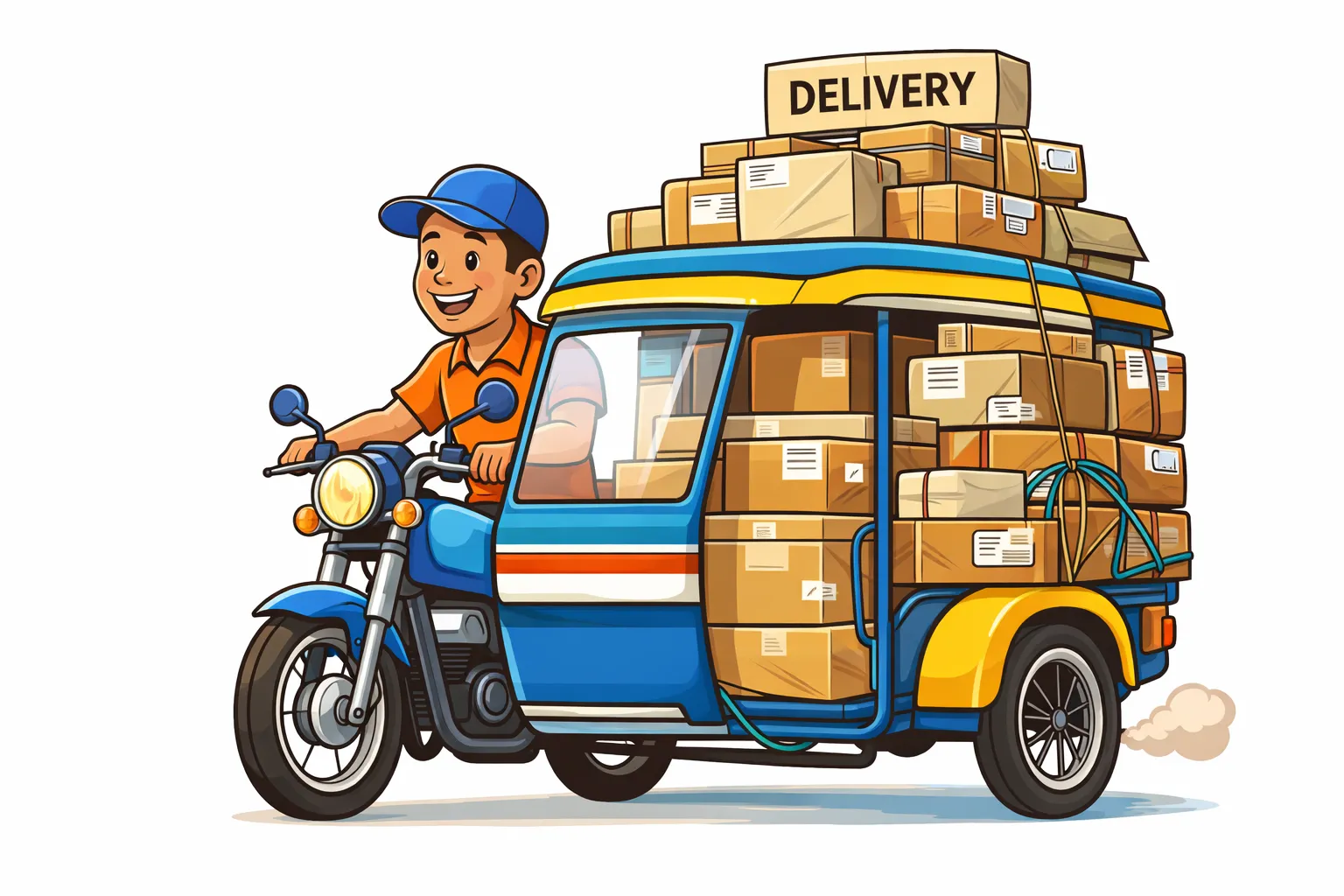
Regardless of where I shop, the same short list of delivery companies seem to be involved in the rural province where I am at. Shopee and Lazada seem to employ their own local delivery drivers and have their own distribution networks. The distribution warehouse for Shopee that I know about is in a small city about 45 minutes by tricycle from my house. The same Shopee driver has delivered almost everything I’ve ever ordered online from that app; this driver went to high school with my girlfriend. Half the time he drops my packages off at her parents house in the baragnay where they live—I’ve asked several times for him to stop doing that. I’m probably not going to win that one. Any other online orders generally use LBC Express to deliver out to the rural areas. There are probably more delivery companies active in the major urban areas.
When I buy something on Shopee or Lazada it takes a minimum of five days for something small (common) to be delivered. For larger, more unique items that aren’t stocked in a local (to the Philippines) warehouse, delivery could take three or four weeks. On a positive note, the western perpensity for impulse shopping is dulled somewhat when what you are ordering online won’t arrive for up to a month. I’ve compensated for the delay by:
- Stock parts and supplies for the common stuff that will break around the house.
- When I go to the store once a month, I’ll buy an extra bottle of shampoo, bodywash, dish soap, bleach, cleaning supplies, etc. to ensure there is another one ready to go when the current runs out.
- Plan out projects and what’s needed ahead of time—I really like my spreadsheets. When I inevitably run into the next wall (tool I don’t have, part I need, product I don’t have, etc), that project gets put on pause. The trick is to remain optimized.
Or, abandon most electronics technology and the dependency on electricity—focus on the basics and live like the locals.
During an early iteration of staying here, I used an immigration lawyer to handle my visa extension and ACR/I-Card processing. I used LBC Express to ship my passport to the lawyer’s office in Manila. Later, they used the same to ship the passport back to me. It took three days to get the package to the lawyer’s office. It took ten days to get it back to me because it sat in a warehouse until they had the minimum number of packages needed to distribute to my area. This would be an example of a possible delay that is built into the system. Plan accordingly.
It’s also interesting to note that there are many comments in online forums stating they would never trust an important document like a passport to a local shipping company here in PH. I asked my real estate lawyer, immigration lawyer, and a trusted friend who has lived here for years who I should use for shipping of important documents. They all gave me the same answer: LBC Express. So, I went ahead and tried it. I acknowledge it is possible I am an idiot. My passport is only valid for another eighteen months—I’m going to be renewing it soon anyway if it even if something did happen to it. That being said, I put it in a ziplock bag and wrapped it in bubble wrap before putting it into the LBC Express package. The passport did eventually arrive without issue at the house.
My comprehension of Tagalog is not that great and the local reception for voice calls varies. For handling the local deliveries, I generally put my girlfriend’s phone number on the recipient information so that she can give the directions to the driver when she calls. My girlfriend and her sister run a store in their parent’s barangay; so, during the day, she tends to not be here. So, I can’t just hand her the phone to explain how to get to the house—it’s just easier to get here. This is a critical point for living in the rural Philippines; you are going to need to speak Tagalog or the local language to address basic things in the course of a day.
I’ve had several items ordered from Shopee / Lazada that were damaged (destroyed might be more accurate) in transit. The delivery drivers didn’t even deliver these, they just declared them damaged and returned the package to the sender. It takes a bit of time to return the package to the sender and have a refund be processed by the system, but each time, I’ve gotten my money back. Then, I have to order whatever was in the package again. This happens to roughly one in twenty packages that are supposed to be delivered to the house—your experience may vary.
For heavy (or bulky) items, they will generally not be delivered to the house. The package will get to the local distribution warehouse for whoever the shipping company is while I get a call or text message stating that I need to come pick it up. This happened with my Ecoflow batteries. Those batteries are probably the heaviest item I’ve ever had shipped to the house. They did arrive intact and functional, but were wrapped in a lot of packaging.
Available Options For Shopping: Ones I’ve Tried
- Buy it in the US, stick it in a suitcase (don’t forget to declare it at customs as appropriate).
- Physical stores (and / or their online stores)
- Small Business with an online store
- Shopee PH
- Lazada PH
- Various international sites (UBuy.com.ph, https://ph.rs-online.com, others).
Physical Stores: Your Best Bet For Specialty, Big, & Expensive Items
For certain specialty items, using a local store (in country) that sells those items is probably the best options. There will be no customs delays or fees. And, you’re supporting the Filipinos, which we’re here, so, we might as well. Sometimes, there will be an online site to order from. Sometimes,, you can call these stores. Sometimes, you’ve just got to go there.
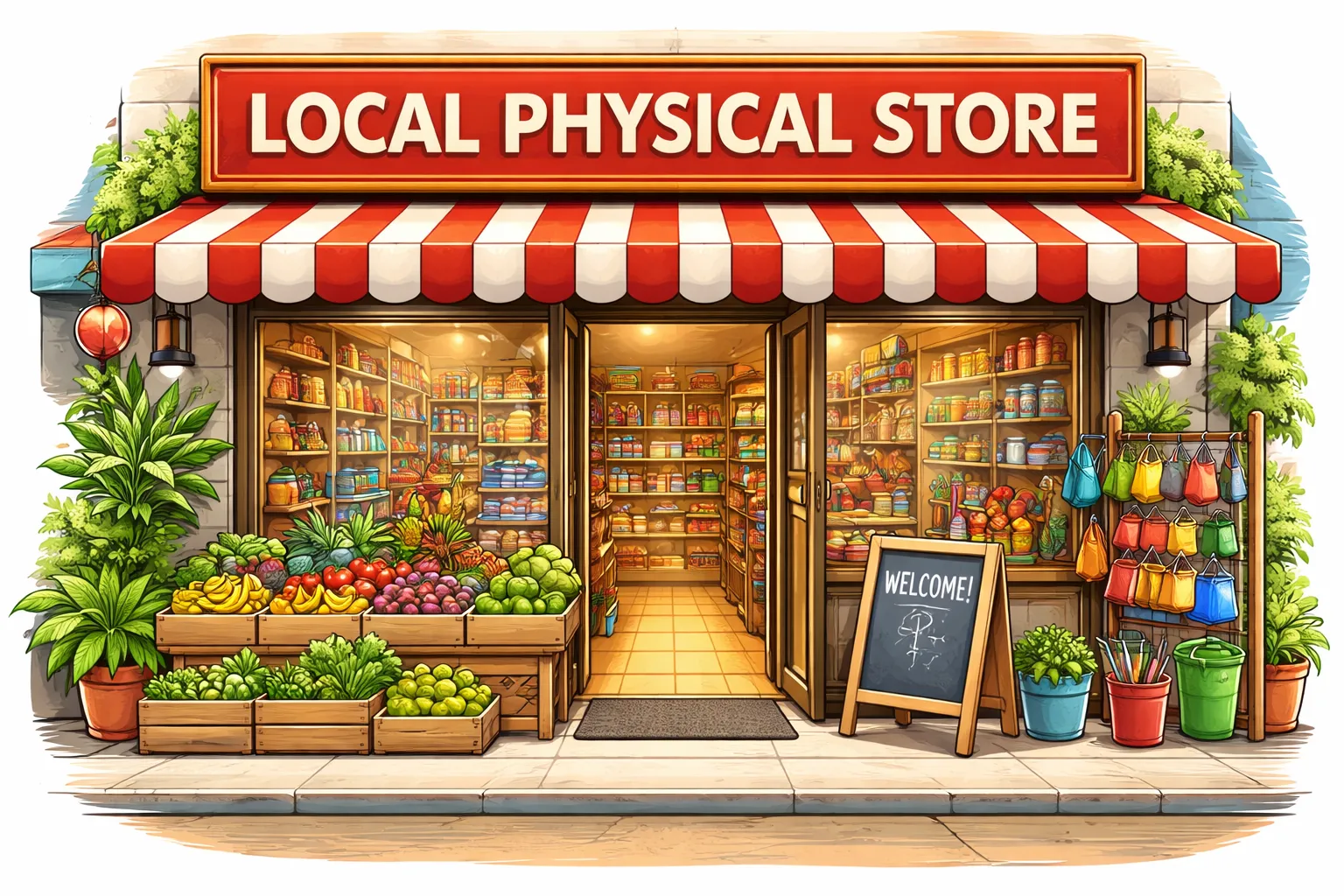
For big / expensive items, I’d recommend going to a physical store where you can see and pick out what you want. It may also behoove you to handle delivery yourself or via people you know or hired directly for these big items. The item will probably arrive in better condition. In my first generator post, I mentioned that I wouldn’t buy a generator on Shopee or Lazada even though units are available there—sometimes even good, well-known brands. The chances of the unit being damaged during shipping is just too great. Plus, if anything goes wrong, sending it back, even if shipping will ultimately be paid for, I’ll have to haul it to the closest shipping center myself. And, anything that can’t fit on the back of a motorcycle (maybe tricycle) is going to sit in the closest shipping warehouse while I get a call stating that I must come pick it up.
Anytime I can support a small business in the Philippines (or anywhere), I’m going to do it and use their services—I am small business owner myself after all. This opportunity has only presented itself a couple of times. Furniture, other things have been bought at locally-owned specialty stores for the house.
Shopee & Lazada
My experience with Shopee has generally been positive. It is one of the most popular shopping apps in the Philippines. You’ll find electronics, fashion, gadgets, home stuff, snacks, etc. It’s good for a wide range of products, frequent promotions (free shipping, vouchers), cheap prices. It’s features include:
- Cash on Delivery (COD) — extremely important in the Philippines.
- Live shopping & games for extra savings.
- Seller ratings & reviews to help vet sellers.
The first couple of orders I made on Shopee used the COD option until I had ShopeePay setup correctly. Cash-On-Delivery is very popular with the locals, but I don’t really want to deal with the logistics of cash if I don’t have to. Grant it, there is a certain amount of cash needed to work with locals here in the rural Philippines. Also, with the Shopee driver randomly dropping things off at the girlfriend’s parents house, I don’t want them to have to deal with the COD payment nor do I want to have items returned because it couldn’t be paid for in that situation.
On Shopee and Lazada, you’ve got to read the reviews for each seller. There are bad sellers that will be difficult to deal with and will probably sell you crap. Sometimes, you will find an item you need with few alternatives. If you are using a new seller, maybe buy something small, inexpensive, simple from them and see how it goes. I’ve tried ordering those small initial things from new sellers where they never send out the item; the platform eventually cancels it and gives me a refund.
Once, I saw a pair of Sony WH1000-XM4 headphones on Shopee—my favorite headphones that I’ve been using for five years now. On Amazon, these are a $200USD pair of noise canceling headphones that I’ve been using for several years. I’ve broken several pairs on the road and buy new one of the same model each time. The Shopee pair of supposedly XM4 headphones was the equivalent of $20USD. Clearly, this is a scam. I was very curious what would show up. So, I went ahead and ordered it from this maindland China-based seller. About ten days later, the headphones showed up in a box that claimed to be the Sony XM4 headphones.
- It was very similar to what Sony packaging would really look like, but it was slightly different.
- The headphones were functional and sounded decent
- There was no noise canceling capability
- The microphone was crap
- It was definitely not the Sony product the seller claimed it to be.
- The controls were similar to the Sony XM4 but the voice response was all in heavily accented English.
- It was definitely not the Sony product the seller claimed it to be.
If something is too good to be true, it probably is—especially a high-end pair of headphones being sold on Shopee at 1/10 the true cost. Please note, I knew I was flushing $20USD down the drain when I placed the order; on a positive note, a mostly usable pair of headphones did arrive (sans noise cancelling feature).

I use the ShopeePay wallet for paying for all of the Shopee purchases. In the Top Apps Every Expat Should Download post, I described the details of using ShopeePay and the application process. The shopee app has an option to add a credit card. I added my US-based CC into it; it saved the information, but I’ve never had a transaction go through. My US-based bank says they have no record of the transaction hitting their system. I tried contacting Shopee, but they told me I should talk to my bank.
So, in theory, some card-processing-industry middleman is blocking the transaction because there is probably a high fraud rate for US credit cards on Shopee in the Philippines. Makes sense for them, but makes my life more difficult. If I contacted Shopee again and got the information for their card processor, I’d probably be able to contact that company and get a flag set in their system for my card that would would allow it to go through their system. I’ve done this before for other vendors in the Philippine…not worth the effort. So, ShopeePay…after a bit of effor to get it setup.
Lazada is another major online marketplace in the Philippines. It’s often viewed as slightly more “premium” than Shopee. I setup a Lazada account when there was a generator part I needed that wasn’t available on Shopee. The electrician (a.k.a generator guy) told me what part I needed to buy and I ordered it. It was a starter motor assembly (motor + selenoid) for a diesel generator. Lazada tends to have the generator parts I need. I only find the generator parts on Shopee sometimes. Shopee is known for having a cleaner UI, trusted global brands, and bigger electronics. It carries beauty products, gadgets, household appliances, etc. The other major highlights are:
- Brand stores and official partnerships.
- Often bigger discounts on electronics and appliances.
- Multiple payment options including COD, cards, and e-wallets.
I use GCash to pay for purchases on Lazada. I discuss using GCash and ShopeePay wallets on the Top Apps Every Expat Should Download post.
Ordering From International Online Stores (Costs, Delays, and Customs Reality)
Before I started using Shopee and Lazada, I ordered a number of large items from some international online market places that specialized in having a large selection of US/EU/China-sourced products / parts and shipping to the Philippines. The primary benefit of these sites is that if you cannot find it locally, you can almost certainly find it on these sites. However, the tradeoff is that between customs fees/taxes/delays and shipping fees, there will be a notable premium to the price charged.
I used the two websites I listed above. Ubuy.com.ph had a better selection for things that I was looking for. I bought the Uninterruptible Power Supply (UPS) and Power Distribution Unit (PDU) for my server rack here from Ubuy.com.ph. One of the PDUs was held up in PH customs for 59 days over a silly issue where the customs officer stated the PDU was actually worth $400USD, but I had actually paid $110 for it. In the end, the Ubuy paid the customs fines even though the whole situation just seemed wrong. Other than waiting a long time, didn’t really cost me anything. If there is something you want that has to be shipped from the EU or North America, this is one of the reliable ways of making it happen, but it is going to have a notable premium associated with it.
Available Options For Shopping: General
There are some other options available for online shopping that I haven’t used, but are popular with the locals. Generally, all the comments about delivery in the rural areas that I mentioned above apply here.
1. Zalora Philippines
Fashion-focused marketplace — think clothes, accessories, shoes.
- Pros: curated fashion, frequent sales, easy returns.
- Ideal for: trends, brand selections, seasonal deals.
2. TikTok Shop
Social commerce has exploded here.
- Pros: live product demos, influencer deals, interactive sales.
- Cons: quality varies widely — read reviews!
Popular for: affordable accessories, beauty products, skincare.
3. Facebook Marketplace + Seller Groups
Philippines still uses Facebook a lot for buying and selling.
-
Barangay groups
-
Buy-sell groups
-
Marketplace listings
-
Good for: second-hand goods, local pick-ups, niche finds.
-
Trade-offs: less buyer protection than big marketplaces.
4. Niche & Specialty Shops
- Beauty & skincare: BeautyMNL (Philippines-focused beauty store)
- Groceries: WalterMart Delivery, Robinsons Online
- Books / Media: Fully Booked online; local bookshops with delivery
- Local crafts: Etsy shops with PH sellers, local maker marketplaces
Payment For Online Purchases
In the Philippines, how you pay is just as important as where you shop. The various payments options across these platforms include:
-
Cash on Delivery (COD)
- Extremely common — and often the most preferred option for many buyers.
-
E-Wallets
- GCash
- Maya
- ShopeePay (generally only used on Shopee)
- These are used everywhere online and increasingly offline.
-
Credit/Debit Cards
- Accepted on most major platforms, but not everyone has one.
-
Bank Transfers
- Still used, especially for higher-value purchases or direct seller deals.
- International (SWIFT) bank transfers from the United States can be complicated. Less so from EU countries.
Always remember these safety tips:
- Check seller ratings and reviews
- Use platform protections (don’t pay outside the system)
- Watch for scams in FB groups
- Beware too-good-to-be-true prices
- Confirm delivery terms & returns policies
There are some unique trends worth knowing about:
- Live Selling
- Livestream shopping events on TikTok or Facebook are huge — sellers demo, answer questions live, and offer flash deals.
Online shopping in the Philippines is easy, cheap, and flexible, but also quirky — with COD, social commerce blitzes, and a heavy reliance on mobile wallets dominating the landscape. Whether you want everyday items, tech gear, clothes, or groceries, there’s a platform that fits the need. Just remember: read reviews, vet sellers, and don’t ignore logistics details; otherwise, your order might end up on a random tricycle somewhere.
Thinking of Moving to the Philippines? Get Reliable Guidance
Online communities are helpful for general questions. For anything important, you still need accurate, professional, and updated information. E636 Expat Services helps foreigners with:
- Residency and long term visas
- Bank account opening
- Health insurance guidance
- Real estate assistance
- Business setup
- Retirement planning
- A smooth and secure transition into life in the Philippines
If you want to move with confidence instead of relying on random comments online, we can guide you every step of the way.
Book a consultation with E636 and start your journey the right way.
Photo by Hc digital on Unsplash