Buwan ng Wika: Why the Philippines Spends August Celebrating Its Languages
culture03-08-2026
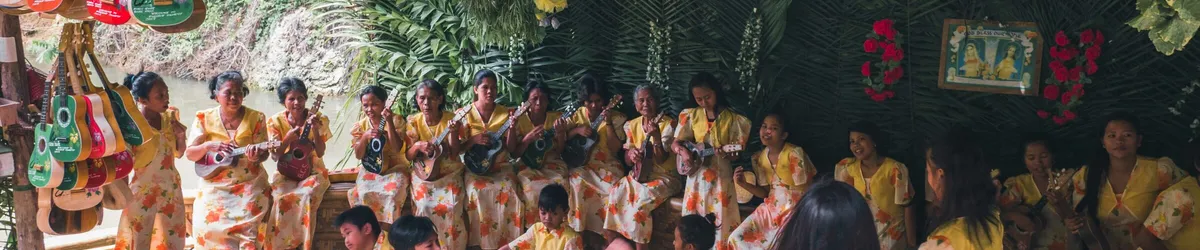
If your Filipino neighbor’s child comes home in early August asking for a barong, a baro’t saya, or a costume from a tribe you have never heard of, there is a reason. August is Buwan ng Wikang Pambansa—National Language Month—and every school in the country is about to spend weeks reciting poems, debating in verse, drawing posters, and dressing up for a culminating program.
It is also a month when the Philippines has a slightly awkward conversation with itself. The country has one national language, two official languages, well over a hundred native languages, and a population that switches between them mid-sentence. This post explains what Buwan ng Wika is, where it came from, how it is celebrated, and what it means for foreigners trying to work out which language to learn. For the bigger picture, see our post on Filipino Languages.
What Buwan ng Wika Is
- Buwan ng Wika literally means “Month of Language.” The full name, Buwan ng Wikang Pambansa, means “Month of the National Language.”
- It runs for all of August, every year.
- It is led by the Komisyon sa Wikang Filipino (KWF), the Commission on the Filipino Language, a government body created by Republic Act No. 7104 in 1991 to develop and promote Filipino and the other Philippine languages.
- It is not a public holiday. Offices and schools stay open—schools are, in fact, where most of the action is.
From a Week to a Month
The celebration started small. It began as Linggo ng Wika (Language Week). In 1954, President Ramon Magsaysay set it for late March to early April—which fell during the summer school break, so schools could not take part. In 1955, Magsaysay’s Proclamation No. 186 moved it to August 13–19.
In 1997, President Fidel V. Ramos signed Proclamation No. 1041, which stretched the observance to the whole of August and gave it its current name.
Why August: Manuel L. Quezon
The August dates were chosen to end on the birthday of Manuel L. Quezon, the Commonwealth president born in Baler (in today’s Aurora province) on August 19, 1878. Quezon pushed for a national language in the 1930s, and he is remembered as the Ama ng Wikang Pambansa—Father of the National Language.
The month now bookends his life. Quezon died on August 1, 1944, and the 2026 celebration opened on August 1 with a program at the Presidential Car Museum in Quezon City marking his 82nd death anniversary. The KWF calendar, as reported by The Summit Express, also lists:
- August 3 – A nationwide symbolic flag-raising at the Independence Flagpole in Rizal Park, Manila, with schools and communities encouraged to hold their own ceremonies.
- August 19 – Quezon’s 148th birth anniversary, with a wreath-laying at the Quezon Memorial Shrine.
- August 27 – Bunyi: Gabi ng Parangal, an awards night for KWF competition winners and language advocates.
- Throughout August – Free online webinars and seminars at the KWF’s 33 Sentro ng Wika at Kultura (language and culture centers).
The 2026 Theme
This year’s theme is “Wikang Filipino at AI: Kasangkapan sa Pananaliksik at Tulay sa Yaman ng Impormasyon”—roughly, “The Filipino Language and AI: A Tool for Research and a Bridge to the Wealth of Information.” Expect a lot of school posters featuring robots in barongs.
As of August 2, The Summit Express reported that the Department of Education (DepEd) had not yet issued a nationwide memo for the 2026 observance, though several Schools Division Offices had released their own.
Filipino vs. Tagalog
This is the question foreigners ask most, and the answer is “it’s complicated, but not that complicated.”
- Tagalog is the native language of Manila and much of Central and Southern Luzon.
- In 1937, Executive Order No. 134 made Tagalog the basis of the national language. In 1959, the national language was renamed Pilipino, partly to separate it from the Tagalog ethnic group.
- The 1987 Constitution declares that “the national language of the Philippines is Filipino” and that it should be developed on the basis of existing Philippine and other languages. Filipino and English are the two official languages.
In practice, Filipino is a standardized form of Tagalog that freely absorbs English and Spanish words. Linguists disagree on whether they are really two languages; one former KWF chair described them as mutually intelligible varieties of one language. For an expat, the distinction rarely matters: if you learn Tagalog, you are learning Filipino.
How Many Languages, Really?
Counts vary depending on how languages are separated from dialects. The KWF counts about 135 native languages, and in 2025 said about 40 of them are endangered. International catalogues put the total higher, at 170-plus. Either way, the Philippines is one of the most linguistically crowded countries on Earth.
The 2020 Census gives a sense of who speaks what at home. According to the Philippine Statistics Authority, Tagalog was the main home language in 10.52 million of 26.39 million households—roughly four in ten. Bisaya/Binisaya came second with 4.21 million households (16%), and that excludes households that listed “Cebuano” separately. Hiligaynon and Ilocano followed.
The KWF’s message is that all of these count. Its mandate covers the other Philippine languages as well as Filipino, and in 2025 its chairperson, Atty. Marites Barrios, warned that some, such as Inagtâ Isaróg, are already extinct: “Wala pong ibang magmamahal sa ating wika kung hindi tayo”—“No one else will love our language if not us.”
The Mother-Tongue Debate
Language in Philippine classrooms is a live political issue.
- In 2013, the Enhanced Basic Education Act (RA 10533) introduced Mother Tongue-Based Multilingual Education (MTB-MLE): children from kindergarten to Grade 3 were taught in their home language—Cebuano, Ilocano, Waray, and so on.
- In October 2024, Republic Act No. 12027 lapsed into law without the President’s signature. It ended mother-tongue instruction in multilingual classes, returning to Filipino and English as the media of instruction. Regional languages can still be used as supplementary aids, and MTB-MLE remains optional in monolingual classes where every pupil shares the same first language.
Supporters argued the program was hard to implement—too few materials and trained teachers in too many languages. Teachers’ groups and language advocates argued that children learn best in the language they speak at home. Expect that argument to resurface every August.
How Schools Celebrate
For parents, Buwan ng Wika means a busy month. Typical activities include:
- Costume day. The culminating program usually has students wearing Filipiniana—barong Tagalog, baro’t saya, Maria Clara gowns—or the dress of an indigenous group. Some schools ask for Filipiniana every Friday in August.
- Sabayang pagbigkas. Choral recitation: a whole class performs a poem together, with choreographed movement and dramatic pauses. It is surprisingly intense.
- Balagtasan. A debate in rhyming verse, named after the poet Francisco Balagtas. Two speakers argue a topic, with a moderator, in front of a cheering crowd.
- Poster and slogan contests. Built around the year’s theme. This year, expect AI.
- Spoken poetry, essay writing (sanaysay), OPM singing, and folk dance competitions.
English in Daily Life
None of this means English is going anywhere. English is an official language, the language of law, business, higher education, most government forms, and much of the media. Road signs, contracts, bank documents, and hospital paperwork are usually in English. Most Filipinos you deal with in an office will switch to English the moment they see a foreigner.
That is convenient, and it is also a trap: plenty of expats live here for years without learning more than salamat.
Cities vs. Provinces
In the Cities
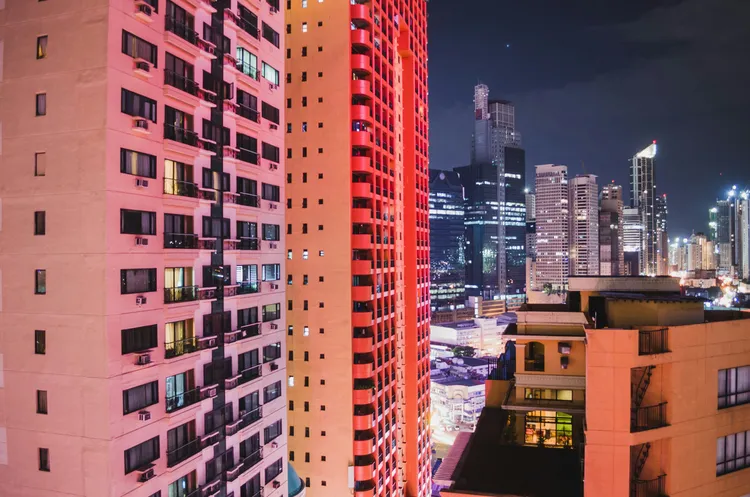
In Metro Manila, the language of the street is Taglish—Tagalog and English mixed freely, often in the same sentence. “Na-traffic ako kasi may accident sa EDSA” is completely normal speech. Office workers, call centers, malls, and condominium staff operate comfortably in English, and the upper-middle class often speaks English at home.
Buwan ng Wika in the city tends to be formal: school programs, KWF events, and government flag ceremonies.
Other major cities follow their own pattern. In Cebu City and Davao City, the street language is Cebuano (Bisaya), mixed with English—and in Davao, a good dose of Tagalog as well.
In the Provinces
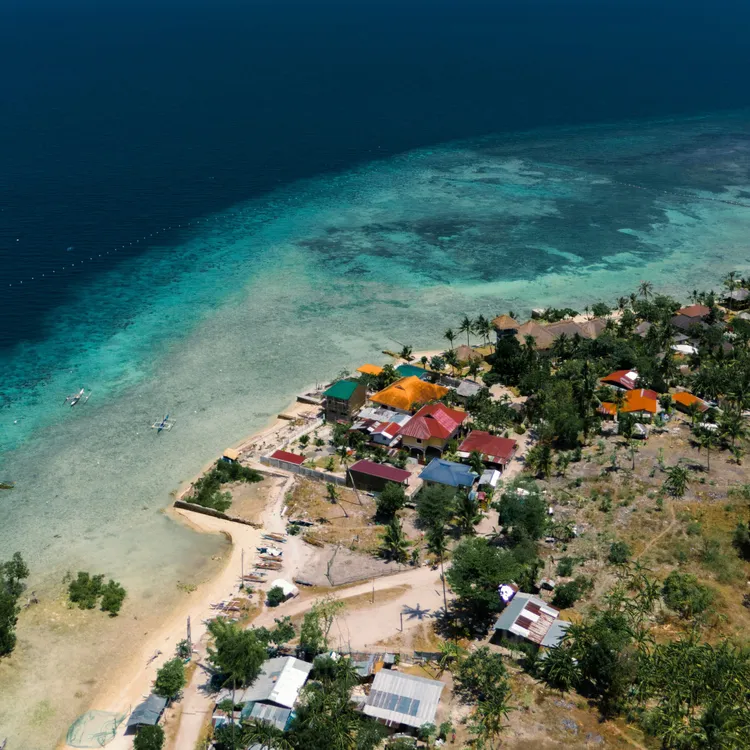
Outside Tagalog-speaking Luzon, Filipino is often a second language. In Samar and Leyte, home life is in Waray; in Iloilo and Negros Occidental, Hiligaynon; in the Ilocos, Ilocano; across most of the Visayas and Mindanao, Cebuano. Many children learn Tagalog from television and school, not at home. In remote areas, older people may speak neither Filipino nor much English.
In these places, Buwan ng Wika has a slightly different flavor. Schools still run the national program in Filipino, but regional pride shows up too—local poetry, local dances, and sometimes a pointed reminder that “national language” and “my language” are not the same thing.
For Expats
Which Language Should You Learn?
- Metro Manila, Central Luzon, Calabarzon, Mindoro, or Palawan towns: Learn Tagalog. It is the local language and the national one.
- Cebu, Bohol, Dumaguete, Cagayan de Oro, Davao, and most of Mindanao: Learn Cebuano (Bisaya). Tagalog is understood, but Cebuano is what people speak to each other.
- Iloilo, Bacolod, and Western Visayas: Hiligaynon (Ilonggo).
- Samar and Leyte: Waray.
- Ilocos and much of Northern Luzon: Ilocano.
- Moving around, or not sure yet? Start with Tagalog. It works nationwide as a lingua franca, and the most-watched media is in it.
Even a few words go a long way. Filipinos are delighted—and often amused—when a foreigner tries.
Useful Phrases (Tagalog / Cebuano)
- Thank you – Salamat po / Salamat
- Good morning – Magandang umaga po / Maayong buntag
- How much? – Magkano? / Pila?
- Where is…? – Nasaan ang…? / Asa ang…?
- Stop here (to a jeepney or tricycle driver) – Para po / Lugar lang
- Take care – Ingat / Amping
The word po (and opo, “yes”) marks respect in Tagalog. Use it with anyone older than you, anyone in authority, and anyone you are not sure about. Overusing it is never an offense.
If You Have Children in School
- Watch for the costume request. Schools often give only a week or two of notice. Filipiniana can be bought or rented in most malls and public markets, and some schools ask for a specific regional or indigenous outfit.
- Go to the culminating program. Parents are expected. It is a good way to meet other families and see your child perform in a language you may not speak.
- Expect contributions. Group presentations sometimes come with costs for props, costumes, or materials.
- Filipino is a required subject. Children of expats in local schools study Filipino as a subject. International schools vary, but many still mark Buwan ng Wika in some form.
Summary
Buwan ng Wika is:
- All of August, every year, under Proclamation No. 1041 of 1997
- Built around Manuel L. Quezon’s birthday on August 19
- Led by the Komisyon sa Wikang Filipino, with the 2026 theme on Filipino and AI
- Celebrated mostly in schools, with costumes, choral recitation, verse debates, and poster contests
- A Taglish-and-English affair in Metro Manila, and a reminder in the provinces that Filipino is often a second language
For expats, it is the best time of year to start learning a local language—and the best excuse to show up at a school program. For more on the customs behind it, see our Filipino Culture page.
Sources
- The Summit Express: ‘Buwan ng Wika’ 2026 theme, official memo, poster, sample slogans
- Wikipedia: Buwan ng Wika
- Wikipedia: Filipino language
- PTV News: KWF working to save 40 dying native languages in PH
- Philippine Statistics Authority: Tagalog is the language generally spoken in 10.52 million households in the country
- Philstar: Bill ending mother tongue education lapses into law
Thinking of Moving to the Philippines? Get Reliable Guidance
Online communities are helpful for general questions. For anything important, you still need accurate, professional, and updated information. E636 Expat Services helps foreigners with:
- Residency and long term visas
- Bank account opening
- Health insurance guidance
- Real estate assistance
- Business setup
- Retirement planning
- A smooth and secure transition into life in the Philippines
If you want to move with confidence instead of relying on random comments online, we can guide you every step of the way.
Book a consultation with E636 and start your journey the right way.
Image credits (via Unsplash, free under the Unsplash License):
- Top image: “Children dancing traditional dance” by Austin Nicomedez