The State of Energy Prices in November 2026: Meralco Hikes Again, Pump Prices Ease, and the Provinces Pay More
news16-11-2026
Eight months after the Iran war pushed the Philippines into a national energy emergency, electricity is still getting more expensive, even as pump prices finally fall.
In March we wrote about the global oil shock hitting home: the Strait of Hormuz closure, diesel spiking past ₱100 a liter, gas stations closing, and the government suspending the spot market. This post is the follow-up. Where do things stand in mid-November 2026, and what does it mean if you live in Manila versus a province or a small island?
Meralco: Second Straight Monthly Increase
On November 13, 2026, Meralco announced that its overall rate for a typical household would rise by ₱0.4895 per kWh, to ₱15.5510/kWh from ₱15.0615 in October. A household using 200 kWh a month pays about ₱98 more. It is the second monthly increase in a row.
According to Meralco’s advisory, the main drivers were:
- Generation charge: up ₱0.4344/kWh. The biggest jump came from First Gas/Prime CoreGen (about 24% of Meralco’s supply), whose charges rose ₱2.9241/kWh. Two reasons: the quarterly Malampaya gas repricing, and more imported LNG, which rose from 24% to 44% of that supplier’s fuel as Malampaya gas needed supplementing.
- The weak peso. About 86% of First Gas/Prime CoreGen’s costs are in dollars, and the peso hit record lows during the period.
- The spot market (WESM): up ₱4.3946/kWh. WESM supplies only about 3% of Meralco’s needs, but prices jumped as Luzon demand rose by roughly 769 MW during an unusually warm October.
- Taxes: up a net ₱0.2165/kWh. This one surprises people. Indigenous natural gas is VAT-exempt, so when less of it is used and more imported fuel replaces it, the VAT on your bill goes up.
Partly offsetting this, power supply agreement charges (about 73% of supply) fell ₱0.2769/kWh, and a new six-month refund of ₱0.1733/kWh started for residential customers. The transmission charge rose ₱0.1721/kWh after the ERC approved higher revenue for the grid operator NGCP, but a lower ancillary service charge almost cancelled it out (net +₱0.0080/kWh).
Philstar’s report attributed the generation increase to the peso and “the ongoing global oil crisis.” The Daily Tribune led with the heat. Both are right; Meralco’s own breakdown shows fuel, currency, and weather all pushing in the same direction.
How That Compares With the Start of the Year
In January 2026, before the war, Meralco’s overall rate was ₱12.9508/kWh (Philstar and Manila Bulletin, January 12). November’s ₱15.5510 is about ₱2.60/kWh, or roughly 20%, higher. For a 200 kWh household, energy charges alone have gone from about ₱2,590 to about ₱3,110 a month.
The Daily Tribune also notes that disconnections for households using 200 kWh or less remain suspended until December, provided unpaid May–July bills are settled by November 26. Unpaid August–October bills are due December 26.
Pump Prices: Big Rollbacks, Still Well Above Pre-War
Fuel is finally moving the other way. The DOE’s weekly adjustments in November 2026:
- November 3: gasoline up as much as ₱3.50/liter; diesel down at least ₱1; kerosene down at least ₱1.90
- November 10: a large rollback, with gasoline down ₱16.80, diesel ₱4.10, and kerosene ₱3.70 per liter, which the DOE linked to expectations of a diplomatic resolution to the US–Iran conflict
- November 17: gasoline down ₱1.50, diesel ₱3.80, kerosene ₱5.80 per liter
After the November 17 rollback, BusinessWorld reported Metro Manila ranges of roughly ₱77 to ₱102.80 per liter for gasoline and ₱84.70 to ₱94.19 for diesel.
For comparison, DOE monitoring reported by GMA News showed these Metro Manila ranges per liter:
| Product | Pre-war (Feb 24–Mar 2, 2026) | Crisis peak week (Mar 24–30, 2026) |
|---|---|---|
| Regular gasoline (RON 91) | ₱49.00–₱63.49 | ₱84.00–₱101.20 |
| Regular diesel | ₱48.00–₱65.39 | ₱105.00–₱131.90 |
| Kerosene | ₱77.40–₱98.89 | ₱140.00–₱166.79 |
So diesel has come well off its March highs, but the Metro Manila range is still roughly ₱30–37 a liter above pre-war levels. (The ranges cover different brands and grades, so treat the comparison as approximate.) The DOE also said on November 17 that it had flagged 114 stations for not fully applying the rollback, so it is worth checking the posted price.
LPG and Kerosene
Cooking gas has been volatile. In September, the President suspended the excise tax on LPG and kerosene, but a large October price hike largely swallowed that saving, according to GMA News. Solane then cut prices by ₱4.55/kg effective October 27 (about ₱50 per 11-kg tank). November prices vary by brand and region, so check your dealer’s current price rather than relying on a national figure.
What the Government Is Doing
- The energy emergency is still in force. Executive Order 110, signed March 24, 2026, runs for one year unless the President lifts or extends it.
- Fuel tax powers. Republic Act 12316, signed March 25, lets the President suspend or reduce fuel excise taxes when Dubai crude averages US$80 a barrel or more for a month, for up to three months at a time, until the end of 2028. So far it has been used on LPG and kerosene, not across the board.
- The debate. Critics, including a Rappler commentary, argue that broad excise cuts help car owners more than poor households; supporters say fuel costs feed into everything, from jeepney fares to rice. Either way, every peso of suspended tax is a peso of lost revenue at a time when the budget is already stretched.
- Off-grid diesel. The DOE arranged for PNOC-EC to sell up to 45 million liters of diesel at ₱80/liter to power providers in off-grid areas, and Napocor began lifting diesel from PNOC-EC in August for its island plants.
- Relief on bills. Staggered payment deadlines and the disconnection moratorium for small Meralco users, described above, are still running.
Cities vs. Provinces
The same oil shock lands very differently depending on who supplies your electricity.
In the Cities
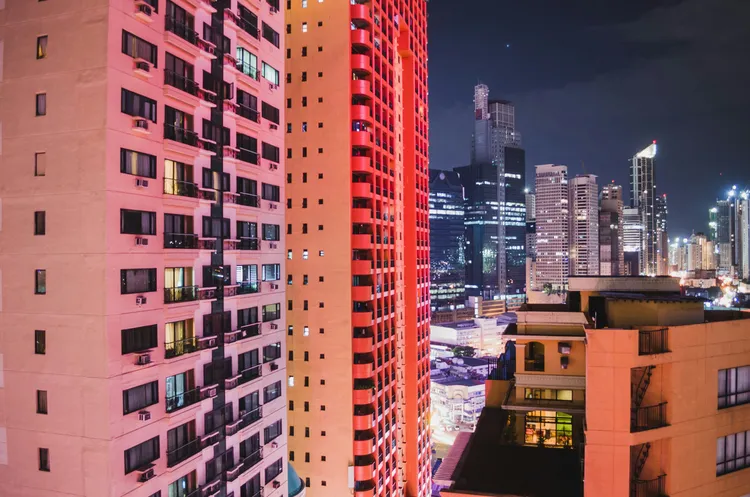
Metro Manila and surrounding provinces are served by Meralco, a large private distribution utility regulated by the ERC. Its bills are high, but they are predictable and published: every month, Meralco announces the rate and the reasons, and the press reports it the same day.
City residents also have:
- More competition at the pump, and the narrowest price ranges
- Faster restoration after outages, and a grid with more backup capacity
- Easier access to installers for solar, batteries, and inverter appliances
- LPG delivered to the door from several brands
The downside: city living leans on aircon, which is where most of a Manila electricity bill goes, and the weather is getting hotter.
In the Provinces
Outside Meralco’s franchise, power usually comes from an electric cooperative or a smaller private utility. Rates vary enormously from one co-op to the next. Some are cheaper than Meralco, but some are noticeably more expensive. For November 2026:
- NOCECO (Negros Occidental Electric Cooperative) raised its residential rate by ₱1.0020/kWh to ₱17.2311/kWh, about ₱200 more for a 200 kWh household. That is double Meralco’s increase, and the resulting rate is about ₱1.68/kWh above Meralco’s.
- Negros Power, the private utility serving Bacolod, rose ₱0.9822/kWh to ₱15.2513/kWh.
Co-ops generally pass generation and transmission costs straight through, and they carry higher system losses over long rural lines. NOCECO is also paying off its October spot-market bill in installments through March 2027, so the costs of this autumn will linger.
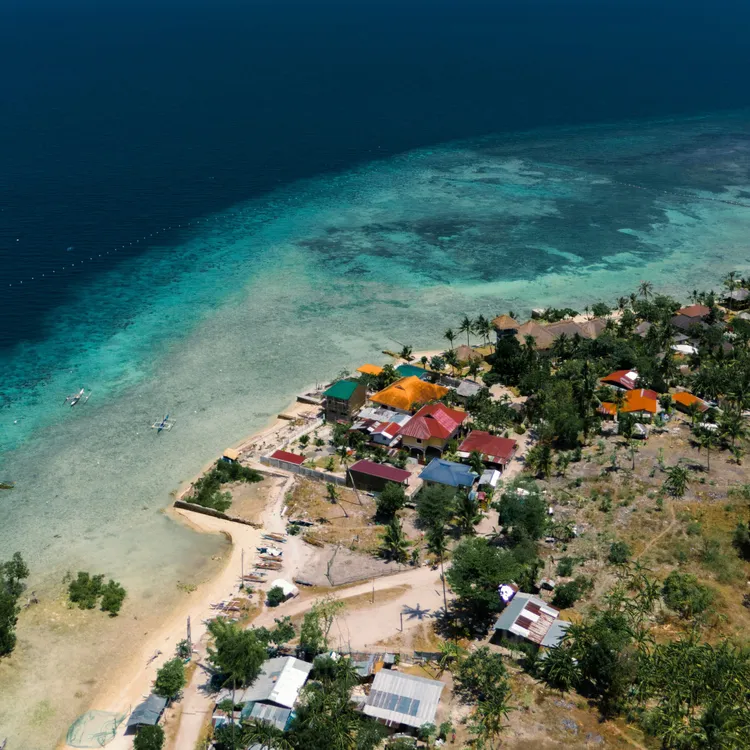
On small islands, the picture is different again. The National Power Corporation’s SPUG (Small Power Utilities Group) runs 281 power plants on 125 islands and isolated communities, most of them diesel generators. According to a Philstar column on missionary electrification (May 29, 2026):
- The true cost of generation on small islands is about ₱20–30/kWh, and the DOE puts the high end at ₱62/kWh
- Residents pay a subsidized rate of roughly ₱7–8.3/kWh
- The difference is covered by the Universal Charge for Missionary Electrification (UCME), a line on every grid-connected bill, including Meralco’s. The ERC authorized ₱30.773 billion for 2026; Napocor has asked for more.
- Mindoro and Palawan account for roughly 60% of the subsidy
The subsidy protects island households from the full price of diesel, but it cannot protect them from running out of it. Oriental Mindoro went through rotational brownouts in 2026, which its co-op, ORMECO, blamed on generation failures, delayed new plants, and surging fuel prices (Inquirer and PIA). In remote areas, outages, not tariffs, are the bigger problem.
Rural households also feel fuel prices more directly:
- LPG costs more the farther it travels from a depot, and some barangays rely on firewood or charcoal when tanks get expensive
- Kerosene is still used for lamps during brownouts, and it saw some of the biggest swings this year
- Small solar kits, from a single panel with a battery to rooftop systems, are increasingly common, partly because the grid is unreliable
What It Means for Expats
Estimate your bill realistically. Multiply your expected kWh by your utility’s current overall rate. At Meralco’s November rate, 300 kWh is about ₱4,670; 500 kWh is about ₱7,780. Outside Manila, look up your co-op’s latest rate advisory (most post on Facebook) rather than assuming it is cheaper.
Aircon is the bill. A single older window unit running overnight can use several hundred kWh a month on its own. Practical steps:
- Buy inverter aircon, refrigerators, and washing machines; the price premium pays back quickly at ₱15+/kWh
- Cool one bedroom at night rather than the whole house
- Set the aircon at 25–26°C with a fan, and clean the filters monthly
- Shade west-facing walls and windows
Consider solar, but size it properly. Solar is now one of the few ways to lock in part of your electricity cost. We covered the practical side in Solar Project 2026, and the DOE, as cited by Philstar, says solar-plus-battery already costs less than diesel generation on small islands. Points to check:
- Net metering is available on the grid, but the application goes through your utility, and approval times vary a lot between Meralco and provincial co-ops
- Batteries matter more than panels if outages are your main problem; see our guide to whole-home battery backup
- Use an accredited installer and get the electrical permit; insurance and resale both depend on it
Plan for outages. In the provinces especially, assume you will have brownouts. A small inverter generator, a battery power station, rechargeable fans, and a stock of LPG cover most of it. Our post on how to survive rolling blackouts has a full checklist. Never run a generator indoors.
Budget for volatility. Fuel prices are falling now, but they move weekly with the Middle East news. A sensible approach is to budget at roughly the current rate plus 10–15% for electricity and transport, and treat any savings as a bonus.
Ask before you rent. When viewing a house or condo, ask for the last few electricity bills, the utility provider, and whether aircon units are inverter. Two similar houses can have very different bills.
Summary
In mid-November 2026:
- Meralco’s rate is ₱15.5510/kWh, up ₱0.4895 for November and about 20% higher than in January, driven by generation costs, Malampaya repricing, more imported LNG, the weak peso, WESM prices, and higher VAT
- Pump prices are falling after big November rollbacks, but diesel is still roughly ₱30–37 a liter above pre-war levels in Metro Manila
- The national energy emergency remains in force, with excise relief so far limited to LPG and kerosene
- Provinces are not automatically cheaper. Some co-ops charge more than Meralco, small islands rely on subsidized diesel, and brownouts are more common
- For expats, inverter appliances, realistic budgeting, and solar with batteries are the most practical hedges
The rollbacks are welcome, but electricity bills tend to follow fuel prices with a lag of a month or two, and the peso is still weak. Don’t expect bills to drop much before the new year.
Sources
- Meralco: Higher Residential Rates this November 2026
- Philstar: Meralco rates rise in November
- Daily Tribune: Heat, higher demand push up Meralco November bill
- BigGo Finance: Meralco Bills to Rise Again in November as Peso Slump, Middle East War Lift Power Costs
- Philstar: Meralco announces rate cut for first month of 2026
- Manila Bulletin: Meralco power rates drop to ₱12.95 as transmission costs ease in January
- GMA News: Pump price increase amid Middle East war (DOE Metro Manila price ranges)
- GMA News: Mega fuel price rollback set on Tuesday, November 10
- Daily Tribune: Motorists gas up!
- BusinessWorld: Fuel prices to drop by up to ₱5.80/L
- Rappler: Gasoline prices get big hike on November 3, diesel and kerosene roll back
- PhilNews: DOE flags 114 gas stations for not applying full rollback
- GMA News: Solane to lower LPG prices starting Oct. 27, 2026
- Lawphil: Executive Order No. 110, s. 2026
- PIA: PBBM signs RA 12316 granting the President emergency powers to suspend, reduce fuel excise tax
- Rappler: Marcos’ new fuel tax law: A gift to the wealthy?
- DOE: DOE, NPC roll out diesel supply support to protect off-grid areas
- BusinessMirror: Napocor stocks up on fuel for off-grid areas
- Philstar: Missionary electrification
- BusinessWorld: NPC seeks higher charge for missionary electrification
- Digicast Negros: NOCECO power rates up by ₱1/kWh in November
- Inquirer: Oriental Mindoro braces for brownouts amid critical supply shortage
Thinking of Moving to the Philippines? Get Reliable Guidance
Online communities are helpful for general questions. For anything important, you still need accurate, professional, and updated information. E636 Expat Services helps foreigners with:
- Residency and long term visas
- Bank account opening
- Health insurance guidance
- Real estate assistance
- Business setup
- Retirement planning
- A smooth and secure transition into life in the Philippines
If you want to move with confidence instead of relying on random comments online, we can guide you every step of the way.
Book a consultation with E636 and start your journey the right way.
Image credits (via Unsplash, free under the Unsplash License):
- Top image: “Silhouette of electric post during sunset” by Wander Fleur
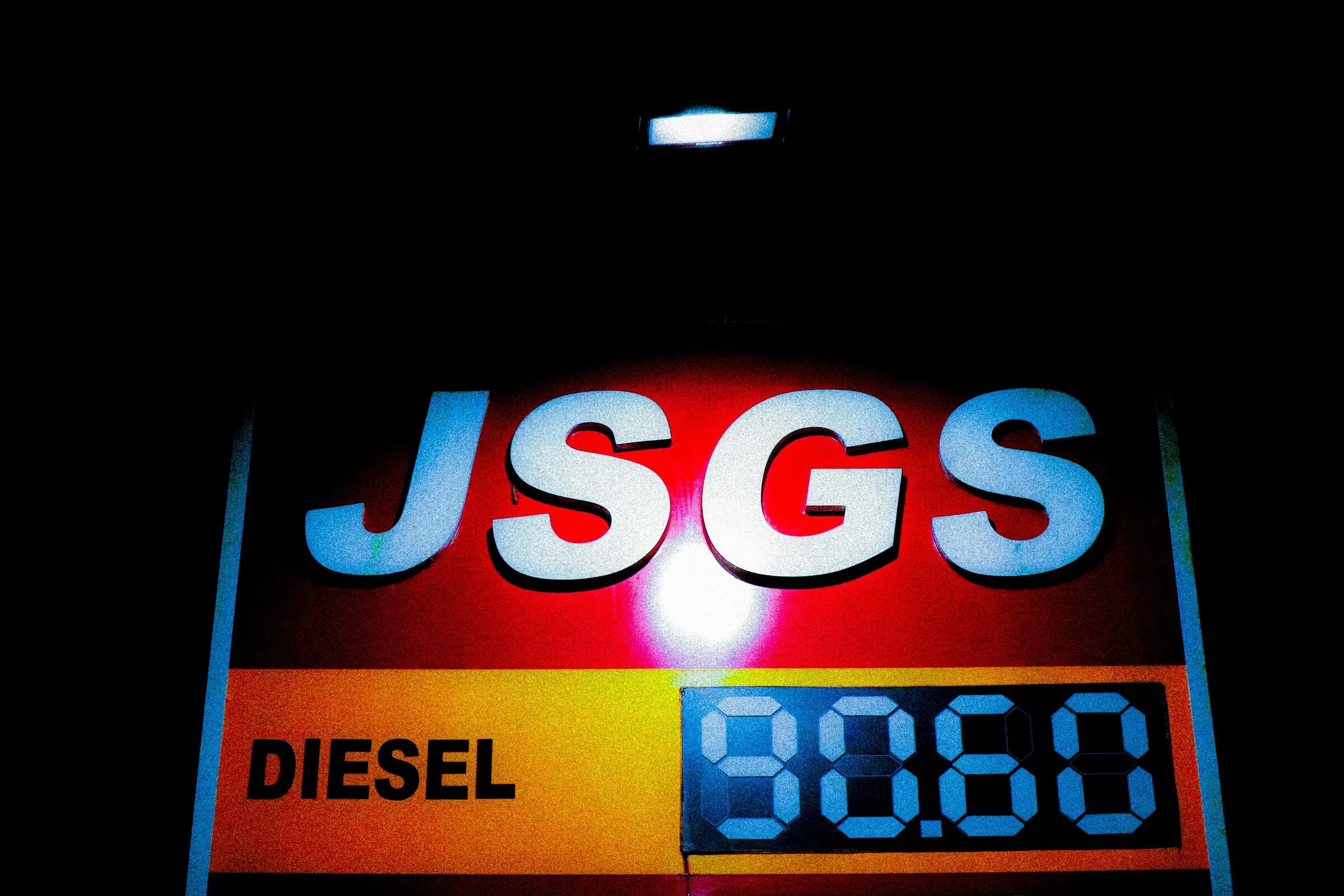
- Pump prices section: “Glowing red JSGS diesel sign” by Chrysler Gonzales