A Rough Week in the West Philippine Sea: A Baton at Ayungin, Water Cannon at Scarborough
news26-07-2026
In the space of five days in July 2026, the long-running dispute between the Philippines and China in the West Philippine Sea produced two very different confrontations. On Monday, July 20, the Armed Forces of the Philippines (AFP) said a China Coast Guard officer struck a Philippine Navy sailor with a wooden baton at Second Thomas (Ayungin) Shoal. On Thursday and Friday, July 23 and 24, the Philippine Coast Guard (PCG) said Chinese vessels fired water cannon at Philippine government ships near Scarborough (Panatag) Shoal, where they were handing out fuel subsidies to Filipino fishermen.
All of this happened during the week Manila hosted Southeast Asia’s foreign ministers, with China’s foreign minister in town.
This post covers what each side says happened, the background to the dispute, and what it means for the people who actually fish these waters, for city consumers, and for foreigners living in the Philippines.
July 20: The Baton at Ayungin Shoal
Second Thomas Shoal, called Ayungin in the Philippines and Ren’ai Jiao in China, is where the Philippines keeps a small detachment aboard the BRP Sierra Madre, an old navy ship deliberately grounded on the reef in 1999. Resupplying that detachment has been a recurring flashpoint for years.
According to the AFP’s account, as reported by Reuters and the Inquirer:
- At about 9:15 a.m. on July 20, a China Coast Guard vessel (bow number 21560) launched a rigid-hull inflatable boat with eight personnel, which approached the Sierra Madre and circled it while taking photos and video.
- Two Philippine Navy rubber boats moved to drive it away.
- The AFP says the Chinese personnel then struck a Navy sailor on the head with a wooden baton, injuring him and damaging one of the rubber boats.
- The AFP released a 25-second video that it says shows the strike.
The Department of Foreign Affairs called the act of violence unacceptable and said it warranted diplomatic action. The Department of National Defense called it part of a “clear pattern of provocative and hostile behavior.”
China’s account is different. In a statement the same day, the China Coast Guard said the Philippine side had distorted the facts. It said its small patrol boat was on routine patrol when two rubber boats from the grounded ship approached at high speed, encircled and rammed it, and that Philippine personnel attacked first with paddles and poles. China described its own response as restrained “countermeasures.” Chinese state media also reported that the China Coast Guard permitted the transfer of injured personnel from the Sierra Madre on humanitarian grounds. Al Jazeera reported that both countries summoned each other’s ambassadors.
This is not the first violent encounter at the shoal. Reuters noted that a June 2024 confrontation there cost a Filipino sailor a finger.
July 23–24: Water Cannon at Scarborough Shoal
Scarborough Shoal, called Panatag or Bajo de Masinloc in the Philippines and Huangyan Dao in China, lies west of Zambales. It is a traditional fishing ground for fishermen from Zambales and Pangasinan, and it has been under effective Chinese control since a 2012 standoff.
The Philippine ships there were supporting the Kadiwa ng Bagong Bayaning Mangingisda program, run by the Bureau of Fisheries and Aquatic Resources (BFAR), which delivers fuel subsidies and food packs to fishermen at sea. With fuel prices high this year (see our post on the Philippine energy crisis), that diesel matters.
According to the PCG, as reported by the Inquirer:
- On Thursday, July 23, China Coast Guard vessel 3302 fired its water cannon for more than two minutes at the BFAR vessel BRP Datu Dumangsil, at about 6:29 a.m., causing what the PCG called an indirect hit.
- No injuries were reported, and by mid-morning the M/V Mamalakaya and BRP Datu Cabaylo had finished distributing fuel and food packs.
It happened again the next day. According to the PCG, as reported by the Philippine Star and Al Jazeera:
- On Friday, July 24, a Chinese vessel (bow number 3107) fired water cannon at the PCG’s BRP Cape San Agustin at about 6:26 a.m.
- Another Chinese vessel came within about 7 meters of the BFAR vessel BRP Datu Paduhinog, and CCG 21581 hit it directly with water cannon several times.
- The BRP Datu Cabaylo was also hit, and a Chinese maritime militia vessel towed a rope behind another BFAR ship, which the PCG called a navigation hazard.
- No injuries were reported in the Philippine Star account.
The counts of Chinese ships differ by source. Al Jazeera, citing the PCG, said 12 China Coast Guard and three militia vessels were involved; the Philippine Star said up to 15 coast guard and militia vessels.
PCG spokesperson Rear Adm. Jay Tarriela said the PCG “strongly condemns the dangerous and unprofessional actions of the China Coast Guard.”
China’s position: the China Coast Guard said it imposed “control measures” on Philippine vessels it said were operating illegally around the shoal, and that it used warnings, blockades, and water cannon after they “insisted on intruding.” China’s Foreign Ministry spokesperson Lin Jian called the coast guard’s actions “reasonable, lawful and beyond reproach.”
The Diplomatic Backdrop
The timing was awkward for everyone. Manila was hosting the 59th ASEAN Foreign Ministers’ Meeting, attended by China’s Foreign Minister Wang Yi and U.S. Secretary of State Marco Rubio. The Inquirer reported that ASEAN is aiming to adopt a legally binding Code of Conduct for the South China Sea at the ASEAN Summit in Manila in November. Al Jazeera reported that Rubio called Beijing’s actions “disturbing” and reaffirmed U.S. support for the Philippines, a treaty ally.
Background: The 2016 Ruling
The legal reference point for the Philippines is the arbitral award of July 12, 2016. A five-member tribunal constituted under the UN Convention on the Law of the Sea (UNCLOS) ruled that:
- There was no legal basis for China to claim historic rights to resources within its “nine-dash line”
- Filipino fishermen, like Chinese fishermen, have traditional fishing rights at Scarborough Shoal, and China had interfered with them by restricting access
China did not take part in the case and does not accept the ruling. In practice, the award is cited constantly by Manila and rejected just as constantly by Beijing, and July 2026 marked its tenth anniversary.
The Human Side: Fishermen
The government statements are about sovereignty. For fishing families, the issue is more basic: where they can fish, and what it costs to get there.
A Reuters report published by GMA News on July 11 described fishermen from Masinloc, Zambales, who have stopped going to Scarborough at all. One had not been there since 2024, another since 2022. One now drives a tricycle to supplement his income. “We won in 2016, but it doesn’t feel like a victory to me,” one told Reuters.
On the ruling’s anniversary, the Inquirer reported that fisher groups with members from Zambales, Pangasinan, Bataan, and Palawan say their livelihoods have not substantially improved. With fewer fish close to shore, trips are longer, which raises spending on diesel, food, and ice and cuts into earnings. Some say they still get tailed and driven off.
That is why the fuel subsidy missions exist, and why it matters when they are disrupted.
Cities vs. Provinces
In the Cities
For most people in Metro Manila, Cebu, or Davao, the West Philippine Sea is something on the evening news, not something on the dinner table.
- Fish prices in city markets are driven mostly by the season, fuel costs, weather, and supply from many fishing grounds. A confrontation at one shoal does not show up at the wet market the next morning.
- The bigger effect is sentiment: the incidents dominate news and social media, and they feed into national politics and diplomacy.
- City life was not disrupted. The ASEAN meetings went ahead.
In the Provinces
For coastal towns in Zambales, Pangasinan, Bataan, and Palawan, it is much more direct:
- Access to traditional grounds determines how much fish comes home, and how much fuel is burned getting it.
- Higher fuel costs this year make every extra hour at sea more expensive, which is why government fuel subsidies are delivered at sea.
- When fishing income falls, families turn to side jobs (tricycle driving, construction, overseas work), and the local economy feels it.
- Local fish supply in these towns is more exposed to what happens offshore than the national market is.
What It Means for Expats
For foreigners living in the Philippines, these incidents are not a reason to panic, and day-to-day life was not affected. A few practical points:
- Daily life continues. None of these incidents affected cities, airports, ferries, or land travel. Palawan and Zambales remain open for living and tourism.
- Stay off the water near disputed features. Tourist boat trips stay close to shore. Do not charter a boat toward Scarborough, Second Thomas, or other contested features, and do not fly drones over coast guard or naval operations.
- Get your news from primary sources. The PCG, AFP, and DFA post statements quickly; Reuters, AP, and the major Philippine outlets report both sides. Viral videos and screenshots often lack context.
- Stay out of the politics. Filipinos feel strongly about the West Philippine Sea, and many expats have strong opinions too. As a guest on a visa, it is wise to avoid rallies and online pile-ons, and to listen more than you talk.
- Register with your embassy. Most embassies have an online registration program for citizens abroad. It costs nothing and makes it easier to reach you if anything ever changes.
- Watch the economic side. The practical effect on expats is more likely to come through prices (fuel, fish, imports) than through security.
Summary
- On July 20, the AFP said a China Coast Guard officer struck a Philippine Navy sailor with a baton at Ayungin Shoal; China says Philippine personnel rammed its boat and attacked first.
- On July 23 and 24, the PCG said Chinese vessels fired water cannon at Philippine government ships supporting a fuel subsidy mission for fishermen near Scarborough Shoal; China says it was enforcing “control measures.”
- Both happened while Manila hosted ASEAN foreign ministers, with a Code of Conduct targeted for the November summit.
- The 2016 arbitral ruling recognized Filipino fishermen’s traditional rights at Scarborough; China rejects it.
- The people most affected are fishing communities in Zambales, Pangasinan, Bataan, and Palawan. For city residents and expats, the effects are mostly indirect.
Sources
- Interaksyon (Reuters): Chinese coast guard struck navy sailor in South China Sea encounter, says Philippine military
- Inquirer: AFP: China Coast Guard assaults PH Navy man at Ayungin
- CGTN: China Coast Guard: Philippines distorted facts over Ren’ai Jiao incident
- CGTN: China permits Philippines to move injured personnel from Ren’ai Jiao
- Inquirer: China Coast Guard fires water cannon at PH vessel during Panatag mission
- Philippine Star: China blasts Philippines vessels with water cannons anew
- Al Jazeera: Philippines accuses China of using water cannon on vessels for second day
- GMA News (Reuters): Filipino fishermen fear China harassment in West PH Sea, a decade after tribunal victory
- Inquirer: 10 years after Hague win, Filipino fishers still face harassment in WPS
- ASIL: Permanent Court of Arbitration rejects China’s sovereignty claims in the South China Sea (July 12, 2016)
- Lawfare: Tribunal Issues Landmark Ruling in South China Sea Arbitration
Thinking of Moving to the Philippines? Get Reliable Guidance
Online communities are helpful for general questions. For anything important, you still need accurate, professional, and updated information. E636 Expat Services helps foreigners with:
- Residency and long term visas
- Bank account opening
- Health insurance guidance
- Real estate assistance
- Business setup
- Retirement planning
- A smooth and secure transition into life in the Philippines
If you want to move with confidence instead of relying on random comments online, we can guide you every step of the way.
Book a consultation with E636 and start your journey the right way.
Image credits (via Unsplash, free under the Unsplash License):
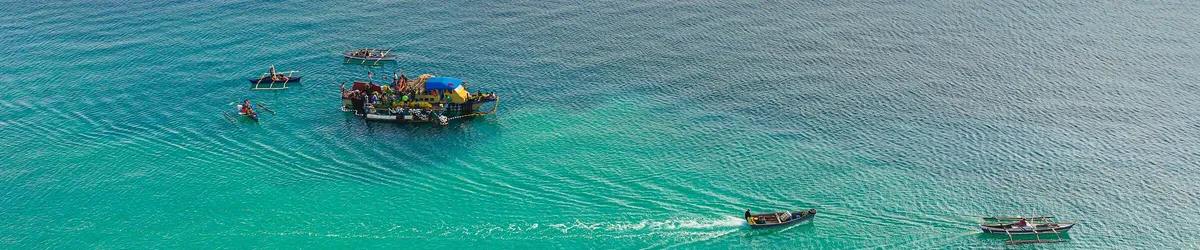
- Top image: “a group of boats in the water” by Josephus Bajo