Senator Estrada and Ex-DPWH Chief Bonoan Face Plunder Warrants: The Flood Control Scandal Explained
news03-06-2026
On June 1, 2026, a sitting senator and a former public works secretary were taken into custody on plunder warrants tied to the Philippines’ flood control projects scandal. Senator Jinggoy Estrada and former Department of Public Works and Highways (DPWH) Secretary Manuel Bonoan are accused, along with three former DPWH engineers, of involvement in an alleged kickback scheme that prosecutors put at more than ₱573 million.
These are charges, not convictions. Everyone named below is presumed innocent until proven guilty, and both Estrada and Bonoan have denied the allegations.
For anyone living in the Philippines, though, this is more than a political story. Flood control money is supposed to keep your street dry in August. Here is what happened, how we got here, and what it means for you.
What Happened This Week
The sequence, as reported by Philippine and international outlets:
- May 28: The Office of the Ombudsman filed one count of plunder and two counts of graft against Estrada at the Sandiganbayan, the country’s anti-graft court. Assistant Ombudsman Mico Clavano put the alleged illicit payouts at over ₱573 million, tied to flood control projects funded under the 2025 national budget. The plunder case was raffled to the Sandiganbayan’s Fifth Division; the graft cases went to the Second and Fifth Divisions.
- May 29: Estrada posted ₱90,000 bail before the Second Division on the graft case, according to Gulf News. Graft is bailable. Plunder generally is not, and the Ombudsman recommended no bail.
- June 1: The Fifth Division issued arrest warrants on the plunder case. Estrada was taken into custody that day and booked at Camp Crame. Bonoan surrendered to the PNP’s Criminal Investigation and Detection Group, but his blood pressure spiked during booking and he was taken to the PNP General Hospital under custody.
- June 2: State broadcaster PTV reported that Estrada and the three co-accused engineers had been transferred to the Quezon City Jail in Payatas, while Bonoan remained under hospital arrest.
One small discrepancy worth noting: most reports, and Wikipedia’s current-events summary, describe Estrada as having surrendered. The Daily Tribune quoted Interior Secretary Jonvic Remulla as saying he did not surrender but was formally arrested under the warrant. Either way, he is in custody.
Who Is Charged
According to GMA News and the Daily Tribune, the plunder warrant covers:
- Sen. Jinggoy Estrada – the principal accused
- Manuel Bonoan – former DPWH Secretary
- Denryl Caesar Cortuna – former assistant district engineer, DPWH-NCR
- Manny Bulusan and Arturo Gonzales Jr. – former district engineers, DPWH-NCR
Three other former DPWH officials—Roberto Bernardo, Gerard Opulencia, and Henry Alcantara—were dropped from the case because they are already state witnesses. Charges against former DPWH Undersecretary Catalina Cabral were dismissed after her death in December 2025.
What Is Alleged
The Ombudsman’s theory, as reported by GMA News, is that funds were inserted into the DPWH budget and steered to particular flood control projects in exchange for predetermined commissions—kickbacks—with insertions made in a “layered method.” Clavano said the case is “built on solid, immovable evidence.”
What the Accused Say
Estrada denies the charges. He has called the case politically motivated, said he “will not be intimidated,” and said he would “exhaust all legal remedies.” He also pointed to a certification from the Senate’s budget research office stating he made no insertions in the 2024 and 2025 budgets. The Ombudsman responded that the certification “does not hold weight.” That is the kind of factual dispute the court will have to settle.
Malacañang has said the Ombudsman acts independently and rejected any link between the case and Senate politics.
This is Estrada’s third plunder case in 25 years. He was acquitted in 2024 of plunder over the 2014 pork barrel scam, though graft counts from that era remain, and he was charged in 2001 alongside his father, former President Joseph Estrada, over jueteng money.
How We Got Here
The scandal did not appear overnight. A short timeline:
- August 11, 2025: President Ferdinand Marcos Jr. said an audit found that about ₱545 billion had gone into roughly 9,855 flood control projects during his term, and that just 15 contractors had won about 20% of that money—roughly ₱100 billion (Philstar). He also said more than ₱350 billion worth of projects did not specify what was actually being built. He launched Sumbong sa Pangulo, a website where citizens could report suspect projects.
- August–September 2025: Senate and House hearings followed. Investigators looked at alleged ghost projects—paid-for flood control works that were incomplete or never built—especially in Bulacan.
- September 2025: The President created the Independent Commission for Infrastructure (ICI) to investigate. It later referred dozens of people to the Ombudsman and ceased operations on March 31, 2026.
- 2025–2026: The Ombudsman began filing cases in batches. The Estrada case is the fourth batch since Ombudsman Jesus Crispin Remulla took office in October 2025, and GMA News described Estrada as the highest-ranking incumbent official charged in the scandal so far.
The President also said no new flood control funding would go into the 2026 budget while the mess was sorted out.
What Happens Next
- Plunder is punishable by up to life imprisonment and is generally non-bailable, so Estrada can expect to remain in detention unless the court grants bail after hearings on the strength of the evidence.
- Arraignment, pre-trial, and trial at the Sandiganbayan typically take a long time. Plunder cases in the Philippines have historically run for years.
- More cases are expected. The Ombudsman has said other officials are under investigation, and reports have mentioned additional complaints in the pipeline.
We will not speculate on outcomes. The court decides; the rest is commentary.
Why Flood Control Spending Matters to Daily Life
Flood control is not abstract. It is the dike that keeps a river out of a barangay, the pumping station that drains a city street, and the drainage canal that is supposed to be clear before the rains. When money meant for those things goes missing—or buys a project that exists only on paper—the bill arrives as water in your living room.
Cities vs. Provinces
In the Cities
In Metro Manila, flooding is mostly urban: heavy rain from typhoons and the southwest monsoon (habagat) overwhelms drainage, esteros, and pumping stations, and low-lying areas go under. Neighborhoods near Manila Bay and the river systems—including places like Malabon and Navotas, which were flagged early in the scandal—flood repeatedly.
What this looks like in practice:
- Streets impassable for hours or days; commutes canceled
- Ground-floor units and parked cars damaged
- Power cut for safety in flooded areas
- Garbage and debris clogging the very drains that should carry water away
City flood control is mostly drainage, pumping, and sea walls. When those are underfunded or poorly built, the same streets flood every year.
In the Provinces
Outside the cities, flood control usually means river dikes, revetments, and embankments—the kind of projects at the center of the Bulacan ghost-project allegations. Rural flooding tends to come fast: a river rises after upstream rain, overtops a weak or missing dike, and floods farmland, roads, and houses.
What this looks like in practice:
- Rice fields and crops lost in a single night
- Bridges and river crossings closed; towns cut off
- Livestock and homes washed out
- Long recovery, because rural households have less savings and fewer alternatives
A substandard dike can be worse than none: people build behind it believing they are protected. For more on how rural infrastructure works (and doesn’t), see our post on rural Philippines infrastructure.
What It Means for Expats
You cannot control what happens at the Sandiganbayan. You can control where you live and how prepared you are.
- Check the flood hazard map before you sign. Two free tools:
- HazardHunterPH (hazardhunter.georisk.gov.ph), from DOST-PHIVOLCS and the GeoRiskPH program, generates a hazard report for any location you pick on a map: flood, landslide, storm surge, faults, and volcanoes. It is designed for property owners, buyers, and developers.
- UP NOAH (noah.up.edu.ph) shows flood, landslide, and storm surge hazard levels as low, medium, or high. Its flood layer is based on a 100-year rain scenario. Both are indicative, not guarantees. Use them as a first filter, not the final word.
- Ask the neighbors. Ask how high the water got during the last big typhoon. Locals remember, and there are often water lines on walls if you look.
- Visit in the rainy season. A property that looks perfect in April can be a pond in August.
- Prefer higher floors and higher ground. In a condo, avoid ground-floor units and check where the building’s electrical room and generator are. In a house, check the elevation relative to the road and the nearest river or canal. (See our guide to renting a condo in the Philippines.)
- Look at the nearest flood control project. If there is a dike or drainage project nearby, look at it. Is it finished? Is it intact? Sumbong sa Pangulo was set up so citizens could report problems.
- Insure what matters. Standard home and car policies in the Philippines may exclude flood or require an add-on (often listed as “acts of nature” or typhoon and flood cover). Read the policy and ask the insurer directly.
- Have a plan. Keep documents in waterproof bags, store valuables above the waterline, and know your evacuation route and your barangay’s evacuation center.
Summary
- On June 1, 2026, the Sandiganbayan issued plunder warrants against Sen. Jinggoy Estrada, former DPWH Secretary Manuel Bonoan, and three former DPWH-NCR engineers over an alleged ₱573-million kickback scheme in 2025 flood control projects.
- All are accused, not convicted, and the principal accused deny the charges.
- The case grows out of a scandal that began in August 2025, when the President said 15 contractors had won about a fifth of roughly ₱545 billion in flood control projects.
- Flood control money is what protects city streets and rural barangays from water. Whatever the courts decide, expats should do their own homework: check hazard maps, visit in the rainy season, and insure accordingly.
Update (November 2026)
Later developments, as reported by Philippine outlets:
- June 4: At Estrada’s arraignment on the graft case before the Sandiganbayan’s Second Division, he declined to plead, so the court entered a not-guilty plea on his behalf after denying his motion to dismiss (Philstar). That case concerns alleged commitment fees on ₱855 million in Bulacan flood control projects.
- July 24: The Fifth Division denied Estrada’s motion to fix bail in the plunder case, calling it premature. The court said bail can only be considered after a formal bail application and a hearing on whether the evidence of guilt is strong. Estrada then filed a petition for bail, arguing the evidence against him is not strong (Philstar).
- By September 2: At the Ombudsman’s request, the Fifth Division discharged Bonoan as a co-accused so he can serve as a state witness, and recalled his arrest warrant and hold departure order (SunStar). Estrada remains detained and maintains his innocence.
The cases are ongoing. No one has been convicted, and the accused remain presumed innocent.
Sources
- Wikipedia: Portal:Current events/June 2026
- Wikipedia: Flood control projects scandal in the Philippines
- GMA News: Ombudsman files plunder, graft cases vs Jinggoy Estrada
- Daily Tribune: Jinggoy faces P573-M plunder, graft charges
- Gulf News: Senator Jinggoy Estrada posts ₱90,000 bail as arrest warrant lands but bigger non-bailable plunder case looms
- Daily Tribune: Jinggoy arrested, booked for plunder; co-accused ex-Sec. Bonoan hospitalized
- PTV News: Jinggoy yields to plunder warrant; Bonoan under hospital arrest
- Philstar: 15 contractors corner P100 billion flood control projects – audit shows
- Philstar: Sandigan enters not-guilty plea for Jinggoy
- Philstar: Jinggoy’s bail plea denied
- SunStar: Sandiganbayan discharges Bonoan as co-accused
- HazardHunterPH: About HazardHunterPH
- UP NOAH: Know Your Hazards
Thinking of Moving to the Philippines? Get Reliable Guidance
Online communities are helpful for general questions. For anything important, you still need accurate, professional, and updated information. E636 Expat Services helps foreigners with:
- Residency and long term visas
- Bank account opening
- Health insurance guidance
- Real estate assistance
- Business setup
- Retirement planning
- A smooth and secure transition into life in the Philippines
If you want to move with confidence instead of relying on random comments online, we can guide you every step of the way.
Book a consultation with E636 and start your journey the right way.
Image credits (via Unsplash, free under the Unsplash License):
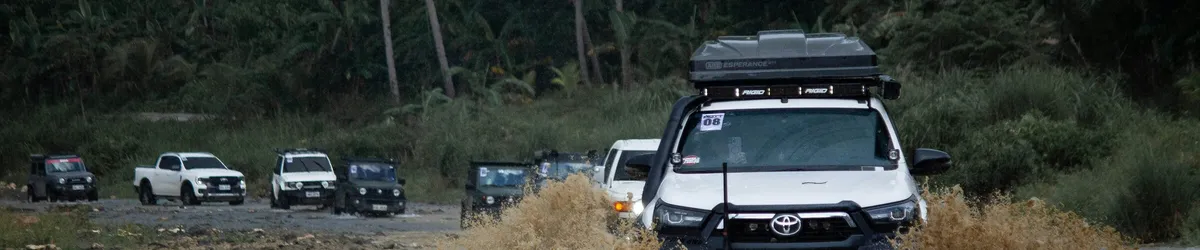
- Top image: “A white truck driving through a flooded street” by Ronald Cadelina