Kalinga: Batok, Bodong, and the Rice Terraces of the Chico River
culture17-06-2026
Kalinga is a landlocked mountain province in the Cordillera of northern Luzon, best known abroad for one village and one tattoo artist. The village is Buscalan, and the artist is Apo Whang-Od. But the province is a good deal more than a tattoo stop: it has its own system of customary peace law, rice terraces that most visitors to Banaue never hear about, a coffee industry, and one of the country’s best whitewater rivers.
This post is part of our “Off the Map Philippines Adventures” series on regions most tourists skip: their culture, food, crafts, and sites, plus the practical details for expats thinking of going.
Kalinga at a Glance
- Region: Cordillera Administrative Region (CAR), northern Luzon
- Capital: Tabuk City, the only city in the province
- Municipalities: Seven (Balbalan, Lubuagan, Pasil, Pinukpuk, Rizal, Tanudan, and Tinglayan), with 153 barangays in total
- Population: 235,391 at the 2024 census
- Area: About 3,231 square kilometers
- Highest point: Mount Alchanon, about 2,617 meters
Kalinga became a sub-province in 1907, was combined with Apayao as Kalinga-Apayao in 1966, and became a separate province in 1995.
The Kalinga People and Their Language
The Kalinga are one of the indigenous peoples of the Cordillera, often grouped under the broad (and sometimes contested) label Igorot. They are organized into many sub-tribes, usually identified with a home village or river valley. The people of Buscalan, for example, are Butbut.
The main language is Kalinga, which has several dialects that vary from valley to valley. Ilocano is the common language of trade across northern Luzon, and Tagalog and English are widely understood in Tabuk. In the upland villages, Ilocano is more useful than Tagalog. (See our post on Filipino Languages for why the Philippines works this way.)
Bodong: The Peace Pact
If one institution defines Kalinga, it is the bodong, a peace pact between two tribes or sub-tribes.
How It Works
- Each side appoints a pact holder, chosen by its pangat (elders and leaders), who is personally responsible for the agreement.
- The terms of the pact are called the pagta. They set out how disputes are settled, how compensation is paid, and how members of one tribe are protected when they are in the other’s territory.
- Pacts are made and renewed at large gatherings with feasting, gongs, and songs.
The system grew out of a world where, as one widely cited description puts it, a life could only be repaid with another life. The bodong replaced endless retaliation with negotiated settlement, and it still works that way today. In October 2026, for example, two sub-tribes in Lubuagan ended what news reports called a decades-long conflict through a bodong settlement, exchanging traditional peace tokens and paying compensation to the families involved.
Written Down for the First Time
In February 2026 the provincial government launched the codified Kalinga Pagta, a 137-page written record of Kalinga customary law, prepared with elders, the National Commission on Indigenous Peoples (NCIP), Kalinga State University, and the Public Attorney’s Office. Moving it from oral to written form took years of consultation.
Matagoan
In Tabuk, where people from many sub-tribes and migrants live side by side, a council called the Matagoan Bodong Consultative Council helps settle disputes between groups. Matagoan is usually translated as a “zone of life”: a place where tribal conflicts are not supposed to spill over. The program won a Galing Pook award for local governance in 2009.
Why This Matters to a Visitor
Tribal disputes still happen, mostly over boundaries and land, and they occasionally turn violent. In mid-2026, for instance, two Kalinga sub-tribes agreed to a temporary ceasefire. These conflicts are local and are not aimed at outsiders, but they are a good reason to travel with a local guide and listen when you are told a route is not advisable this week.
Batok: Kalinga Tattooing
Batok is the traditional Kalinga tattoo, hand-tapped into the skin. A tattooist is a mambabatok.
How It Is Done
The ink is soot or charcoal mixed with water. The design is tapped in with a thorn, traditionally from a citrus tree such as calamansi or pomelo, set in a wooden or bamboo handle and struck with a small stick. The patterns draw on natural forms, such as centipedes, snakes, ferns, and rice terraces, along with simple geometric shapes.
Historically, tattoos marked passages in life. For men they were associated with prowess and status as warriors; for women, with beauty and adulthood. The practice declined through the twentieth century and has been revived largely because of tourism.
Apo Whang-Od
Apo Whang-Od (also written Whang-od) of Buscalan is the best-known mambabatok. Apo is a respectful title for an elder.
- Her recorded birth date is February 17, 1917, which would make her 109 in 2026. Some have questioned this, because there were no birth records in Buscalan at the time; a government-issued ID later recognized the date.
- She received the NCCA’s Dangal ng Haraya award in 2018 and the Presidential Medal of Merit in 2024.
- She was nominated for the GAMABA (National Living Treasure) award in 2017, but as far as published sources show, it has not been conferred.
- In 2023 she appeared on the cover of Vogue Philippines, reported as the oldest person ever on a Vogue cover.
She broke with tradition by teaching women. Her grandniece Grace Palicas and Ilyang Wigan are her best-known successors, and other young mambabatok in the village now do most of the work. Visitors who arrive expecting a tattoo from Whang-Od herself should know that, at her age, she does only small, simple designs, when she is working at all.
The Tourism Question
Buscalan’s fame has brought money into a remote village and given young people a reason to learn batok. It has also brought crowds: a 2026 report cited local estimates of about 100 visitors on weekdays and 300 to 400 on weekends. There have been controversies, including a 2021 online “academy” that used her name without her consent, and in September 2026 Tinglayan officials publicly objected after a foreign visitor reportedly insisted on being tattooed on an intimate part of the body. The lesson for visitors is simple: a batok is a cultural practice, not a novelty, and the tattooist decides what she will and will not do.
Rice Terraces
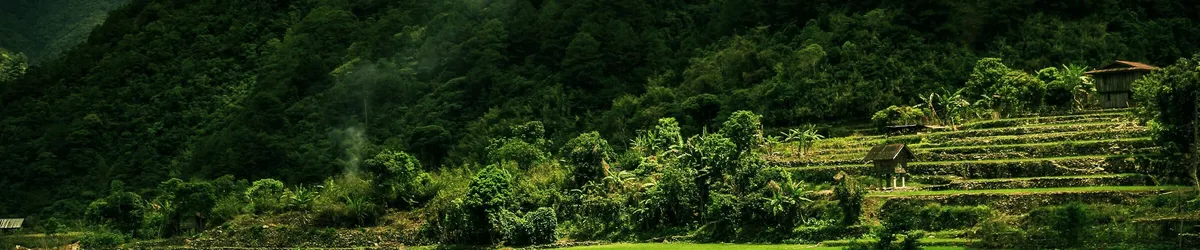
Everyone has heard of the Banaue terraces in Ifugao. Kalinga’s terraces get a fraction of the attention, but they are a working part of the landscape. Rizal and Tabuk are the province’s main rice producers, and the province is sometimes called the rice granary of the Cordillera.
Terraced areas worth knowing about include:
- Buscalan and the surrounding Tinglayan villages, where the terraces are part of the hike in
- Lubuagan, where the Pon-e and Gapis terraces rise from the Chico River valley
- Balbalan, Pasil, and Tanudan, which also have notable terraced fields
Kalinga also grows heirloom rice, including a variety called unoy, which you may find in local markets and slow-food meals.
Coffee
Kalinga is one of the Cordillera’s main coffee-producing provinces, and most of what it grows is robusta, with smaller amounts of arabica and excelsa. Tanudan has the largest robusta area. Production fell in the 2010s as some farmers converted coffee land to corn, and provincial programs have since tried to revive it. Local roasters sell Kalinga coffee in Tabuk, and it makes a better gift than anything in the airport.
The Chico River
The Chico River runs through the heart of the province, and it carries two very different stories.
The Dam That Was Not Built
In the 1970s the Marcos government planned a series of hydroelectric dams on the Chico. The project would have flooded villages, rice terraces, and burial grounds, and displaced tens of thousands of indigenous people (estimates vary, with some putting it near 100,000). Kalinga and Bontoc communities resisted, and the bodong system helped unite villages against it. In April 1980 the Kalinga leader Macli-ing Dulag was killed, and his death turned national opinion against the project, which was eventually abandoned. The episode is now a landmark in the history of indigenous land rights in the Philippines.
Whitewater
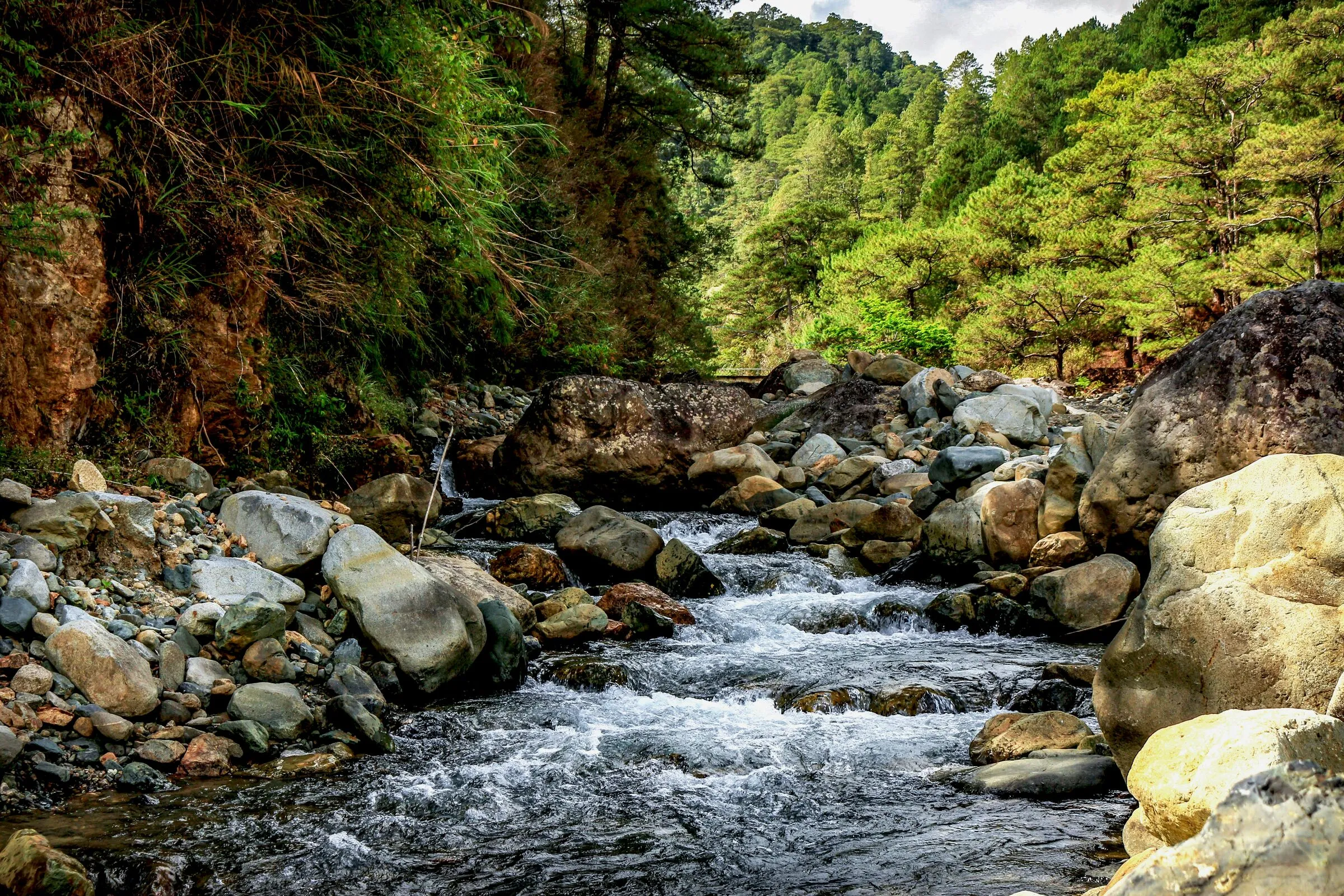
Today the Chico is known for whitewater rafting near Tabuk. The standard route, called the Ullalim run, includes Class III rapids. Sources disagree on the best season, but water levels are generally best between about June and December. Book with an established local operator and ask about current water conditions.
Weaving and Lubuagan
Lubuagan is the province’s weaving center, particularly the village of Mabilong, where women weave skirts (tapis), loincloths, and blankets on backstrap looms in patterns dominated by red and black. The town holds a Laga Festival, usually in March; laga means “to weave.”
Lubuagan also has a place in national history. Emilio Aguinaldo made it the seat of the First Philippine Republic for roughly 73 days in 1900, from March into May, while retreating north from American forces. Sources disagree on the exact end date.
Festivals
Kalinga’s main provincial celebration is the Kalinga Founding Anniversary and Bodong Festival in February in Tabuk, which showcases the peace-pact tradition along with dances, gongs, and ullalim (Kalinga chanted epic verse). Tabuk has also held a Matagoan Festival, with dates that have varied. As with any festival in the Philippines, check with the provincial or municipal tourism office for the current year. (See our post on the Filipino Fiesta for background on how local celebrations work.)
Food
Kalinga food is mountain food: rice, vegetables, river fish, and pork or chicken for occasions. A few things to know:
- Heirloom rice is the centerpiece of most meals.
- Pinikpikan is a Cordillera chicken dish with ritual roots. Its traditional preparation involves beating the live bird before cooking, which has drawn criticism from animal-welfare advocates. You may be offered it; you may decline.
- Coffee is served everywhere, and strong.
- Rice wine may be offered at gatherings. Accept a little as courtesy; you are not obliged to keep up.
For Expats and Visitors
Getting There
- To Tabuk: Overnight buses run from Manila to Tabuk; the trip is about 12 hours. Tuguegarao, in Cagayan, has the nearest regular commercial airport and is a road trip away from Tabuk.
- To Buscalan: Most travelers come through Bontoc in Mountain Province, then continue by road to Tinglayan and the Buscalan jump-off point. From Manila, the whole journey has typically been described as 12 to 15 hours. A 137-meter hanging bridge completed in 2024 has made the final walk into the village easier, but there is still a hike and the village is steep.
Guides and Fees
Tinglayan requires visitors to Buscalan to hire an accredited local guide, and it charges an environmental or eco-cultural fee. Published rates differ between sources and change over time, so contact the Tinglayan Municipal Tourism Office or the Kalinga provincial tourism office before you go.
Weather
Kalinga has a Type III climate: a dry season from roughly November to April and a wet season from May to October. The uplands are cool, especially at night. In the wet season, landslides regularly close mountain roads, so build slack into any itinerary.
Costs
Lodging in Buscalan is mostly homestays, and costs are modest. Tattoo prices vary by design and artist. Carry cash; ATMs are in larger towns such as Tabuk, not in the upland villages.
Connectivity
Signal is reasonable in Tabuk and patchy to absent in the mountain villages. If you need to stay connected, plan around it. (See our posts on internet in the Philippines and rural infrastructure.)
Healthcare
The main hospitals are in Tabuk. From the upland villages, getting to one can take hours over mountain roads; before the bridge was built, emergencies in Buscalan sometimes required helicopter evacuation. A new batok is an open wound, so keep it clean and watch for signs of infection.
Safety
Kalinga is not covered by the Mindanao-style “do not travel” warnings that apply in the far south. The realistic risks are roads, landslides, weather, and the occasional local tribal dispute. Travel with a local guide, check your government’s current advice, and take local warnings seriously.
Respectful Etiquette
- Ask before photographing anyone, especially elders with traditional tattoos. They are residents, not attractions.
- Do not ask for chants or rituals. Some are reserved for the Kalinga themselves, and Whang-Od has stopped chanting for tourists.
- Let the tattooist choose. Traditional designs carry meaning. Ask what a design means, and accept a no.
- Stay out of burial sites and sacred places unless your guide invites you in.
- Respect the terraces. Walk only on paths and dikes your guide uses; damaged walls take a family’s labor to repair.
- Pay the fees and use the guides. They are how the village gets something back from tourism.
Summary
Kalinga is:
- The home of batok tattooing, and of Apo Whang-Od and her successors in Buscalan
- Governed in part by the bodong, a living system of peace pacts that was written down for the first time in 2026
- A province of rice terraces, heirloom rice, and robusta coffee
- The place where the Chico River dam was stopped, and now a whitewater destination
- Remote, cool, steep, and best visited with a local guide and some patience
Most foreigners who come to Kalinga come for a tattoo. The ones who stay a little longer find a province with a strong sense of its own law, history, and identity.
Thinking of Moving to the Philippines? Get Reliable Guidance
Online communities are helpful for general questions. For anything important, you still need accurate, professional, and updated information. E636 Expat Services helps foreigners with:
- Residency and long term visas
- Bank account opening
- Health insurance guidance
- Real estate assistance
- Business setup
- Retirement planning
- A smooth and secure transition into life in the Philippines
If you want to move with confidence instead of relying on random comments online, we can guide you every step of the way.
Book a consultation with E636 and start your journey the right way.
Image credits (via Unsplash, free under the Unsplash License):
- Top image (rice terraces): “green grass field near green trees under white clouds during daytime” by Joshua Kyle
- Balbalasang river photo: “river in the middle of forest during daytime” by Joshua Kyle