Lake Sebu: T'nalak, Seven Falls, and the Home of the Dreamweavers
culture10-06-2026

Lake Sebu is a highland town in South Cotabato, built around a cool, lily-covered lake and home to the T’boli people. It is best known for T’nalak, a cloth woven from abaca whose patterns, by T’boli tradition, come to the weaver in dreams. It also has seven waterfalls, a lake full of tilapia cages, and four national living treasures.
This post is part of our “Off the Map Philippines Adventures” series on regions most tourists skip: their culture, food, crafts, and sites, plus the practical details for expats. Lake Sebu also comes with a serious caveat, which we cover in the practical section: several foreign governments advise their citizens against travel to this part of Mindanao. Read that section before you plan anything.
Lake Sebu at a Glance
- Province: South Cotabato, in Region XII (Soccsksargen), southern Mindanao
- Population: 84,252 at the 2024 census
- Area: About 702 square kilometers
- Elevation: The town center sits at roughly 780 meters, and the lake itself is commonly described as being close to 1,000 meters above sea level; sources differ
- Founded: Created as a municipality under Batas Pambansa Blg. 249 in 1982, ratified by plebiscite in 1983
- Nicknames: The town promotes itself as the “Summer Capital of Southern Mindanao” and, more recently, “Home of the Living Treasures”
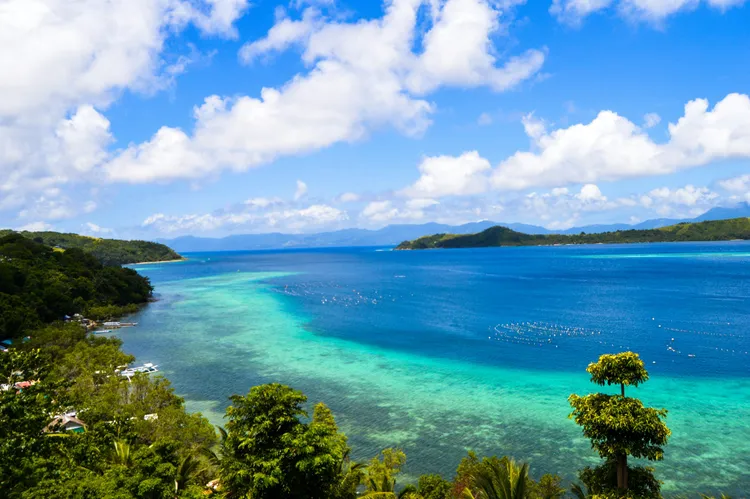
The municipality actually has three lakes. According to the Philippine News Agency, Lake Sebu covers about 354 hectares, Lake Seloton about 48 hectares, and Lake Lahit about 24 hectares.
The T’boli and Their Neighbors
Lake Sebu is part of the ancestral domain of the T’boli (also written Tboli), an indigenous people of the mountains around the upper Allah Valley. The town is also home to Ubo, Manobo, and Tiruray communities, and to settlers whose families came from Visayas and Luzon: Hiligaynon (Ilonggo), Cebuano, and Ilocano speakers, among others.
Many T’boli were pushed off the fertile valley floor and onto the slopes as settlers arrived after World War II. Land and ancestral-domain questions are still part of local life, which is worth knowing before you treat any village as scenery.
The Language
The T’boli speak Tboli, their own language. Hiligaynon and Cebuano are the common languages of trade in South Cotabato, and Tagalog and English are understood in town. If you have been learning Tagalog, it will get you through transactions, but not into conversations with elders. (See our post on Filipino Languages for why this happens so often in the Philippines.)
T’nalak: The Dream Cloth
T’nalak is a cloth woven from abaca (Musa textilis, a banana relative grown for its fiber). It is the cultural signature of Lake Sebu, and the province named its biggest festival after it.
Where the Designs Come From
In T’boli tradition, a weaver receives her designs in dreams from Fu Dalu, the spirit or goddess of abaca. This is why T’boli weavers are often called dreamweavers. The designs are not copied from pattern books; a skilled weaver may carry dozens of them in her head.
How It Is Made
The process is slow, and almost entirely by hand:
- Stripping and drying: Abaca stalks are stripped for fiber, and the fibers are sun-dried. Men often take part at this stage.
- Tying: Sections of the fiber are tied or coated so they resist dye. This is the ikat (resist-dyeing) technique, and it is where the design is actually set.
- Dyeing: The traditional palette is three colors: the natural off-white of the abaca, plus red and black dyes made from plant roots and leaves. Sources name the plants differently, and spellings vary.
- Weaving: The pattern is woven on a backstrap loom. Depending on the design, a single piece can take up to two months.
- Finishing: The surface of the finished cloth is burnished to give it a sheen.
The colors are commonly explained this way: white for purity, red for blood, and black for the earth.
Taboos
Weavers observe a number of taboos. Accounts vary, but frequently cited ones include not cutting the cloth (cutting it is believed to bring sickness), passing the abaca thread over the body before weaving to ward off illness, and avoiding soap when dyeing or washing it. Whether you believe any of this is beside the point; it tells you the cloth is not just a souvenir to the people who make it.
Lang Dulay and the Living Treasures
Lang Dulay was the best-known T’nalak weaver of her generation. The National Commission for Culture and the Arts (NCCA) named her a Manlilikha ng Bayan (National Living Treasure, under the GAMABA award) in 1998. She died in Lake Sebu on April 30, 2015. News reports gave her age as 91; other records suggest she was younger, so her exact age is uncertain. Her weaving center in Lake Sebu still teaches the craft.
In 2023 three more Lake Sebu artists received the same honor:
- Barbara Ofong – T’nalak weaving
- Rosie Sula – T’boli chanting and oral tradition
- Bundos Fara – brass casting
Four national living treasures in one municipality is unusual anywhere in the country, and the town now builds its tourism branding around it.
Brass, Gongs, and Music
T’nalak gets the attention, but the T’boli are also known for:
- Brass casting – using the lost-wax method to make bells, belts, figurines, and betel-nut boxes. Small brass bells on belts and anklets are a T’boli trademark.
- Beadwork and ornaments – combs, earrings, and heavy beaded necklaces worn with traditional dress
- Music – gong ensembles and string instruments such as the hegelung, a two-stringed lute
If you buy brass or beadwork, buying directly from makers or from community weaving and craft centers is the best way to make sure the money stays local.
Seven Falls
The best-known natural site in Lake Sebu is Seven Falls, in Barangay Seloton. Each waterfall has a T’boli name (hikong means “falls”). The first two are the easiest to see:
- Hikong Alu (“passage”) – the first falls, a short walk from the entrance
- Hikong Bente (“immeasurable”) – the second and tallest, often given as about 70 feet
The others are usually listed as Hikong B’lebel, Hikong Lowig, Hikong K’fo-i, Hikong Ukol, and Hikong Tonok. Sources disagree on the order and translations of the last few, so treat any neat list with a little skepticism.
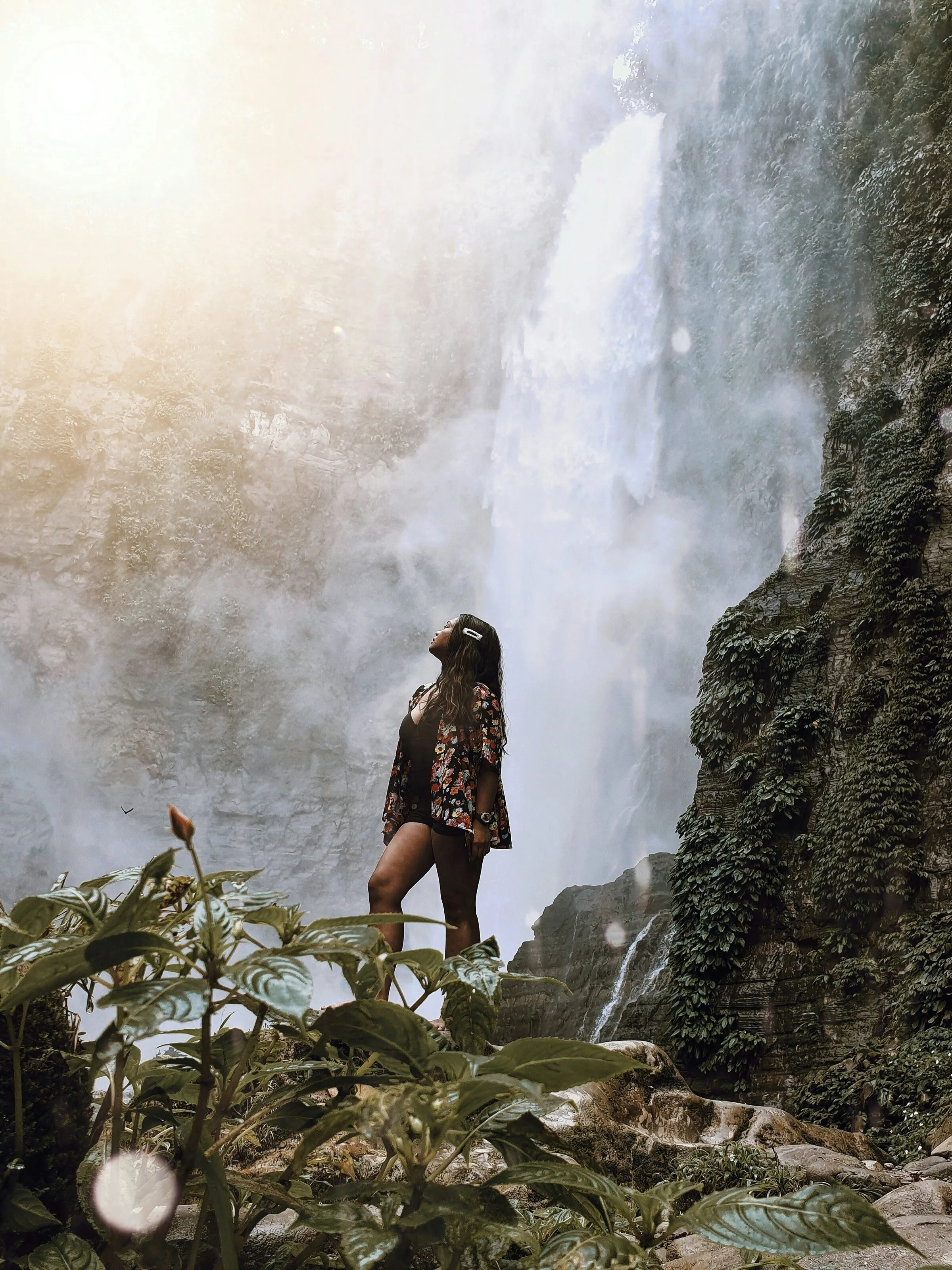
Most visitors see the upper falls from the zipline, which runs above the gorge in two stages. Published heights and lengths vary between sources, and fees have changed over the years, so check with the operator on the day.
The Lake and Its Tilapia
Lake Sebu is a working lake. Its main industry is tilapia raised in floating cages, and much of the lake surface is divided into fish pens. You will see people moving between them in small dugout canoes.
The local menu reflects that: grilled, fried, and stewed tilapia, often served at resorts overlooking the cages.
The lake also has a recurring problem the locals call kamahong, a sudden die-off of caged fish. Explanations in news reports vary: oxygen depletion, sudden temperature changes, and sulfur-rich water rising from the lake bottom during the rainy season have all been cited. Fish kills have cost growers millions of pesos in some years, and the town has declared a state of calamity and considered moratoriums on new fish cages. Water lilies, which make the lake look so photogenic, are also cleared regularly because they choke the water.
Festivals
Festival dates in South Cotabato move from year to year, so always check with the municipal or provincial tourism office. (For background on how Philippine festivals work, see our post on the Filipino Fiesta.)
Helobung Festival
The Helobung Festival is Lake Sebu’s own cultural festival, organized to commemorate the town’s founding. Expect a cultural parade, dance competitions, singing contests, and a showcase of T’boli dress. The provincial government calls it one of the pioneering cultural festivals in the region and a prelude to the T’nalak Festival.
Dates have shifted over the years: older listings place it in November, while recent editions (2024 and 2025) were held in late May.
Lem Lunay
Lem Lunay refers to a T’boli idea of paradise, and the festival of the same name began as a celebration tied to the feast of the Santa Cruz in Lake Sebu before growing into a broader gathering of indigenous groups. It blends Catholic and indigenous rites. Listings give it in September in some years and November in others. Older accounts mention horse fighting as part of the program; animal fights other than cockfighting are prohibited under the Animal Welfare Act, and visitors should not expect or seek them out.
T’nalak Festival (Koronadal)
The province’s main festival is held in Koronadal City, the provincial capital, and culminates on July 18, South Cotabato’s founding anniversary. The 2026 edition was the 27th. Street dancing is the headline event, and Lake Sebu’s T’boli culture is central to it.
For Expats and Visitors
Travel Advisories: Read This First
South Cotabato is in Mindanao, and foreign-government travel advice for Mindanao is restrictive. As of late 2026:
- Canada lists South Cotabato among the provinces where it advises Canadians to avoid all travel.
- The United Kingdom advises against all travel to western and central Mindanao and against all but essential travel to the rest of Mindanao (with a few island exceptions that do not include South Cotabato).
- The United States advises its citizens to reconsider travel to Mindanao, with stricter “do not travel” warnings for the Sulu Archipelago and Marawi City.
Lake Sebu is not in the Bangsamoro region, and it receives domestic tourists every year. But these advisories matter to you for practical reasons, not just safety ones: many travel and health insurance policies will not cover you in an area your home government tells you not to visit, and your embassy’s ability to help may be limited.
We do not recommend planning a trip around this post. If you are a resident of the Philippines considering a visit, check your own government’s current advice, check your insurance policy wording, and ask locally about current conditions. Advisories change, and so do local situations.
Getting There
- The nearest commercial airport is in General Santos City.
- By road, the usual route is General Santos to Koronadal (Marbel), then on to Surallah and up to Lake Sebu. Vans also run more directly from General Santos.
- By private vehicle, General Santos to Lake Sebu is typically described as a drive of a bit over an hour; by public transport with transfers, plan on half a day.
Weather
Lake Sebu is noticeably cooler than the lowlands. Average daily highs are in the mid-20s °C, and nights can drop below 20°C. It is also wet: average rainfall is well over 3,000 mm a year, and rain falls on most days. Bring a light jacket and rain gear in any month. Mindanao is generally less exposed to typhoons than the Visayas or Luzon, but heavy rain still brings landslides and road problems.
Costs
Lake Sebu is inexpensive by Philippine standards. Lodging is mostly small resorts and inns along the lake, and entrance fees, boat rides, and zipline rides are modest. Published prices online are often years out of date, so carry enough cash and confirm prices locally. Do not count on ATMs in town; Koronadal and General Santos are the reliable places to withdraw money.
Connectivity
Mobile data is generally usable in the town center and at the lakeside resorts, and weaker in the hills and around the falls. If you work online, test your signal before committing to a longer stay. (See our post on internet in the Philippines.)
Healthcare
For anything beyond basic care, expect to go down the mountain. The South Cotabato Provincial Hospital is in Koronadal, and General Santos City has the largest private hospitals in the area. If you have a serious medical condition, factor in the travel time.
Respectful Etiquette
- Ask before photographing people. This applies especially to elders, weavers at work, and anyone in traditional dress. A “no” is a complete answer.
- Do not treat weaving centers as photo sets. If you visit a weaver’s workshop, buy something or leave a contribution. You are taking someone’s time.
- Respect the cloth. Do not handle cloth, looms, or tools without being invited.
- Buy from makers. Mass-produced “T’nalak-style” products exist. Buying from weavers or community centers supports the people who keep the tradition alive.
- Ask about rituals before attending. Some ceremonies are open to visitors and some are not. Your guide or the tourism office can tell you which is which.
- Dress modestly in villages. Swimwear is for the lake resorts, not the barangays.
Summary
Lake Sebu is:
- The ancestral home of the T’boli, and the center of T’nalak dream weaving
- Home to four national living treasures in weaving, chanting, and brass casting
- A cool highland town with three lakes, seven waterfalls, and a tilapia economy that sometimes struggles
- A place where festival dates move, so check before you plan
- Located in a part of Mindanao covered by foreign-government travel advisories, which you need to read before you think about going
Very few foreigners make it here, and the advisories are a large part of why. The culture is worth knowing about whether or not you ever go.
Thinking of Moving to the Philippines? Get Reliable Guidance
Online communities are helpful for general questions. For anything important, you still need accurate, professional, and updated information. E636 Expat Services helps foreigners with:
- Residency and long term visas
- Bank account opening
- Health insurance guidance
- Real estate assistance
- Business setup
- Retirement planning
- A smooth and secure transition into life in the Philippines
If you want to move with confidence instead of relying on random comments online, we can guide you every step of the way.
Book a consultation with E636 and start your journey the right way.
Image credits (via Unsplash, free under the Unsplash License):
- Top image: “a man sitting in a small boat on a lake” by Mubarak Tahir
- Waterfall photo: “woman looking up at waterfalls” by Joyce Marie Cantrell