Masbate: Cowboys, Cattle, and Islands in the Middle of Everything
culture03-06-2026
Masbate sits almost exactly in the middle of the Philippines, and it may be the only province in the country where the biggest party of the year is a rodeo. It is cattle country: ranches, cowboys, beef tapa, and a festival full of lassos and bull riding. It also has manta rays, a waterfall that drops straight into the sea, and a reputation—some of it earned, some of it dated—that has kept many visitors away.
This post is part of our “Off the Map Philippines Adventures” series, where we look at regions most tourists skip: the culture, the food, the festivals, and what a foreigner should know before visiting or settling there.
Masbate at a Glance
- Capital: Masbate City (the only city in the province)
- Municipalities: 20, plus Masbate City
- Population: 910,813 (2024 census)
- Area: About 4,150 square kilometers
- Main islands: Masbate, Ticao, and Burias, plus many smaller islands
- Region: Bicol (Region V)
Masbate is an oddity on the map. Administratively it belongs to Bicol, but culturally and linguistically it leans toward the Visayas. The main language is Masbateño (also called Minasbate), a Visayan language closely related to Hiligaynon and Capiznon. Cebuano is common in the southern towns, Hiligaynon and Waray are also spoken, and Bicolano is heard in parts of Burias Island. Masbateños will tell you, correctly, that their language is not a dialect of Bicolano. (See our post on Filipino Languages for more on how this patchwork works.)
Deep History: Kalanay Cave and the Galleons
Masbate’s human story is old. Kalanay Cave, a small burial cave on the northwest coast in Aroroy, was excavated in 1951 by the American archaeologist Wilhelm Solheim. The pottery found there became the type site for the Kalanay pottery complex, which Solheim linked to the Sa Huỳnh culture of southern Vietnam. Archaeologists are still arguing about how close that relationship really is—a 2025 study questioned whether all of the Kalanay material belongs to one tradition—but the cave remains one of the reference points of Philippine prehistory.
In the Spanish period, San Jacinto on Ticao Island served as an anchorage for the Manila–Acapulco galleons. Spanish missionaries arrived, and the town of Masbate was established in 1791.
Masbate’s provincial history is messy: sources give different dates for when it became a separate province, and it was attached to Sorsogon for a time in the early 1900s after a devastating 1908 typhoon. If you see conflicting founding dates, that is why.
Cattle Country
Spanish colonizers brought cattle to the Philippines in the 16th century, and Masbate’s rolling grasslands turned out to suit them. Ranching has been part of life here for generations. Children grow up on horseback, and the province is known nationally as the country’s cattle country.
How big is the industry? Sources disagree. Some describe Masbate as the top cattle-producing province, others as second to Bukidnon; a 2013 GMA report put the cattle population at over 54,000 head on as many as 30 ranches. The Bureau of Animal Industry has described Masbate as the only Bicol province commercially producing cattle. The numbers move with typhoons, prices, and disease, so treat any single figure as a snapshot.
What matters for the culture is that ranch work is everyday work here, and the province built its biggest festival around it.
Rodeo Masbateño
The Rodeo Masbateño Festival began in 1993. It was initiated by then-Governor Emilio Espinosa Jr., with local ranchers and businessmen, to promote tourism and to revive a cattle industry that was struggling at the time. Some sources say it started under the name “Rodeo Filipino.” It is organized by Rodeo Masbateño, Inc. and held at the rodeo arena in Masbate City.
International news reports have called it Asia’s only Western-style rodeo. Whether or not that is strictly true, it is certainly the biggest in the Philippines.
When It Happens
Recent editions have been held in April. The 30th Rodeo Festival ran April 10–19, 2026, with the main competitions on April 13–18. Some older sources and travel guides say May. Dates move year to year, so check with the provincial tourism office or Rodeo Masbateño, Inc. before booking.
The Events
Organizers describe it as a “ranch rodeo”: the events mirror real ranch work rather than imported show events. A typical program includes:
- Cattle wrestling – on foot and from horseback
- Casting down – bringing an animal to the ground for treatment or branding
- Lassoing and steer tying – roping against the clock
- Carambola – team events with two- and four-person teams
- Bull riding
- Ceremonial cattle branding and a street recreation of a cattle drive
- A grand parade, a “Rodeo Saloon,” and a food bazaar
Organizers have pointed out a difference from American rodeo: many Masbate events are team-based, where American events are mostly individual. The local cattle are also Asian breeds—smaller than the European breeds used in the United States, and, according to the organizers, less docile.
The Cowgirls
Women compete too, and often win. Many competitors, men and women, are students from agricultural and veterinary programs at the state colleges. In 2026, a veterinary student set the fastest roping time and took the rodeo queen title. The catch, as competitors told reporters, is that there is no professional category for women, so most women’s rodeo careers end at graduation. Expect that to keep coming up.
Rodeo and Image
The rodeo has always been about more than cattle. Local and national reporting has framed it as Masbate’s effort to replace its image as a violent province with something better. Rappler once reported on the festival bringing rival politicians to the same arena. During election years, candidates show up in force.
Food: Beef First
In most of the Philippines, pork is the default meat. In Masbate, beef gets equal billing.
- Beef tapa – sun-dried, cured beef, the classic Masbate pasalubong (take-home gift). Vacuum-packed tapa from Masbate City is sold for travelers; keep it frozen once you get home.
- Bulalo – beef shank and marrow soup, simmered for hours; a fixture at the rodeo
- Sinigang with batuan – the sour soup made tart with batuan, a sour fruit common in the Visayas, instead of tamarind
- Dried fish – an island province with good fishing grounds produces plenty
- Carmelado – sweets made from carabao’s milk
Coconut-milk dishes (ginataan) and malunggay (moringa) leaves appear in a lot of home cooking.
Islands and Seas
Masbate’s coastline and smaller islands are the real draw for most visitors. They are also the least crowded beaches you are likely to find in this part of the country.
Ticao Island
Ticao lies off Masbate’s eastern side and is shared by four municipalities: Batuan, Monreal, San Fernando, and San Jacinto.
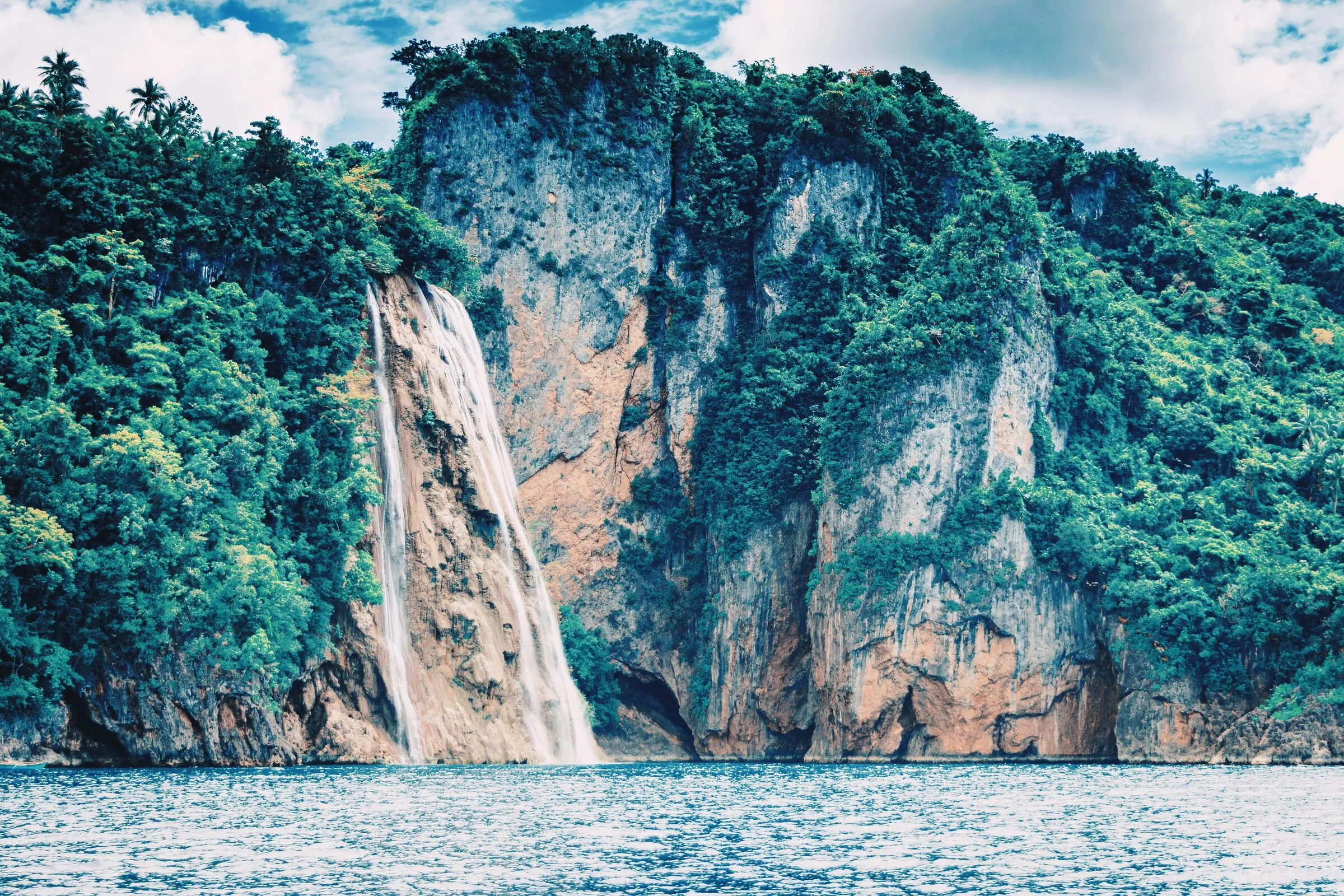
- Catandayagan Falls – one of the few waterfalls anywhere that drops straight into the sea; it is reached by boat, not by trail
- The Manta Bowl – an underwater shoal in the Ticao Pass that manta rays use as a cleaning station. Researchers have identified more than 240 individual mantas there. The area falls within the Ticao–Burias Pass Protected Seascape, and it is for experienced divers only because of strong currents.
- San Miguel Island (Monreal) – limestone coves and the Halea Nature Park
Burias Island
Burias, to the northwest, is divided between Claveria and San Pascual. Island-hopping out of San Pascual covers:
- Sombrero Island – one of the most visited spots in the province, with a single resort
- Animasola Island – white sand and rock formations; ánima sola means “lonely soul,” a Catholic image of a soul in purgatory
- Tinalisayan Island – known for a long sandbar that appears at low tide
Off Masbate City
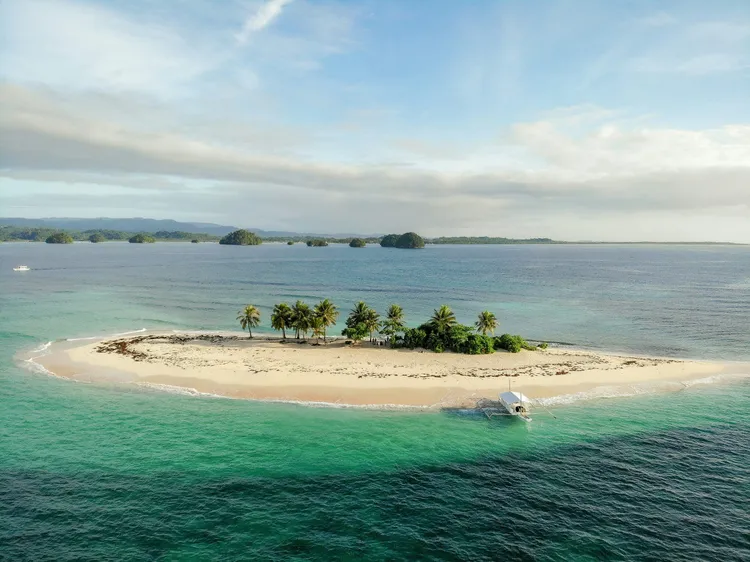
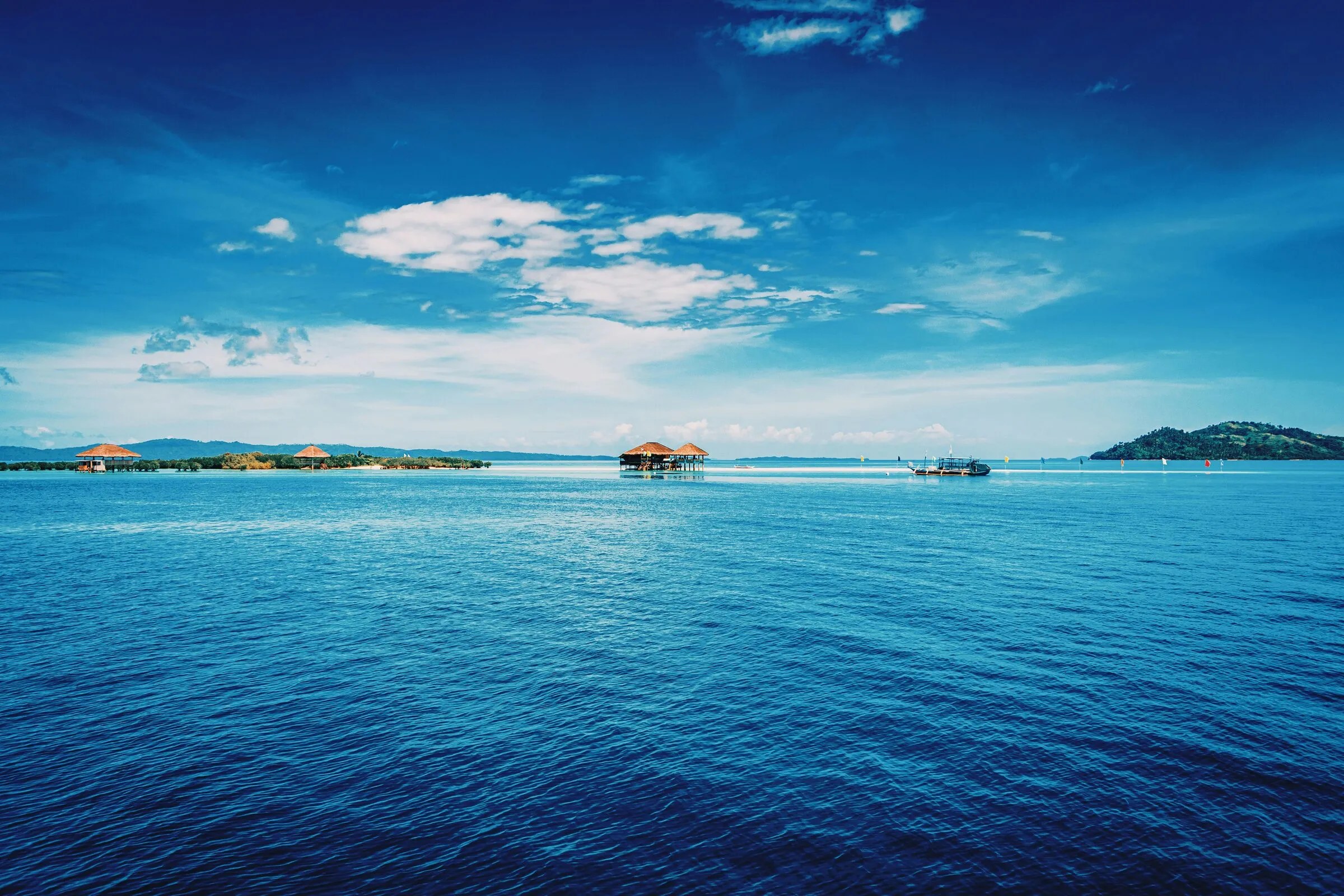
- Buntod Sandbar and Reef Marine Sanctuary – a sandbar and reef just off the capital, established as a marine sanctuary in 2001 in waters once damaged by dynamite fishing. Local fishers objected at first; the recovery since has made it a regular example of what a protected reef can do.
Gold
Masbate is also a mining province. Gold mining here goes back well before the modern era. Today the Masbate Gold Project in Aroroy is an open-pit mine operated with Canadian miner B2Gold, which describes it as the largest operating gold mine in the Philippines. Mining brings jobs and also the usual debates over land, water, and environmental impact. You will hear both sides.
For Expats and Visitors
Getting There
- By air: Moises R. Espinosa Airport in Masbate City has had direct flights to Cebu and Clark; routes and frequencies change, so check the airlines directly.
- By sea from Sorsogon: Ferries and fastcraft run from Pilar, Sorsogon to Masbate City. Pilar also has boats to San Jacinto for Ticao Island.
- By sea from Albay: Ferries run from Pio Duran, Albay to Masbate City (about three to four hours) and to Claveria on Burias.
Published fares and travel times conflict from one source to the next. Confirm with the operator, and expect cancellations whenever the Coast Guard suspends sea travel.
Weather, Typhoons, and Earthquakes
Masbate is in typhoon country. In September 2025, Typhoon Opong (Bualoi) made landfall in Palanas, Masbate, as a severe tropical storm after first hitting Eastern Samar. Masbate took the heaviest damage in Bicol: roofs torn off, crops destroyed, schools damaged, and the airport needing repairs. Power restoration took weeks—by mid-October, fewer than a fifth of the electric cooperative’s villages had been reenergized.
The province also sits along the Masbate segment of the Philippine Fault. A magnitude 6.0 earthquake in February 2023 (reports range from 5.7 to 6.1) forced the temporary evacuation of the provincial hospital.
Practical takeaways:
- Rainfall patterns vary across the three main islands, but the months around March to May are generally the driest—and also rodeo season
- Typhoon risk is highest in the second half of the year, roughly July to November, though storms can arrive outside that window
- Anyone living here needs a real plan for extended power outages (see our post on Rural Philippines Infrastructure)
Costs
Masbate is one of the less expensive provinces in the country for food and rent, and tourism infrastructure is thin. Outside Masbate City, expect simple guesthouses and a handful of resorts rather than hotel chains. Island-hopping and diving costs depend heavily on boat hire, so travel in a group if you can.
Connectivity
Mobile data is available in Masbate City and most town centers, with weaker coverage on the smaller islands and in the interior. After major storms, both power and signal can be out for an extended period.
Healthcare
The main government hospital is the Masbate Provincial Hospital in Masbate City, whose authorized bed capacity was raised from 125 to 200 by law in 2019. It has a Malasakit Center (a one-stop office for government medical financial assistance). Specialist care is limited; serious cases are often referred off the island to mainland Bicol or Manila, which means a flight or a long ferry ride. Expats with chronic conditions should plan for that. (See our post on the State of Philippine Healthcare.)
Safety: The Honest Version
Masbate has long had a reputation for political violence, and it is not invented. For decades the Commission on Elections (COMELEC) and the Philippine National Police have listed Masbate as an election hotspot, citing:
- Intense rivalries between political clans
- The spread of loose, unlicensed firearms
- Private armed groups maintained by political figures
The violence has mostly been targeted—candidates, officials, and their supporters, especially around elections—rather than aimed at tourists. It has also eased in some periods and flared in others. Ahead of the May 2025 elections, COMELEC initially placed Baleno and Masbate City in its “red” category (areas with serious armed threats and a history of election-related violence); by March 2025, only Baleno remained red. Separately, human rights groups and the military have reported incidents linked to counterinsurgency operations in rural parts of the province.
What that means in practice:
- Avoid election periods if you are visiting, and stay out of political events
- Check the latest advisories—from the PNP, your embassy, and local news—before traveling to rural areas
- Stick to established routes and operators for island trips
- Keep out of local politics. As a foreigner, you cannot vote or campaign anyway, and taking sides publicly in a clan-dominated province is a bad idea.
Most visitors to Masbate City, Ticao, and Burias come and go without incident. The point is not to scare you away; it is to go in informed.
Etiquette
- Respect the animals and the work. Ranching is a livelihood, not a theme park. Ask before entering ranch land or photographing people at work.
- Learn a few words of Masbateño. Even a greeting is noticed and appreciated.
- Protect the reefs. Follow guides’ rules at the Manta Bowl and Buntod—no touching, chasing, or feeding marine life.
- Accept hospitality gracefully, especially food at fiestas (see our post on the Filipino Fiesta).
- Check dates locally. The rodeo, town fiestas, and boat schedules all shift. The provincial tourism office and municipal Facebook pages are your best sources.
Summary
Masbate is:
- A Visayan-speaking province in the Bicol Region, sitting at the center of the archipelago
- The Philippines’ cattle country, with a rodeo that has run since 1993 and real ranching behind it
- Home to Ticao’s Manta Bowl, a waterfall that falls into the sea, and quiet islands off Burias and Masbate City
- Exposed to typhoons and earthquakes, with limited healthcare and infrastructure outside the capital
- Still working to move past a long history of political violence
It is not an easy destination, and it is not trying to be one. But if you want beaches without crowds and a festival that is unmistakably local, Masbate delivers.
Thinking of Moving to the Philippines? Get Reliable Guidance
Online communities are helpful for general questions. For anything important, you still need accurate, professional, and updated information. E636 Expat Services helps foreigners with:
- Residency and long term visas
- Bank account opening
- Health insurance guidance
- Real estate assistance
- Business setup
- Retirement planning
- A smooth and secure transition into life in the Philippines
If you want to move with confidence instead of relying on random comments online, we can guide you every step of the way.
Book a consultation with E636 and start your journey the right way.
Image credits (via Unsplash, free under the Unsplash License):
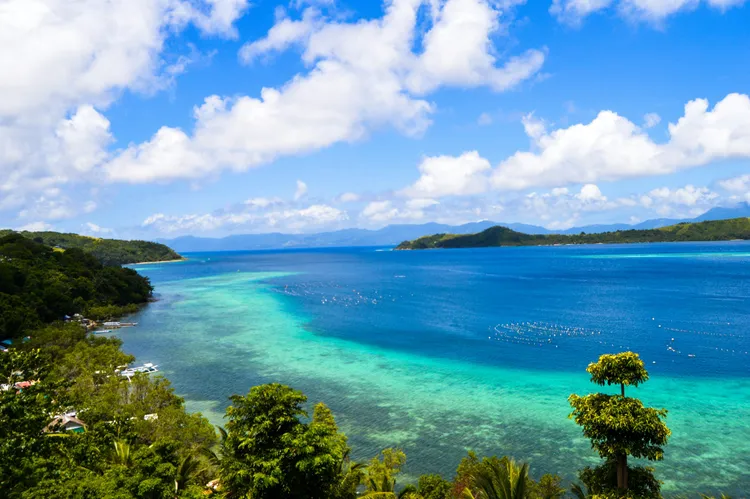
- Top image: “green trees on rocky mountain beside body of water during daytime” (Ticao Island, Masbate) by lorenz narbs
- Catandayagan Falls, in the Ticao Island section: “gray rocky mountain beside body of water during daytime” by lorenz narbs
- Buntod Reef Marine Sanctuary, in the Masbate City section: “white and brown boat on sea under blue sky during daytime” by lorenz narbs